Digitizing film is one of the easiest ways to protect family photos, slides, and negatives from fading, damage, and obsolete viewing equipment. The right scanner can turn a box of analog memories into organized, shareable digital files.
This roundup compares 10 film scanners for archiving, covering convenient display-equipped models, versatile format scanners, and higher-end options for photographers who want more control over image quality.
Best 10 Film Scanners for Archiving Picks for 2026
Best for Easy Home Digitizing
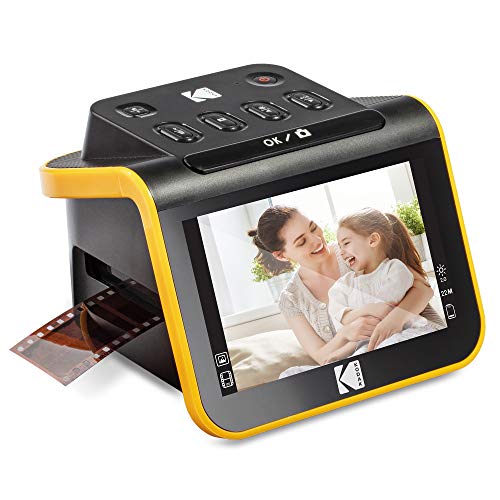
- Handles 135, 110, and 126 film plus 50mm slides
- 5-inch LCD with gallery mode and quick edits
- Saves scans directly to optional SD or SDHC cards
Best For: Casual home archiving of mixed-format film
Best for Color-Managed 35mm Archives
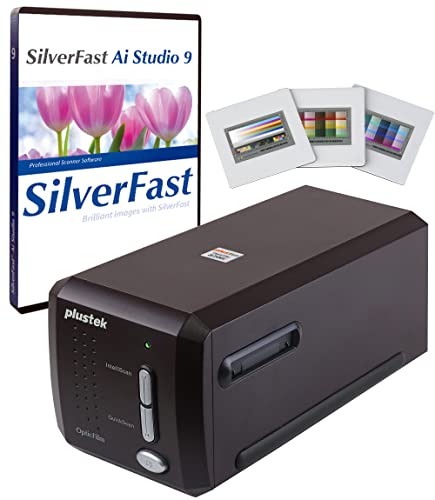
- 7200-resolution CCD scanning with 16-bit color
- Includes SilverFast 9 and an IT8 calibration target
- Infrared, HDRi, and multi-exposure processing tools
Best For: Detailed 35mm archiving with color-management control
Best All-in-One Starter Kit
DigitPro Photo and Film Scanner

- Scans film, slides, prints, and business cards
- Standalone 5-inch display needs no computer or drivers
- Includes 8GB SD card and three-year warranty
Best For: Beginner-friendly mixed photo and film archiving
Best for High-Volume 35mm Scanning
Pacific Image PrimeFilm XA Plus
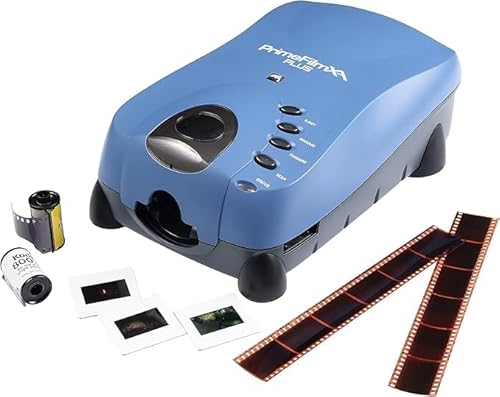
- Automatic feeder supports up to 40 frames
- 10,000 dpi and 48-bit CCD output
- Autofocus, Magic Touch, and DNG support
Best For: Large 35mm collections and computer-based workflows
Best Standalone Workflow
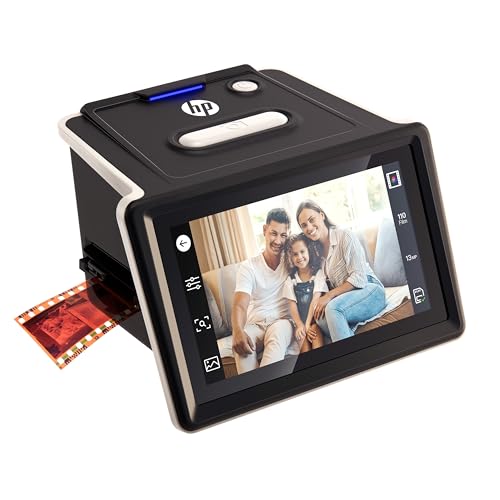
- Computer-free scanning with SD card storage
- Handles 135, 126, and 110 film formats
- 5-inch touchscreen and quick-load tray
Best For: Home archivists digitizing mixed film collections
Best for Fast, Flexible Viewing

- Produces 24MP JPEG files without a computer
- Supports 35mm, 110, 126, and Super 8 formats
- 5-inch display plus HDMI viewing
Best For: Fast home scanning and large-screen image viewing
Best for Comfortable Batch Previewing

- Quick-feeding tray supports continuous scanning
- 7-inch tiltable LCD simplifies previewing
- Direct SD/SDHC saving for 135, 110, and 126 film
Best For: Users scanning large collections with easy preview and editing
Best Large-Format Pick
Professional 22MP 35mm & 120 Film Scanner

- Handles 35mm and 120 medium-format film
- Up to 22MP JPEG scans with on-device adjustments
- Saves to 128MB memory or SD card up to 32GB
Best For: Mixed-format archives that include medium-format film
Best Connected Kit
22MP Slide & Negative Film Scanner

- One-touch JPEG scanning with a 5-inch LCD
- USB export and HDMI playback on a TV
- Includes five adapters and a 36-month warranty
Best For: First-time users who want easy scanning and sharing
Best Simple Display Model
22MP Film & Slide Scanner with 5-inch LCD

- Supports 35mm, 110, 126, 50mm slides, and Super 8
- One-touch scanning with built-in color and brightness controls
- Includes HDMI, USB, holders, and cleaning brush
Best For: Straightforward home archiving across common film formats
Best for Easy Home Digitizing – KODAK Slide N Scan
For shoppers seeking film scanners for archiving without a complicated computer setup, the KODAK Slide N Scan offers a straightforward way to convert 135, 110, and 126 negatives plus 50mm slides. Its built-in 5-inch display supports quick previews and basic adjustments, while files save to an SD or SDHC card.
Best For: Casual home archiving of mixed-format slides and negatives with on-device viewing.
Pros:
- Supports 135, 110, and 126 film formats, plus 50mm slides.
- Large 5-inch LCD includes gallery mode for previews and sharing.
- Includes film adapters, a cleaning brush, USB cable, and HDMI cable.
- Offers one-touch options for color, brightness, resizing, and date/time settings.
Cons:
- SD or SDHC card is required but not included.
- Its 22MP CMOS design is oriented toward convenience rather than advanced professional scanning control.
The KODAK is a practical choice when simple operation and broad format support matter more than extensive color-management tools. It is especially convenient for families working through varied boxes of old film.
Best for Color-Managed 35mm Archives – Plustek OpticFilm 8300i Ai
For serious film scanners for archiving, the Plustek OpticFilm 8300i Ai is designed around detailed 35mm scanning and color calibration. Its 7200 resolution CCD sensor works with SilverFast 9 Ai Studio, infrared-based dust reduction, HDRi, multi-exposure, and an included IT8 target.
Best For: Dedicated archivists who want more control over 35mm color accuracy and image processing.
Pros:
- 7200-resolution CCD sensor with 16-bit color depth.
- Includes SilverFast 9 Ai Studio and Plustek Quick Scan Plus.
- Built-in infrared, iSRD, HDRi, and multi-exposure features support restoration workflows.
- Includes an ISO 12641-2-compliant 35mm IT8 calibration target.
Cons:
- Limited to 35mm slides according to the supplied specifications.
- USB computer operation and advanced software require a more involved workflow.
- Does not offer the standalone LCD-based operation found on consumer models.
The OpticFilm 8300i Ai is the stronger fit for users building a carefully managed 35mm digital archive. Its calibration target and software suite add capability, but also make it better suited to patient, computer-based scanning than quick casual conversions.
Best All-in-One Starter Kit – DigitPro Photo and Film Scanner
Among film scanners for archiving, the DigitPro M129A stands out for its broad media support and self-contained setup. It scans 35mm slides, 135 and 110 negatives, printed photos, and business cards, then saves JPEGs to the included 8GB SD card without requiring a computer during scanning.
Best For: Families and beginners who want to archive film and printed photos with minimal setup.
Pros:
- Handles film, slides, printed photos, and business cards.
- 5-inch HD screen provides wide-angle previews and editing access.
- Standalone operation uses one-touch controls and needs no drivers or apps.
- Includes an 8GB SD card, holders, photo trays, cleaning brush, and a three-year warranty.
Cons:
- 1080P output is less specified for high-detail enlargement than dedicated high-resolution film scanners.
- Supplied media support does not include the wider range of formats offered by some specialized models.
The DigitPro is appealing when convenience and bundle completeness are priorities. Its offline workflow and included storage make it a friendly option for first-time users archiving both negatives and family photo prints.
Best for High-Volume 35mm Scanning – Pacific Image PrimeFilm XA Plus
For large 35mm collections, the Pacific Image PrimeFilm XA Plus is one of the more workflow-focused film scanners for archiving. Its automatic feeder can scan film strips and rolls continuously, while the CCD sensor, autofocus, and 10,000 dpi resolution target detailed digital files.
Best For: Users digitizing substantial 35mm collections who want automatic feeding and extensive post-processing options.
Pros:
- Automatic film feeding supports up to 40 frames in a continuous workflow.
- 10,000 dpi resolution and 48-bit output are designed for detailed, richly colored scans.
- Autofocus helps adjust clarity across film frames.
- Magic Touch, color adjustment, and DNG support provide flexible editing options.
Cons:
- Designed for 135 slides and film, so it is not a general-purpose photo scanner.
- Requires a Windows or Mac computer and substantial available storage.
- Its 3 kg weight and specialized workflow may be excessive for occasional scanning.
The XA Plus makes the most sense when scanning volume justifies a dedicated, computer-connected machine. Automatic feeding and high-bit output can streamline a serious archive, provided the collection is primarily 35mm and the user is comfortable with post-processing software.
Best Standalone Workflow – HPFS500 Film & Slide Scanner
For film scanners for archiving, the HPFS500 is a practical choice when you want to digitize mixed collections without relying on a computer. Its standalone controls, SD card storage, and support for several common film formats make it well suited to home archiving projects.
Best For: Adults digitizing 135, 126, and 110 negatives and slides with a computer-free workflow.
Pros:
- Standalone scanning workflow with direct image saving to an SD card.
- Supports 135, 126, and 110 negatives and positive slides.
- 5-inch all-angle touchscreen enables previewing and basic image adjustments.
- Quick-load tray helps speed up larger scanning sessions.
Cons:
- SD card is required for the standalone workflow.
- Its 13MP sensor uses interpolation for the stated 22MP output.
The HPFS500 emphasizes convenience and efficient handling rather than a computer-based scanning setup. It is a strong fit for users who want accessible controls and broad format support while organizing a personal film archive.
Best for Fast, Flexible Viewing – Magnasonic FS71 Film Scanner
Among film scanners for archiving, the Magnasonic FS71 stands out for fast scans, broad format support, and flexible viewing. It creates JPEG files without a computer and can display results on its built-in screen or an HDMI-connected TV or monitor.
Best For: Users who want quick scanning of 35mm, 110, 126, and Super 8 film plus compatible slides.
Pros:
- Converts supported film and slides into 24MP JPEG files.
- Scans images in less than five seconds each with fast-loading trays.
- 5-inch LCD supports direct viewing, while HDMI enables TV or monitor display.
- Brightness, RGB color, flip, and mirror adjustments work directly on the scanner.
Cons:
- SD card and HDMI cable are not included.
- SD card storage supports up to 128GB, so external storage planning may be needed for larger archives.
The FS71 is designed for straightforward, rapid digitization with useful on-device adjustments. Its Super 8 support and HDMI output add flexibility for households preserving varied collections and sharing scanned images on a larger screen.
Best for Comfortable Batch Previewing – Kodak Slide N Scan Max
The Kodak Slide N Scan Max is a convenient option among film scanners for archiving, particularly for users who value a large preview screen and continuous feeding. It saves scans directly to SD or SDHC cards and supports several widely used film formats.
Best For: Home users archiving 135, 110, and 126 negatives and slides with simple on-device editing.
Pros:
- Quick-feeding tray supports continuous scanning without repositioning every frame.
- Saves scans directly to SD or SDHC cards up to 32GB.
- Supports 135mm, 110mm, and 126mm film formats.
- 7-inch tiltable LCD provides comfortable previewing and doubles as a digital picture frame.
Cons:
- SD or SDHC card is required for direct storage.
- Its listed card capacity is limited to 32GB.
The Slide N Scan Max prioritizes a smooth, approachable workflow, with one-touch editing and a generous tiltable display. It is especially appealing for archivers who expect to review many images while scanning and want minimal menu navigation.
Best Large-Format Pick – Professional 22MP 35mm & 120 Film Scanner
For film scanners for archiving, this model stands out by supporting both 35mm and 120 medium-format film. It saves JPEG scans to built-in memory or an SD card and offers on-device color and exposure adjustments.
Best For: Archiving mixed-format collections, including medium-format negatives and slides.
Pros:
- Supports 135, 120, 127, and 126K negatives and slides.
- Up to 22MP output with built-in color and exposure adjustments.
- Offers 128MB internal memory plus SD-card saving up to 32GB.
Cons:
- SD card is not included.
- Its stated 32GB card limit is lower than some competing options.
- The supplied details list Bluetooth connectivity without describing a computer-transfer workflow.
This is the most flexible choice here for households with medium-format originals, especially if you want to make basic corrections before saving your archive.
Best Connected Kit – 22MP Slide & Negative Film Scanner
Among film scanners for archiving, this all-in-one option emphasizes easy operation and flexible viewing. Its 5-inch LCD, one-touch scanning, SD-card storage, USB transfer, and HDMI output make it practical for both digitizing and sharing.
Best For: Beginners who want a straightforward scanner with computer and TV connections.
Pros:
- Converts supported 135/110 negatives and 135/110/126/Super 8 slides to JPEG.
- Provides a large 5-inch preview screen with editing and gallery modes.
- Includes USB and HDMI cables, five film adapters, and a 36-month warranty.
Cons:
- Must remain connected to power while scanning.
- SD card is not included.
- Its listed resolution is 1080p, rather than the 22MP figure used in the product description.
The broad accessory package and simple controls reduce setup friction, while HDMI viewing adds an appealing way to share an archive with family.
Best Simple Display Model – 22MP Film & Slide Scanner with 5-inch LCD
This model is a practical choice among film scanners for archiving if you value a large preview display and uncomplicated controls. It supports several common film types, stores scans internally or on an SD card, and can send images to a computer or TV.
Best For: Home users digitizing 35mm, 110, 126, and Super 8 collections without complicated software.
Pros:
- Supports color and black-and-white 35mm/135, 110, 126, 50mm slides, and Super 8 film.
- 5-inch LCD supports real-time preview, playback, and digital-frame use.
- Includes HDMI and USB cables, film holders, a cleaning brush, and a power adapter.
Cons:
- SD card is not included.
- Requires an external power source during use according to the supplied kit description.
- The listed resolution is 1080p despite the 22MP product title.
Its broad format support and one-touch workflow make it a sensible home archiving tool, particularly for users who want to inspect scans on the built-in screen before transferring them.
How We Picked These Film Scanners for Archiving
We focused on scanners that support common archival formats, including 35mm film, mounted slides, 110, 126, Super 8, and, where available, 120 medium format. We also considered resolution claims, color depth, dynamic range, preview screens, connectivity, supported software, scanning speed, and ease of use.
For casual family archives, convenience and reliable file transfer often matter more than maximum optical resolution. For photographers and preservation projects, image quality, dust reduction, consistent film handling, and software controls deserve greater weight.
Quick Comparison
| Best For | Look For | Typical Strength |
|---|---|---|
| Large family collections | Fast loading and simple controls | Efficient batch digitizing |
| Everyday snapshots | 35mm, 110, and 126 support | Flexible format compatibility |
| Slide viewing and sharing | Large LCD and HDMI or USB output | Convenient previews |
| Serious photo work | High optical resolution and 48-bit output | More editing latitude |
| Mixed-size archives | Broad film and slide support | Fewer adapters to manage |
Key Buying Factors for Film Scanners for Archiving
Resolution and Real-World Detail
Advertised megapixels or dpi do not tell the whole story. Optical resolution, lens quality, sensor performance, and sharpening all affect detail. Higher-resolution models are most useful when you plan to crop, print, or preserve small frames for future editing.
Supported Film Formats
Check the specifications before buying. Many affordable units handle 35mm negatives and slides but do not support 120 film. If your collection includes 110, 126, Super 8, or medium format, choose a scanner with the correct holders and compatible software.
Color, Dynamic Range, and Dust Control
Greater color depth and dynamic range help retain shadow detail and subtle tones, especially in faded or underexposed negatives. Infrared dust and scratch removal can be valuable, but compatibility varies by film type and scanning software.
Workflow and File Handling
For hundreds of frames, loading speed, automatic exposure, batch features, and straightforward file naming can save substantial time. A built-in LCD is convenient for standalone scanning, while computer-based models may offer more precise adjustments.
Connectivity and Storage
USB is common, but some scanners also support HDMI, memory cards, or direct viewing. Confirm the included cable, operating-system support, file formats, and whether the scanner saves uncompressed or high-quality files suitable for long-term storage.
Who Should Buy Which Film Scanners for Archiving?
Choose an all-in-one LCD scanner if you want simple operation, quick previews, and easy conversion without learning dedicated scanning software.
Choose a versatile multi-format model if your archive contains several film sizes or you want one device for family negatives, slides, and specialty formats.
Choose a dedicated high-resolution scanner if you are preserving important originals, making large prints, or editing scans extensively. These models generally require more setup but can deliver better control and consistency.
Regardless of the model, create two copies of your finished archive, use descriptive filenames, and keep at least one backup on a separate drive or cloud service.