A well-organized sewing room makes it easier to find fabric, protect yardage, and keep cutting and pressing areas clear. The right rack can turn unused wall, door, closet, or floor space into practical storage.
These 10 picks cover different sewing-room layouts, from rolling commercial racks for fabric bolts to hanging organizers, garment racks, and dedicated ruler holders. Use the guide below to match capacity, access, and installation style to your projects.
Best 10 Fabric Storage Racks for Sewing Rooms Picks for 2026
Commercial Roll Storage

- Holds up to eight rolls on four double-sided tiers
- Adjustable rods fit different roll diameters
- 660-pound capacity with swivel locking casters
Best For: Large fabric rolls, curtain studios, and high-volume sewing spaces
Flexible Garment Storage

- Four adjustable tiers plus a hanging rod
- 500-pound overall load capacity
- Freestanding iron frame for garments and supplies
Best For: Mixed sewing-room storage with folded items and hanging garments
Door-Mounted Fabric Storage

- Provides 20 vertical fabric-storage layers
- Installs on a door or wall with included hooks
- Swing-arm design improves fabric visibility
Best For: Small sewing rooms and quilting collections needing floor-free storage
Modular Basket Storage
6-Tier Stackable Metal Baskets

- Six baskets can hang, stack, or stand independently
- Each basket supports up to 22 pounds
- Foldable metal mesh with hooks and S-hooks
Best For: Folded fabric, notions, accessories, and modular sewing-room organization
Space-Saving Pick

- 20 compact storage layers
- Includes wall and door hooks
- Designed for 1- to 2-yard fabric pieces
Best For: Small sewing rooms and vertical fabric storage
Tool Organization Pick

- Holds 12 rulers upright
- Compact 6-by-6-inch footprint
- Smooth plastic helps prevent scratches
Best For: Quilting rulers, templates, and measuring tools
Heavy-Duty Pick
Wheeled Textile Roll Storage Rack

- Steel frame with adjustable storage
- Four 360-degree spinner wheels
- Designed for rolls, textiles, and displays
Best For: Professional studios, showrooms, and large fabric collections
Tall Vertical Organizer
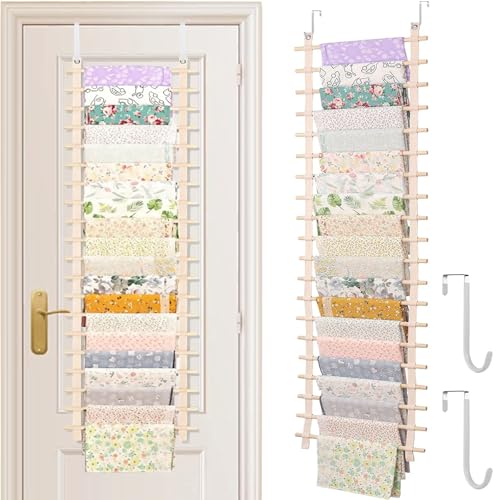
- 20 shelves for large fabric stashes
- Door- or wall-mounted vertical design
- Visible storage helps protect textiles
Best For: Large sewing collections needing maximum vertical capacity
Balanced Storage Pick

- 15 shelves for fabric and notions
- Moderate height for flexible placement
- Wall- or door-mounted space saver
Best For: Everyday sewing rooms needing balanced capacity
Compact Organizer
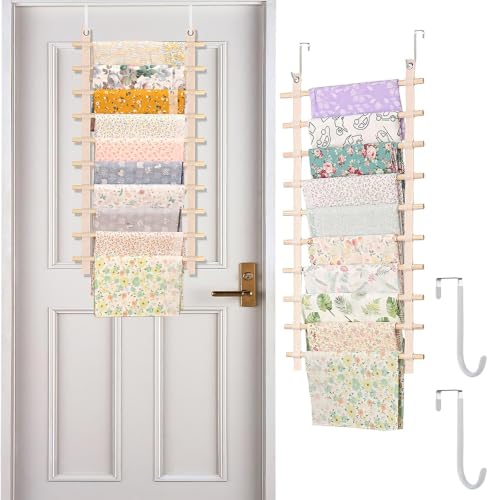
- 10 shelves in a compact vertical design
- Useful for fabric and sewing notions
- Mounts on a door or wall
Best For: Small sewing rooms and lighter fabric collections
Commercial Roll Storage – 8-Roll Movable Fabric Rack
For sewing rooms handling bolts, upholstery materials, or other large rolls, this commercial rack offers high-capacity fabric storage with a sturdy, movable design. Its four-tier, double-sided layout holds up to eight rolls, while adjustable rods accommodate different roll diameters.
Best For: Sewing rooms, curtain studios, fabric retailers, and other workspaces storing large or heavy rolls.
Pros:
- Heavy-duty steel frame has a stated 660-pound capacity.
- Adjustable, detachable rods fit rolls of varying diameters.
- Four swivel casters, including two lockable wheels, support mobility and stability.
- Enamel finish is designed to resist water and rust and is easy to clean.
Cons:
- At 74 inches wide and 67 inches high, it requires substantial floor space.
- The 68-pound frame is less convenient to move when fully loaded.
- Assembly is required.
This is the strongest choice here for organizing full-size fabric rolls rather than folded yardage. Choose it when capacity, adjustability, and rolling access matter more than a compact footprint.
Flexible Garment Storage – V1 Four-Tier Wire Rack
If your sewing room stores fabric alongside clothing, lining, bedding, or accessories, this freestanding wire rack provides versatile vertical organization. It combines four adjustable tiers with a hanging rod and can support up to 500 pounds overall.
Best For: Sewing rooms that need general-purpose storage for fabric-related supplies, garments, bedding, and accessories.
Pros:
- Four tiers provide room for folded items, shoes, boxes, or supplies.
- Hanging rod supports up to 90 pounds for garments and other hanging items.
- Adjustable shelf heights use a slip-sleeve system in one-inch increments.
- Powder-coated iron construction is designed for durability and scratch resistance.
Cons:
- It is a general garment rack rather than a dedicated roll-fabric holder.
- Assembly requires following the shelf installation order carefully.
- Its 35.4-inch width may provide less capacity for bulky fabric than a commercial roll rack.
This rack is a practical middle ground for sewing rooms needing flexible fabric storage plus garment hanging. It works best for folded materials and related items, not large bolts that need horizontal roll support.
Door-Mounted Fabric Storage – 20-Layer Hanging Organizer
For compact sewing rooms, this hanging organizer turns a door or wall into vertical fabric storage without taking up floor space. It provides 20 layers with 3.5-inch spacing and uses a swing-arm design to make individual fabrics easier to identify.
Best For: Small sewing and quilting rooms storing folded fabric, clothing, and other lightweight items vertically.
Pros:
- Twenty layers maximize vertical storage in a narrow footprint.
- Includes both over-the-door hooks and wall hooks for flexible installation.
- Swing-arm design helps with visibility and access.
- Hanging fabric can reduce wrinkles compared with folding.
Cons:
- The organizer is only 0.1 inch wide according to the listed dimensions, so door and wall clearance should be checked carefully.
- It is intended for hanging storage rather than heavy fabric rolls.
- Installation depends on a suitable 16.5-inch-wide door or wall area.
This is the most space-conscious option for fabric collections in a compact craft area. It suits folded or lightweight materials that benefit from visibility, while heavier supplies may be better placed on a freestanding rack.
Modular Basket Storage – 6-Tier Stackable Metal Baskets
When fabric storage for sewing rooms includes notions, garments, towels, and small supplies, this six-basket system adds flexible organization. The stackable metal-mesh baskets can hang from a rod or rack, stand on a shelf or floor, and fold flat when not in use.
Best For: Sewing rooms needing modular bins for folded fabric, accessories, notions, and miscellaneous supplies.
Pros:
- Six stackable baskets can be used together or separately.
- Each basket supports up to 22 pounds.
- Four heavy-duty hooks fit rods up to 1.65 inches, with extra S-hooks for accessories.
- Foldable metal-mesh construction is breathable and easy to wipe clean.
Cons:
- Basket dimensions are better suited to folded items than fabric bolts or rolls.
- Each individual basket has a 22-pound capacity.
- Assembly and hardware installation are required.
This organizer is useful when a sewing room needs adaptable compartments rather than open shelves. Its baskets make small fabric cuts and accessories easier to separate, while the fold-flat design helps when storage needs change.
Space-Saving Pick – Hanging Wall Fabric Organizer
For sewing rooms short on space, this hanging organizer is a practical option among fabric storage racks for sewing rooms. Its 20 layers provide a compact way to keep 1- to 2-yard fabric pieces visible and accessible, while the swing-arm design helps you identify materials quickly.
Best For: Sewists who need door- or wall-mounted storage for smaller fabric cuts and want to reduce folding-related wrinkles.
Pros:
- Offers 20 storage layers in a compact 13.8-inch-wide design.
- Includes two wall hooks and two over-the-door hooks for flexible installation.
- Hanging storage can help reduce wrinkles, pilling, and fading compared with folding.
- Can also organize clothing, socks, and other lightweight items.
Cons:
- The 1.6-inch layer spacing is primarily suited to 1- to 2-yard fabric pieces.
- It requires a suitable door, wall, or closet mounting location.
This is a strong choice when vertical organization matters more than large-capacity storage. Check the dimensions and mounting surface before buying, especially if your fabric collection includes bulky bolts or large yardage.
Tool Organization Pick – 12-Slot Quilting Ruler Holder
Storage Rack for Quilting Rulers, 12 Slot Ruler Holder Organizer and Storage (1-Pack)
Check Price On AmazonAlthough it is designed for rulers rather than fabric, this compact holder complements fabric storage racks for sewing rooms by keeping measuring and cutting tools organized. Twelve narrow slots hold quilting rulers upright, making frequently used tools easier to reach and helping protect them from scratches and warping.
Best For: Quilters and sewists who need a small, dedicated organizer for rulers, templates, and other flat measuring tools.
Pros:
- Provides 12 slots in a compact 6-by-6-inch footprint.
- Smooth, sturdy plastic helps protect rulers from scratches.
- Supports multiple ruler and template styles, including cutting and squared rulers.
- Slots are designed for rulers approximately 1/8 inch thick.
Cons:
- It does not store fabric or larger bulky supplies.
- The narrow 0.15-inch slots may not fit substantially thicker tools.
This holder is best viewed as a companion organizer for a sewing workstation rather than a fabric rack. Its small footprint makes it useful when keeping rulers upright and close at hand is the main priority.
Heavy-Duty Pick – Wheeled Textile Roll Storage Rack
For studios handling fabric rolls, samples, or display materials, this wheeled rack offers a larger-scale alternative among fabric storage racks for sewing rooms. Its steel frame, adjustable shelving, multiple hanging rods, and double-sided layout are suited to substantial collections, while four spinner wheels make repositioning easier.
Best For: Fashion studios, professional sewing rooms, showrooms, and retail spaces that need mobile storage for rolls, textiles, scarves, or samples.
Pros:
- Heavy-duty steel frame with a scratch-resistant painted finish.
- Adjustable side shelves and removable or addable hanging rods support flexible layouts.
- Double-sided design provides substantial capacity for textile organization and display.
- Four 360-degree spinner wheels support movement and repositioning.
Cons:
- Its approximately 39.37-by-39.37-by-70.87-inch dimensions require significant floor space.
- At about 16 kilograms, it is much less suited to lightweight home storage than compact organizers.
- The freestanding rack may be more capacity than a small sewing room needs.
This rack makes the most sense when fabric storage is a central studio function and mobility matters. Measure doorways and available floor space carefully, since its commercial-scale footprint is a defining feature.
Tall Vertical Organizer – 67-Inch Fabric Storage Rack
For sewing rooms with substantial fabric stashes, this 67-inch fabric storage rack for sewing rooms uses vertical wall or door space instead of valuable shelves and drawers. Its 20 shelves keep fabric, patterns, yarn, and notions visible and organized.
Best For: Large sewing collections and rooms with plenty of unused vertical space.
Pros:
- Offers 20 shelves for fabric and other craft supplies.
- Mounts to a door or wall to conserve floor and shelf space.
- Keeps contents visible and helps shield textiles from dust and damage.
Cons:
- Its 67-inch height requires sufficient vertical clearance.
- The 16.5-inch minimum door width may limit installation options.
This is the largest option in the group, making it a practical choice when maximum capacity matters more than a compact footprint. Measure your wall or door before installing.
Balanced Storage Pick – 50-Inch Fabric Organizer
This 50-inch fabric storage rack for sewing rooms offers a middle ground between capacity and height. The door- or wall-mounted organizer provides 15 shelves for fabric, sewing notions, patterns, yarn, and other craft supplies while freeing shelf and drawer space.
Best For: Everyday sewing rooms that need substantial organization without the full height of a tall rack.
Pros:
- Includes 15 shelves for organizing a broad range of supplies.
- Uses unused vertical space on a door or wall.
- Provides quick visibility and individual access to stored items.
Cons:
- Requires a mounting area at least 16.5 inches wide.
- Its 50-inch height still needs adequate vertical clearance.
With a useful shelf count and moderate height, this version is a versatile option for many sewing spaces. Confirm the installation dimensions and wipe it with a dry cloth for care.
Compact Organizer – 33.5-Inch Fabric Storage Rack
For smaller sewing rooms or lighter stashes, this 33.5-inch fabric storage rack for sewing rooms adds organized storage without taking up floor space. Its 10 shelves are designed for fabric, patterns, yarn, notions, and other craft supplies on a wall or door.
Best For: Compact craft areas, limited collections, and adding a smaller storage zone.
Pros:
- Compact 33.5-inch height fits more easily in smaller spaces.
- Provides 10 dedicated shelves for visible organization.
- Mounts vertically to free shelf and drawer space.
Cons:
- Has less capacity than the 50- and 67-inch versions.
- Still requires a mounting area at least 16.5 inches wide.
This is the most space-conscious choice in the lineup. Choose it when you want accessible fabric organization but do not need the capacity of a full-height rack.
How We Picked the Best Fabric Storage Racks for Sewing Rooms
We focused on storage solutions that address common sewing-room needs: holding fabric rolls or folded yardage, using vertical space, keeping supplies visible, and fitting into dedicated craft areas. The selection includes freestanding, wheeled, hanging, wall-mounted, door-mounted, and specialized storage designs.
We also considered capacity, accessibility, adjustability, portability, installation requirements, and how well each format suits quilting, apparel sewing, or general fabric crafting. Since room layouts vary, no single rack is ideal for every maker.
Quick Comparison
| Storage type | Best for | Main advantage | Potential limitation |
|---|---|---|---|
| Rolling fabric rack | Bolts and large rolls | High capacity and mobility | Requires floor space |
| Garment rack | Mixed sewing supplies | Flexible shelves and hanging space | May need bins for small pieces |
| Hanging organizer | Folded fabric and lightweight materials | Uses doors, walls, or closets | Limited weight capacity |
| Ruler holder | Quilting rulers | Keeps long tools upright and accessible | Designed for a specific item category |
Key Buying Factors for Fabric Storage Racks for Sewing Rooms
Capacity and Fabric Format
Measure the width, depth, and height of your available space before buying. Roll-storage racks work best for bolts and large material rolls, while cubbies or hanging shelves are better for folded fat quarters, remnants, and pre-cuts. Leave enough clearance to remove fabric without disturbing nearby supplies.
Placement and Installation
Freestanding racks are easier to reposition, but they occupy floor area. Wall, door, and closet organizers preserve floor space yet may require suitable hardware or a strong mounting surface. Check door clearance, wall construction, and the organizer’s loaded weight before installation.
Stability and Access
Look for a sturdy frame, secure shelves, and a stable base. Wheels are useful when you regularly rearrange a workroom, but locking casters are preferable. Open designs improve visibility; enclosed bins offer better protection from dust and sunlight.
Adjustability and Room to Grow
Adjustable rods, shelves, or tiers let the rack accommodate changing fabric sizes. If your collection is expanding, choose a design with extra capacity rather than one that will be filled immediately.
Who Should Buy Which Fabric Storage Racks for Sewing Rooms?
Choose a rolling commercial-style rack if you store fabric bolts, vinyl, or other large rolls and need to move them around the room. A freestanding garment rack is a better all-purpose choice for makers who want a combination of shelves and hanging space.
Hanging wall, door, and closet organizers suit small sewing rooms, renters, and anyone trying to use vertical space without adding bulky furniture. Select the size based on available clearance and the amount of folded fabric you regularly access. Quilters with many long rulers should add a dedicated ruler holder rather than leaning tools against a wall.
For the best result, group fabric by project, material, or color and label containers or shelves. Keep frequently used yardage at eye level, reserve upper sections for seasonal or less-used supplies, and avoid overloading any rack beyond its stated capacity.