The best benchtop belt sanders make fast work of edge shaping, surface smoothing, deburring, and detail sanding without taking up the space of a full-size floor machine. The right model depends on your projects, available bench space, and whether you primarily sand wood, metal, or both.
We selected 10 noteworthy options ranging from compact 1 x 30-inch combination sanders to powerful 6 x 48-inch machines. This roundup highlights belt and disc sizes, motor performance, worktable adjustability, dust collection, and the features that matter most in a busy workshop.
Best 10 Benchtop Belt Sanders Picks for 2026
Best All-Around Value
WEN 4 x 36-Inch Belt and 6-Inch Disc Sander
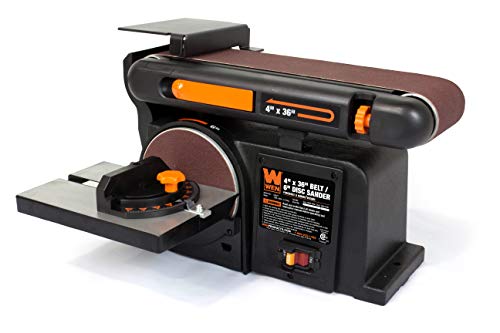
- Combines belt and disc sanding
- Tilting belt supports angled work
- Cast iron base reduces vibration
Best For: Versatile DIY and general workshop sanding
Best Combo for Metalwork
BUCKTOOL 2 x 42-Inch Belt Sander and Grinder
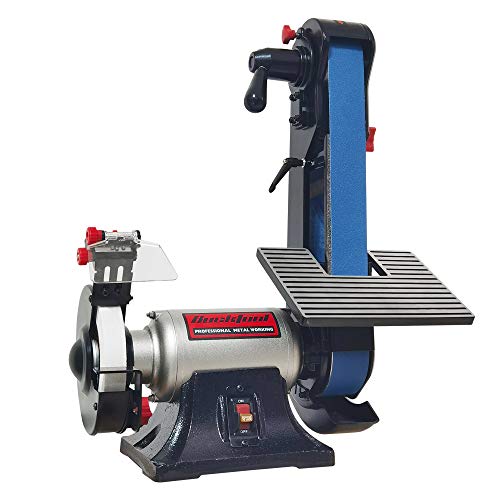
- Combines sanding and grinding
- Swivels from horizontal to vertical
- Includes quick belt changes and LED light
Best For: Metalworking, knife sharpening, and mixed workshop tasks
Best for Power and Capacity
DEWALT 4 x 36-Inch Belt and 8-Inch Disc Sander

- Powered by a 7-amp motor
- Uses a large 8-inch sanding disc
- Tables tilt up to 45 degrees
Best For: Demanding sanding and beveling applications
Best for Knife Making
BUCKTOOL 2 x 48-Inch Heavy-Duty Belt Sander

- 1 HP motor runs at 4500 FPM
- Supports flat and curved sanding
- Built for knife making and metalwork
Best For: Heavy-duty knife making, metal shaping, and polishing
Compact Starter Pick
WEN 1 x 30 in. Belt and 5 in. Disc Sander
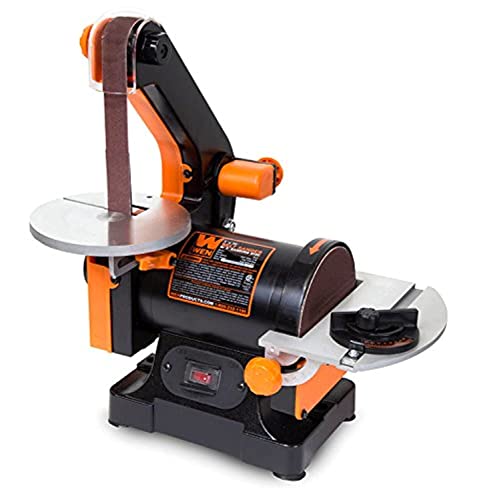
- Two-in-one 1-by-30-inch belt and 5-inch disc
- 2.3A motor with up to 3,160 FPM belt speed
- Stable base and dual dust ports
Best For: Compact home workshops and light-duty sanding
Adjustability Pick
4 x 36 in. Belt and 6 in. Disc Sander

- Larger 4-by-36-inch belt and 6-inch disc
- Belt adjusts from horizontal to vertical
- 4.3A motor and dual dust exhaust ports
Best For: Flexible shaping and contour sanding
Precision Compact Pick
Rikon 1 x 30 in. Belt and 5 in. Disc Sander

- Compact belt-and-disc design for small projects
- Cast-metal frame with tilting aluminum tables
- Quick-release belt lever and dual dust ports
Best For: Crafts, repairs, and detailed light-duty sanding
Versatile Workshop Pick
VEVOR 4 x 36 in. Belt & 8 in. Disc Sander

- 5A enclosed induction motor
- 0–90° belt and 0–45° table adjustment
- Belt-and-disc combination with dust port
Best For: DIYers needing flexible belt and disc sanding
Heavy-Duty Shop Choice
JET 6 x 48 in. Belt & 12 in. Disc Sander

- 1-1/2 HP motor for demanding sanding
- Large 6 x 48 in. belt and 12 in. disc
- 215-pound build with 4-inch dust port
Best For: Workshops handling larger, tougher sanding jobs
Compact DIY Option
VEVOR 4 x 36 in. Belt & 6 in. Disc Sander
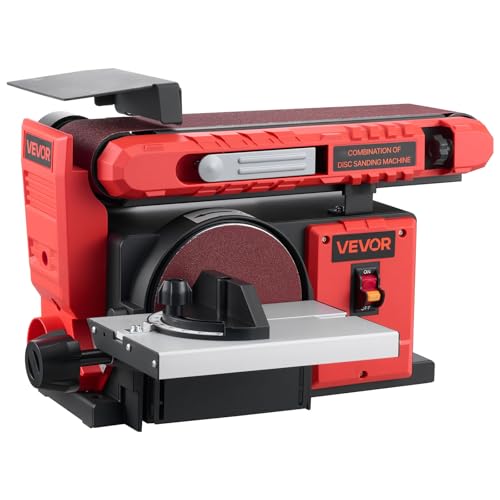
- 400W motor with 4 x 36 in. belt
- 0–90° belt and 0–45° table adjustment
- Compact 33.7-pound design with dust port
Best For: Home workshops, crafts, and knife sharpening
Best All-Around Value – WEN 4 x 36-Inch Belt and 6-Inch Disc Sander
WEN Benchtop Belt and Disc Sander with 4 x 36 in. Belt, 6 in. Disc and Cast Iron Base (6502T)
Check Price On AmazonThe WEN 6502T is a practical choice among benchtop belt sanders when you want two sanding functions in one machine. Its 4-by-36-inch belt and 6-inch disc handle general sanding tasks, while the cast iron base helps limit vibration during use.
Best For: Woodworkers and DIY users who want versatile belt and disc sanding in one corded benchtop tool.
Pros:
- Combines a 4-by-36-inch belt with a 6-inch disc.
- Belt tilts from 0 to 90 degrees for angled sanding.
- Cast iron base helps prevent heavy vibrations.
- Tension release lever simplifies grit changes.
Cons:
- Uses a comparatively modest 4.3-amp motor.
- The included disc is smaller than the 8-inch disc on some alternatives.
With a 3600 RPM motor and straightforward belt-change system, the 6502T is a balanced option for routine workshop sanding where flexibility matters more than specialized heavy-duty capacity.
Best Combo for Metalwork – BUCKTOOL 2 x 42-Inch Belt Sander and Grinder
This BUCKTOOL combination unit is one of the more task-focused benchtop belt sanders for users who also need grinding capability. The 2-by-42-inch belt supports sanding and finishing across metal, wood, and plastics, while the 6-inch grinding wheel adds sharpening and grinding utility.
Best For: Metalworking, knife sharpening, and workshops that need a belt sander and bench grinder together.
Pros:
- Includes a 2-by-42-inch sanding belt and 6-inch grinding wheel.
- Belt housing swivels from horizontal to vertical.
- Quick-release tension and tracking mechanism speeds belt changes.
- Two worktables support different sanding materials and tasks.
Cons:
- The 3.5-amp motor is less powerful than the 7-amp models listed here.
- It is a taller combination machine at 24.53 inches high.
The 4480 FPM belt speed, LED light, and adjustable eye shield make this a versatile station for sharpening and material finishing, especially where a dedicated grinder would otherwise take up additional bench space.
Best for Power and Capacity – DEWALT 4 x 36-Inch Belt and 8-Inch Disc Sander
The DEWALT DXBD4801 is a strong option among benchtop belt sanders for buyers prioritizing motor output and a larger disc. Its 7-amp motor drives a 4-by-36-inch belt and 8-inch disc, while separate adjustable tables support more controlled sanding and bevel work.
Best For: Demanding general sanding applications that benefit from a powerful motor and larger disc surface.
Pros:
- 7-amp motor provides consistent power under demanding use.
- Combines a 4-by-36-inch belt with a large 8-inch disc.
- Separate die-cast aluminum tables provide stable work support.
- Tables tilt up to 45 degrees for angled and bevel sanding.
Cons:
- The notes do not specify the belt speed or maximum RPM.
- Its 7-amp motor may be more capacity than occasional users need.
A 2-1/2-inch dust port with an adjustable control knob can help keep the workspace clearer when connected to suitable dust collection. Overall, this model emphasizes power, table adjustability, and disc capacity.
Best for Knife Making – BUCKTOOL 2 x 48-Inch Heavy-Duty Belt Sander
For specialized benchtop belt sanders, this BUCKTOOL model is designed around high-speed material removal and knife-making work. Its 1 HP induction motor runs the 2-by-48-inch belt at 4500 FPM, and the dual-wheel setup supports both flat and curved sanding.
Best For: Knife making, metal fabrication, polishing, and other heavy-duty shaping tasks.
Pros:
- 1 HP induction motor delivers 4500 FPM belt speed.
- Dual wheels support flat and curved sanding.
- Large cast iron worktable provides stable workpiece support.
- Quick-release tension handle and tracking knob simplify setup.
Cons:
- Its specialized 2-by-48-inch format may be excessive for light general sanding.
- The supplied notes describe a single belt-sanding function rather than a disc-sanding attachment.
The cast iron platen, graphite board, and sturdy construction are aimed at consistent performance during extended shaping and finishing. This is the most purpose-built choice in the group for users who need speed and control on metal projects.
Compact Starter Pick – WEN 1 x 30 in. Belt and 5 in. Disc Sander
WEN Benchtop Belt and Disc Sander with 1 x 30 in. Belt and 5 in. Sanding Disc (6515T)
Check Price On AmazonThe WEN 6515T is a practical choice for shoppers comparing benchtop belt sanders for smaller woodworking and workshop tasks. Its combined 1-by-30-inch belt and 5-inch disc provide two sanding surfaces, while the 2.3A motor delivers up to 3,160 FPM on the belt and 3,450 RPM on the disc.
Best For: Home workshops and light-duty projects that benefit from a compact belt-and-disc setup.
Pros:
- Combines a 1-by-30-inch belt and 5-inch disc in one machine.
- Heavy-duty base helps limit walking and wobbling during operation.
- Includes dual dust ports, a miter gauge, sanding media, and a 2-year warranty.
Cons:
- The 1-by-30-inch belt and 5-inch disc offer less working area than larger combination sanders.
- Its 2.3A motor is geared toward smaller tasks rather than demanding stock removal.
Choose this model if compact dimensions and included accessories matter more than maximum sanding capacity. The dual dust ports and stable base add useful workshop convenience.
Adjustability Pick – 4 x 36 in. Belt and 6 in. Disc Sander
This 4.3A combination machine stands out among benchtop belt sanders for its larger 4-by-36-inch belt, 6-inch disc, and adjustable working positions. The belt tilts from horizontal to vertical, while the work table adjusts from 0 to 45 degrees for varied sanding and shaping tasks.
Best For: Woodworkers who want a larger sanding surface and flexible belt positioning for shaping and contour work.
Pros:
- Includes a 4-by-36-inch belt and 6-inch disc for a larger sanding area.
- Adjustable belt position moves from 0 to 90 degrees.
- Features a 4.3A, 3/4 HP motor, dual dust exhaust, a miter gauge, and a 2-year warranty.
Cons:
- At 25 pounds, it is less portable than smaller benchtop models.
- The supplied specifications list a 36-grit sanding belt, which may require additional media for finer finishing.
- Its larger footprint requires more bench space.
This is a strong option when adjustability and sanding capacity take priority. Its tilting belt, angled table, and separate dust exhausts make it particularly versatile for shaping and contour sanding.
Precision Compact Pick – Rikon 1 x 30 in. Belt and 5 in. Disc Sander
The Rikon 50-1305 is a compact option for shoppers seeking benchtop belt sanders for crafts, repairs, and small precision projects. It combines a 1-by-30-inch belt with a 5-inch disc, uses a 2.3A induction motor, and adds cast-metal construction for a stable working platform.
Best For: Small projects such as furniture repair, model building, jewelry making, toys, and home crafts.
Pros:
- Compact belt-and-disc design suits small workshops and detailed projects.
- Cast-metal frame and base with tilting aluminum tables support stable angle sanding.
- Quick-release belt tension lever simplifies belt changes and dual dust ports support cleanup.
Cons:
- The 1-by-30-inch belt and 5-inch disc are suited to smaller workpieces.
- The 1/3 HP, 2.3A motor is intended for light-duty sanding rather than heavy stock removal.
- The supplied package includes only a 100-grit belt and 80-grit disc, limiting the initial grit range.
Consider the Rikon when controlled, compact sanding is more important than high throughput. Its cast-metal build, tilting tables, and tool-free belt release give it a useful precision-oriented feature set.
Versatile Workshop Pick – VEVOR 4 x 36 in. Belt & 8 in. Disc Sander
For shoppers comparing benchtop belt sanders, this VEVOR combination unit offers both a 4 x 36-inch belt and an 8-inch disc in one machine. Its 5A enclosed induction motor, adjustable belt angle, and cast-aluminum worktable suit a range of woodworking and light metalworking tasks.
Best For: DIYers and small workshops that want belt and disc sanding in one relatively compact machine.
Pros:
- Combines belt and disc sanding for added flexibility.
- 5A induction motor is designed for quieter, durable operation.
- Belt tilts from 0 to 90 degrees, while the worktable tilts from 0 to 45 degrees.
- Steel plate base, rubber pads, and a dust collection port support stable, cleaner sanding.
Cons:
- At 36.3 pounds, it is not a lightweight benchtop tool.
- The included 120-grit abrasive setup may not suit every initial application.
This is a practical choice when versatility matters more than having a dedicated belt-only sander. The adjustable belt and table make it easier to work across different angles, while the dual-sander format helps conserve bench space.
Heavy-Duty Shop Choice – JET 6 x 48 in. Belt & 12 in. Disc Sander
Among benchtop belt sanders, the JET JSG-6DC stands out as a substantially heavier-duty combination machine. It pairs a 6 x 48-inch belt with a 12-inch disc and a 1-1/2 HP motor for demanding sanding operations.
Best For: Workshops that need a large-capacity belt-and-disc sander and have room for a 215-pound machine.
Pros:
- Powerful 1-1/2 HP motor is specified for tough sanding operations.
- Large 6 x 48-inch belt and 12-inch disc provide generous sanding surfaces.
- Includes a miter gauge, back stop, and 60-grit belt and disc.
- Features a 4-inch dust port and a five-year warranty listing.
Cons:
- Its 215-pound weight makes it far less portable than compact benchtop models.
- The stand is sold separately.
- Its 35 x 22 x 34.5-inch footprint requires substantial shop space.
The JET is aimed at buyers who prioritize capacity and motor power over portability. Confirm available floor or bench space and plan for a suitable stand before choosing this large-format unit.
Compact DIY Option – VEVOR 4 x 36 in. Belt & 6 in. Disc Sander
This compact VEVOR is a practical entry in the benchtop belt sanders category for home workshops and DIY projects. Its 400W motor drives a 4 x 36-inch belt and 6-inch disc, while the adjustable table and miter gauge support angled, controlled sanding.
Best For: Home woodworkers, craft users, and knife-sharpening projects where a space-saving belt-and-disc combo is useful.
Pros:
- Compact 19.9 x 15.7 x 12-inch design weighs 33.7 pounds.
- Belt adjusts from 0 to 90 degrees for horizontal or vertical sanding.
- Disc worktable tilts from 0 to 45 degrees and includes a miter gauge.
- Dust collection port supports connection to a vacuum.
Cons:
- The 400W, 3.3A motor is less powerful on paper than the JET’s 1-1/2 HP motor.
- The included 60-grit abrasive may be too coarse for some finishing tasks.
- The 6-inch disc offers less surface area than the larger disc on the other VEVOR model.
This model makes sense when bench space and manageable weight are important. It provides useful belt and disc versatility for general DIY work, though heavier production sanding may call for a more powerful machine.
How We Picked the Best Benchtop Belt Sanders
We compared these Benchtop Belt Sanders by looking at the specifications most likely to affect real workshop performance: belt dimensions, disc size, motor output, belt speed, table design, footprint, construction, adjustment options, and intended material. Combination machines received additional consideration because they can handle both straight-edge work and curved or end-grain sanding.
We also separated compact hobbyist tools from larger, higher-capacity machines. A small sander can be convenient for occasional woodworking, while a wider belt, stronger motor, and heavier base are more useful for frequent shaping or metalworking.
Quick Comparison
| Best For | What to Look For |
|---|---|
| Small woodworking projects | 1 x 30-inch or 4 x 36-inch belt, compact footprint, adjustable table |
| General-purpose workshop use | Combination belt-and-disc design, sturdy base, reliable dust port |
| Knife making and metalwork | High belt speed, stronger motor, durable platen, suitable abrasive belts |
| Heavy-duty production | Large belt, induction motor, rigid cast construction, ample work surface |
Key Buying Factors for Benchtop Belt Sanders
Belt and Disc Size
Larger belts cover more surface area and stay cooler during extended sanding, but they require more bench space. A 1 x 30-inch belt is easier to control for small parts, while 4 x 36-inch and 2 x 48-inch formats offer more versatility. Disc sanders are useful for end grain, curves, and precise angle work.
Motor Power and Belt Speed
Motor ratings are useful comparisons, but they do not tell the whole story. Look for a machine with enough power to maintain speed under pressure. Woodworkers often value smooth, controllable operation; metalworkers and knife makers may prefer higher belt speeds and motors designed for longer workloads.
Tables, Angles, and Tracking
A rigid, adjustable table helps produce consistent bevels and clean edges. Check the available tilt range, miter-gauge support, platen design, and belt-tracking adjustment. Easy tracking controls reduce setup time and help prevent uneven abrasive wear.
Dust Collection and Stability
Sanding creates substantial dust, so a usable dust port or collection system is important for shop cleanliness and visibility. A heavy cast-iron or cast-aluminum base also reduces vibration, especially when applying pressure to larger workpieces.
Who Should Buy Which Benchtop Belt Sanders?
Choose a compact 1 x 30-inch model if you have limited space or mainly sand small wooden parts. A 4 x 36-inch belt-and-disc machine is the most practical all-around choice for many home workshops because it balances capacity, versatility, and price. If knife making or metalworking is the priority, focus on a machine with a powerful motor, fast belt speed, and a durable work surface. For demanding production work, a larger 6 x 48-inch unit is worth considering if you have the room and electrical capacity.
Before buying, confirm the machine’s voltage, abrasive availability, dust-port size, bench-mounting requirements, and replacement-belt cost. The best Benchtop Belt Sanders are not necessarily the largest; they are the ones whose capacity, controls, and construction match the work you do most often.