Long coding sessions demand more than a padded seat. The best ergonomic office chair for programmers supports your lower back, keeps your arms aligned with your desk, and makes it easier to maintain a comfortable posture through hours of focused work.
These 10 picks cover a range of budgets, body types, and workstation preferences, including breathable mesh designs, adjustable seat-depth models, reclining chairs, and options with footrests. Use the guide below to narrow the list to the chair that best fits your setup.
Best 10 Ergonomic Office Chair for Programmers Picks for 2026
Best Overall
SIHOO M57 Ergonomic Office Chair

- Adjustable headrest and lumbar support
- 90°–126° recline with quiet casters
- 330-pound capacity and 3-year warranty
Best For: Programmers wanting extensive adjustments and sturdy support
Best for Seat-Depth Fit
ProtoArc EC200 Ergonomic Office Chair

- Five-position sliding seat-depth adjustment
- Adjustable lumbar, mesh back, and 3D headrest
- Four recline locks for work and relaxation
Best For: Users needing a tailored fit in a compact home-office chair
Best for Adjustability

- 14 customizable adjustment points
- 5D armrests and two-way lumbar cushion
- Forward tilt with smooth reclining
Best For: Users who want detailed control over their sitting position
Best for Long Sessions
Hbada E3 Air Ergonomic Office Chair
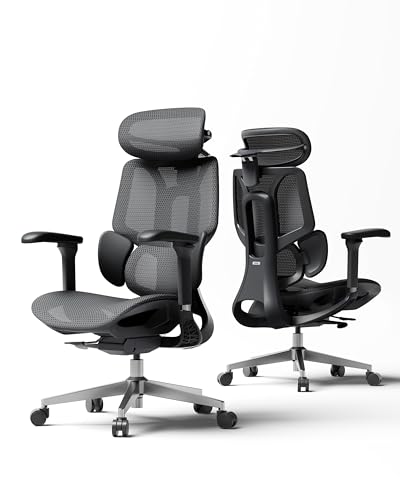
- Three-zone elastic lumbar support
- 4D headrest and armrest adjustments
- Weight-sensing recline and 300-pound capacity
Best For: Programmers working extended hours who want full-body adjustability
Best for Easy Setup
Marsail Mesh Ergonomic Office Chair

- Six-level lumbar support and sliding seat depth
- 6D armrests with broad positioning options
- Breathable mesh seat with four-position recline
Best For: Programmers seeking highly adjustable support for long work sessions
Best for Extended Sessions
ELABEST X100 Ergonomic Mesh Chair

- Dynamic 3D lumbar support with multiple adjustments
- 5D flip-up arms and an extendable footrest
- Breathable mesh and 300-pound capacity
Best For: Programmers who want work-to-relaxation versatility
Best Space-Saving Value

- 3.15-inch cushioned seat for daily support
- 90-degree flip-up arms save desk space
- Adjustable lumbar support and breathable mesh
Best For: Programmers furnishing compact workspaces
Best Reclining Support

- Two-way adjustable lumbar support
- 135° recline with retractable footrest
- 3D arms, headrest, and 300-lb capacity
Best For: Programmers wanting work-to-rest flexibility
Best Weight Capacity
Marsail Adjustable Mesh Office Chair

- 330-lb maximum weight recommendation
- Adjustable lumbar and 3D armrests
- Foam seat with breathable mesh back
Best For: Programmers seeking a cushioned, highly adjustable seat
Best Space-Saving Footrest
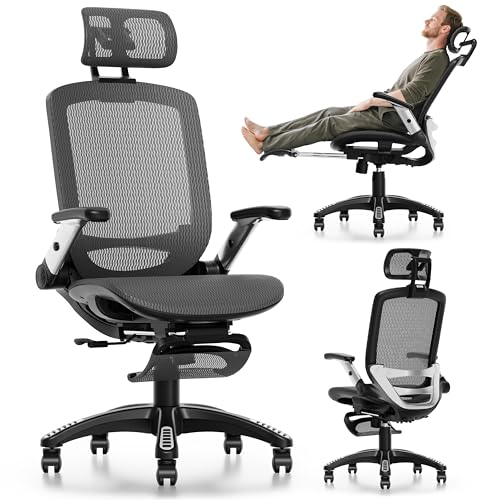
- 135° recline and retractable steel footrest
- Flip-up arms tuck under the desk
- Wide, breathable all-mesh design
Best For: Programmers needing relaxation features in a compact workspace
Best Overall – SIHOO M57 Ergonomic Office Chair
The SIHOO M57 is a strong ergonomic office chair for programmers who want broad adjustability for long coding sessions. Its adjustable headrest, height- and depth-adjustable lumbar support, reclining range, waterfall-edge seat, and quiet casters make it easy to change posture while working.
Best For: Programmers seeking a highly adjustable chair with a 330-pound capacity and quiet movement.
Pros:
- Headrest, lumbar support, recline, height, and swivel adjustments support varied sitting positions.
- Split backrest and waterfall-edge seat are designed for spinal and thigh support.
- Reinforced aluminum base, BIFMA and SGS certifications, and a 3-year warranty add reassurance.
Cons:
- The chair requires assembly.
- Its feature-rich design may be more than users need for a basic desk setup.
Choose the M57 if you prioritize adjustability, stability, and a higher weight capacity. It is especially appealing for programmers who alternate between upright typing, reading, and reclining.
Best for Seat-Depth Fit – ProtoArc EC200 Ergonomic Office Chair
The ProtoArc EC200 stands out among ergonomic office chairs for programmers because its seat depth can be adjusted independently. Five depth positions and nearly 2 inches of travel help users keep their thighs supported while maintaining contact with the lumbar support during long work sessions.
Best For: Users between 5’4″ and 6’0″ and under 220 pounds who need a more tailored seat fit.
Pros:
- Five-position seat-depth adjustment helps accommodate different leg lengths.
- Adjustable lumbar support, mesh back, and 3D headrest provide three-point support.
- Four recline lock positions and tilt-tension control support work, reading, calls, and relaxation.
Cons:
- The stated body-size guidance limits its suitability for users outside the recommended range.
- It has a 220-pound maximum weight recommendation.
The EC200 is a practical choice when seat fit is a priority. Its focused adjustability and compact-space design suit remote workers and programmers who want support without an oversized chair.
Best for Adjustability – Branch Ergonomic Chair Pro
The Branch Ergonomic Chair Pro is a compelling ergonomic office chair for programmers who want fine control over their posture. With 14 adjustment points, a two-way lumbar cushion, 5D armrests, forward tilt, and smooth recline, it can be configured for typing, focused work, and posture changes throughout the day.
Best For: Programmers who want highly customizable arm, seat, tilt, and lumbar settings.
Pros:
- Fourteen adjustment points allow detailed personalization.
- 5D armrests adjust in height, width, depth, pivot, and pad position.
- High-density molded foam and a forward-tilting seat support active sitting.
Cons:
- The chair has a 275-pound maximum weight recommendation.
- Assembly is required.
The Chair Pro makes the most sense for users who are willing to spend time dialing in their setup. Its extensive armrest and seating adjustments are particularly useful for keyboard- and mouse-heavy programming work.
Best for Long Sessions – Hbada E3 Air Ergonomic Office Chair
The Hbada E3 Air is designed for programmers and office professionals who spend extended periods at a desk. Its three-zone elastic lumbar system, pressure-distributing CloudMesh construction, adjustable seat depth, 4D headrest and armrests, and weight-sensing recline provide support across different working postures.
Best For: Users seeking full-body adjustability and support for 8-plus-hour workdays.
Pros:
- Three-zone lumbar support is designed to fill the lower-back gap and support posture.
- Headrest, backrest, armrests, seat depth, and height are customizable.
- Automatic recline resistance adjusts to body weight, while the chair supports up to 300 pounds.
Cons:
- The supplied details do not specify a warranty length.
- Its extensive adjustment system may require setup time to optimize.
The E3 Air is a good fit for programmers who value comfort across a full workday rather than a simple task chair. Its lumbar design and automatic recline make it particularly suited to alternating between focused work and relaxed postures.
Best for Easy Setup – Marsail Mesh Ergonomic Office Chair
For programmers who spend long sessions typing, the Marsail Mesh Ergonomic Office Chair offers a broad range of adjustments. Its six-level lumbar support, sliding seat depth, breathable mesh seat, and four-position recline make it a versatile ergonomic office chair for programmers working, studying, or gaming.
Best For: Programmers who want extensive posture and armrest adjustments for long workdays.
Pros:
- Six-level lumbar support and a 3D headrest help personalize back and neck support.
- 6D armrests adjust in multiple directions for typing, calls, drawing, or reclining.
- Sliding seat depth and a breathable, pressure-distributing mesh seat improve fit and airflow.
- Four recline positions range from upright 90-degree typing to a 121-degree break.
Cons:
- The many adjustment options may take time to configure.
- The supplied notes do not specify a maximum weight capacity.
This is the strongest all-around choice when precise fit matters. Programmers can fine-tune the seat, lumbar area, headrest, armrests, and recline rather than settling for a fixed workstation posture.
Best for Extended Sessions – ELABEST X100 Ergonomic Mesh Chair
The ELABEST X100 is designed for programmers who want a workstation chair that can also support breaks and relaxation. Dynamic lumbar tracking, a breathable mesh design, flip-up 5D arms, a footrest, and a 300-pound capacity make it a feature-rich ergonomic office chair for programmers.
Best For: Coders and professionals who want extensive adjustment, reclining, and footrest functionality.
Pros:
- Dynamic 3D lumbar support adjusts in depth, height, and rotation to follow spinal movement.
- 5D flip-up armrests offer flexible positioning and can tuck under a desk.
- Three-stage reclining pairs with an 18-inch extendable footrest for work and rest.
- Breathable Dual-Stripe AirMesh, BIFMA-certified construction, and support up to 300 pounds add practical appeal.
Cons:
- Its extensive features may be more than needed for a basic programming setup.
- The footrest and reclining design require additional space compared with a simple office chair.
The X100 stands out for users who alternate between focused coding and recovery breaks. It is especially appealing if a footrest, adaptable lumbar mechanism, and flexible arm positioning are priorities.
Best Space-Saving Value – Mid-Back Mesh Office Chair
For a straightforward desk setup, this mid-back model provides the core features many programmers need without a complex adjustment system. A 3.15-inch cushion, adjustable lumbar support, breathable mesh, and 90-degree flip-up arms make it a practical ergonomic office chair for programmers in compact home offices.
Best For: Programmers who need a simple, space-conscious chair with supportive cushioning.
Pros:
- Thick 3.15-inch seat cushion and wide seat help distribute weight during daily use.
- Flip-up armrests let the chair slide under a desk when not in use.
- Adjustable lumbar support and an S-curve backrest target lower-back alignment.
- Breathable mesh, a reinforced base, and a 300-pound capacity support practical everyday use.
Cons:
- The supplied specifications list only one reclining position.
- It offers fewer adjustment points than the other chairs in this roundup.
- Its mid-back design may provide less upper-body support than a high-back chair.
This chair is a sensible pick for programmers who value simplicity, cushioning, and easy storage. Choose it when a compact footprint and basic lumbar support matter more than advanced recline or armrest customization.
Best Reclining Support – GABRYLLY Chair with Footrest
If you need an ergonomic office chair for programmers that can shift from focused typing to relaxed breaks, this GABRYLLY model combines adjustable lumbar support, a reclining backrest, and a retractable footrest. Its all-mesh construction and large steel base are suited to extended desk sessions.
Best For: Programmers who want strong adjustability plus a built-in footrest for breaks or naps.
Pros:
- Two-way lumbar adjustment helps tailor lower-back support.
- Three recline positions range from 90° to 135°.
- 3D armrests, an adjustable headrest, and breathable mesh support long work sessions.
- 300-pound capacity and a large steel base provide added stability.
Cons:
- The chair is designed for users approximately 5’3″ to 6′ tall.
- The footrest and reclining design may require more space than a basic task chair.
Its combination of posture-focused adjustments and relaxation features makes it a versatile choice for coding, reading, and recovery between demanding work blocks.
Best Weight Capacity – Marsail Adjustable Mesh Office Chair
This Marsail chair is a practical ergonomic office chair for programmers who want detailed positioning adjustments without giving up a cushioned seat. Its adjustable lumbar system, 3D armrests, and breathable mesh back are designed for adaptable support through a full workday.
Best For: Programmers who prioritize a wide, foam-cushioned seat and a 330-pound weight capacity.
Pros:
- Lumbar support adjusts vertically and forward or backward.
- 90° to 120° recline supports multiple working postures.
- 3D armrests can move forward, backward, and swivel, then flip up.
- Breathable mesh back and a 3.14-inch foam seat combine airflow with cushioning.
Cons:
- Its maximum recline is 120°, less than some reclining models.
- Assembly is required.
With its high weight rating and broad range of armrest and lumbar adjustments, this model is especially appealing when seat comfort and fit matter more than a built-in footrest.
Best Space-Saving Footrest – GABRYLLY GYB01-FT Chair
For programmers who alternate between intense screen time and short recovery breaks, this ergonomic office chair for programmers offers a retractable footrest, 135° recline, and a wide all-mesh seat. Flip-up arms also make it easier to tuck the chair beneath a desk when floor space is limited.
Best For: Users who want a breathable chair with a footrest and space-saving flip-up arms.
Pros:
- Three recline settings run from 90° to 135°.
- Retractable steel footrest extends up to 18.1 inches.
- Flip-up arms support typing and help the chair slide under a desk.
- Wide mesh seat, 3D headrest, and tested 300-pound capacity support varied users.
Cons:
- The recommended user height range is approximately 5’2″ to 6’1″.
- It does not list a separately adjustable lumbar mechanism in the supplied specifications.
This is a strong fit for compact workspaces where you want reclining comfort without permanently sacrificing room beneath the desk.
How We Picked the Best Ergonomic Office Chair for Programmers
We focused on the adjustments that matter most during extended computer work: lumbar support, seat depth, armrest positioning, recline control, headrest design, and breathable materials. We also considered practical details such as weight capacity, base stability, caster mobility, assembly, and whether the chair can fit under a typical desk.
The selection includes chairs at different price points rather than assuming one design suits every programmer. A simple mid-back model may be ideal for a compact home office, while a taller user or someone who alternates between coding and reclining may benefit from a high-back chair with a footrest.
Quick Comparison
| What You Value | Look For | Best-Matched Options |
|---|---|---|
| Breathability | Mesh back and ventilated seat | SIHOO M57, Branch Ergonomic Chair Pro, Marsail Mesh |
| Fine-tuned positioning | Adjustable seat depth and multiple armrest settings | ProtoArc EC200, Branch Ergonomic Chair Pro |
| Reclining comfort | Deep tilt range, headrest, and footrest | Hbada E3 Air, ELABEST X100, reclining footrest models |
| Compact workspace | Flip-up arms and a moderate footprint | Mid-back flip-up-arm and Marsail models |
| Higher weight capacity | Wide cushion and reinforced base | Big-and-tall and heavy-duty mesh options |
Key Buying Factors for an Ergonomic Office Chair for Programmers
Lumbar and Back Support
Look for lumbar support that meets your lower back without forcing your spine into an unnatural curve. Adjustable height or depth is more useful than a fixed cushion because bodies and desk setups vary.
Seat Depth and Cushioning
Your back should rest against the backrest while leaving a small gap between the seat edge and the back of your knees. Sliding seat-depth adjustment is especially valuable for taller users. Choose cushioning that feels supportive rather than excessively soft, which can lose comfort during long sessions.
Armrests and Desk Alignment
Adjustable armrests help keep your shoulders relaxed while typing or using a mouse. 3D and 4D designs offer more positioning flexibility, but even height-adjustable arms can work well if they fit beneath your desk.
Recline, Headrest, and Footrest Features
A reclining mechanism can reduce static posture during reading, meetings, or breaks. Headrests and footrests are useful for relaxed viewing, but they should not interfere with your primary upright coding position or make the chair too large for your room.
Who Should Buy Which Ergonomic Office Chair for Programmers?
Choose a highly adjustable model if you spend most of the day programming and want precise control over seat depth, arms, lumbar support, and recline. Choose a breathable mesh chair if you work in a warm room or dislike the feel of traditional upholstery. Choose a footrest-equipped reclining chair if you regularly switch between focused work, video calls, reading, and relaxation. Choose flip-up arms or a mid-back design for a smaller office or a desk that needs flexible storage.
Before ordering, measure your desk height, available floor space, and the distance from the seat to your monitor. A chair with impressive adjustments is only ergonomic when it fits your body and workstation.