The right office chair can make long workdays more comfortable by supporting your lower back, encouraging better posture, and reducing pressure from prolonged sitting.
We selected 10 ergonomic office chairs with features such as adjustable lumbar support, breathable mesh, headrests, reclining backrests, and weight capacities for different users and budgets.
Best 10 Ergonomic Office Chair for Back Pain Picks for 2026
Balanced Support
SIHOO M18 Ergonomic Office Chair

- Adjustable lumbar, headrest, back support, and seat height
- Breathable mesh back with three-position recline
- 330-pound capacity and three-year warranty
Best For: Users seeking adjustable support and airflow for extended desk work
Heavy-Duty Adjustability
Fizzin Mesh Office Chair with Adjustable Lumbar
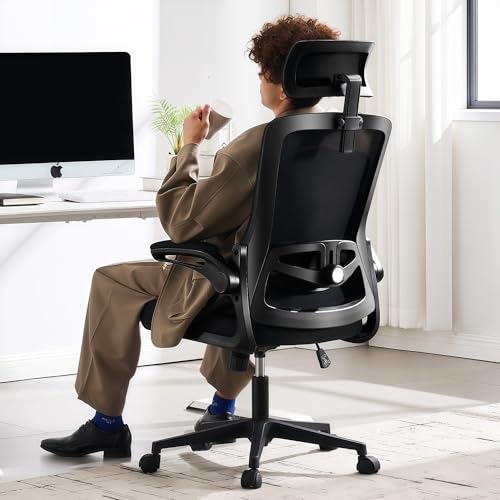
- 400-pound capacity for added stability
- Multi-directional lumbar and adjustable headrest
- 125-degree tilt with adjustable armrests
Best For: Users who want extensive adjustments and a higher weight capacity
Precision Lumbar Fit
Holludle V-Back Mesh Office Chair

- Five-direction 3D lumbar adjustment
- 3D armrests, 2D headrest, and three-level tilt lock
- BIFMA and EN1335 standards with five-year warranty
Best For: Users who need highly customizable lumbar and arm support
Lower-Back Focus
Ergonomic 4-Way Lumbar Office Chair

- Four-way lumbar support with adjustable headrest
- 3.5-inch foam cushion and breathable mesh back
- 330-pound capacity with five-year warranty
Best For: Users prioritizing lower-back adjustment and cushioned all-day comfort
Best Value Lumbar Support
TRALT Ergonomic Mesh Office Chair

- Depth-adjustable lumbar support
- High-resilience molded-foam seat
- 330-lb capacity with breathable mesh
Best For: Budget-focused home-office users wanting essential back support
Best Wide-Seat Pick
Nexthro Ergonomic Office Chair

- Wide 20.9-inch seat
- Lumbar adjusts forward/back and up/down
- 400-lb stated capacity
Best For: Users seeking roomy seating and flexible lumbar positioning
Best Fully Adjustable Design
High-Back Ergonomic Mesh Chair

- Eight-level micro-adjustable lumbar support
- Three-position reclining backrest
- Adjustable headrest and flip-up arms
Best For: Long-hour users who want extensive posture customization
Best Heavy-Duty Support

- Adjustable-angle and vertical lumbar support
- 400-pound maximum weight recommendation
- Thick foam seat with breathable mesh
Best For: Larger users needing durable support for long desk sessions
Best Adjustability
Marsail Ergonomic Office Chair

- Lumbar support moves up, down, forward, and backward
- 90–120-degree reclining backrest
- 3D armrests and adjustable headrest
Best For: Users who frequently change positions at their desk
Best for Reclining

- Five-level lumbar height adjustment
- 90–130-degree recline with tilt control
- Retractable footrest and 3D headrest
Best For: Workers, students, and gamers who want support with built-in relaxation features
Balanced Support – SIHOO M18 Ergonomic Office Chair
The SIHOO M18 is a practical ergonomic office chair for back pain concerns, combining adjustable lumbar and back support with a breathable mesh back. Its headrest, seat height, armrests, and recline settings can be adjusted to create a more personalized sitting position for home or office work.
Best For: Adults approximately 5’6″ to 6’2″ who want adjustable support and a breathable chair for extended desk sessions.
Pros:
- Adjustable lumbar support, headrest, seat height, and back support.
- Breathable mesh helps promote airflow during long sitting periods.
- Supports up to 330 pounds and includes a tilt lock with three recline positions.
- Includes a three-year warranty with replacement parts support.
Cons:
- The stated recommended height range may not suit users outside 5’6″ to 6’2″.
- Assembly is required, although the instructions describe an eight-step process.
The M18 stands out as a balanced option for shoppers who want core ergonomic adjustments without giving up breathable materials. Its height guidance and support configuration are worth checking before purchase.
Heavy-Duty Adjustability – Fizzin Mesh Office Chair with Adjustable Lumbar
The Fizzin mesh chair is a strong contender for an ergonomic office chair for back pain needs, with independently adjustable lumbar support and headrest positioning. Its higher weight capacity, adjustable armrests, and 125-degree tilt make it suitable for users who want flexible support while working or relaxing.
Best For: Adults approximately 5’4″ to 6’3″ who prioritize a high weight capacity and extensive adjustment options.
Pros:
- Adjustable lumbar support moves up, down, forward, and backward.
- Headrest adjusts vertically and by angle for customizable neck support.
- Supports up to 400 pounds and includes smooth casters for office or carpeted use.
- Adjustable armrests, 125-degree tilt, and 360-degree swivel add flexibility.
Cons:
- Only a one-year warranty is listed.
- Its numerous adjustment points may require time to dial in.
With the highest stated capacity in this roundup and unusually flexible lumbar adjustment, the Fizzin is worth considering when fit and load support are priorities. Verify the dimensions and adjustment range for your desk setup.
Precision Lumbar Fit – Holludle V-Back Mesh Office Chair
The Holludle V-Back is designed for shoppers comparing an ergonomic office chair for back pain, especially those who want precise lumbar positioning. Its 3D lumbar system adjusts in multiple directions, while the headrest, armrests, and three-level tilt lock support a customized working posture.
Best For: Users who want highly configurable lumbar support and armrest positioning in a modern mesh chair.
Pros:
- 3D lumbar support adjusts up, down, forward, backward, and by rotation.
- 2D headrest and 3D armrests provide additional positioning options.
- Three-level tilt lock supports working, gaming, and reclining positions.
- Meets stated BIFMA and EN1335 standards and includes a five-year warranty.
Cons:
- The 350-pound capacity stated in the item highlight may not suit every user.
- Assembly is required and may take approximately 20–30 minutes.
The V-Back’s main advantage is its unusually detailed lumbar adjustment, making it appealing when standard fixed support is not enough. Its white finish and V-shaped design also give it a more distinctive appearance than typical office chairs.
Lower-Back Focus – Ergonomic 4-Way Lumbar Office Chair
This ergonomic office chair for back pain concerns emphasizes lower-back support through four-way lumbar adjustment, a padded cushion, and a breathable mesh back. Its adjustable headrest, flip-up arms, rocking function, and tilt features make it a flexible choice for work, study, reading, and breaks.
Best For: Users seeking dedicated lower-back adjustment, a cushioned seat, and flexible arm positioning for long daily sessions.
Pros:
- Four-way lumbar support is designed to follow the spine’s natural curve.
- Includes a 3.5-inch foam cushion, breathable mesh back, and adjustable headrest.
- Flip-up armrests create extra space when raised.
- Supports up to 330 pounds and includes BIFMA-tested components, a five-year warranty, and 24/7 support.
Cons:
- The medium-size chair may not fit every body type or desk configuration.
- Its feature set is focused on office comfort rather than specialized medical support.
The chair is a sensible pick for buyers who specifically want four-way lumbar adjustment and a softer foam seat. Its rocking function and flip-up arms add useful flexibility, while the warranty provides additional ownership reassurance.
Best Value Lumbar Support – TRALT Ergonomic Mesh Office Chair
If you want an ergonomic office chair for back pain without paying for unnecessary extras, the TRALT focuses on core comfort features. Its depth-adjustable lumbar support, resilient molded-foam seat, and breathable mesh back are practical choices for long home-office work sessions.
Best For: Budget-conscious users who prioritize adjustable lower-back support, durable seating, and a cool mesh back over a headrest.
Pros:
- Adjustable lumbar mechanism changes depth to better match the spine’s natural curve.
- High-resilience molded foam seat is designed to resist flattening and sagging.
- Breathable mesh back promotes airflow and avoids peeling upholstery.
- Metal-core base, BIFMA-certified gas cylinder, and 330-pound capacity support everyday durability.
Cons:
- No headrest, by design.
- Its 17.7–21.7-inch seat-height range is best suited to users approximately 5’4″ to 6’2″.
The TRALT is a sensible value pick when lower-back adjustability and dependable construction matter more than premium reclining or head-support features. Its 2-year warranty and stated 15-minute assembly add useful convenience.
Best Wide-Seat Pick – Nexthro Ergonomic Office Chair
The Nexthro is a strong option for shoppers seeking an ergonomic office chair for back pain with a roomy seat and highly adjustable lumbar support. Its wide, deep cushion and 400-pound capacity make it suitable for extended work sessions and a range of body types.
Best For: Users who want extra seating room, substantial lumbar adjustability, and a high weight capacity for office or study use.
Pros:
- Lumbar support adjusts 1 inch forward/backward and 3.15 inches up/down.
- 20.9-inch-wide seat provides generous room and weight distribution.
- 3.2-inch high-density foam cushion is designed to resist sagging during prolonged sitting.
- 400-pound capacity, breathable mesh, padded arm pads, and flip-up arms offer versatile everyday use.
Cons:
- The chair requires assembly, although instructions and an installation video are provided.
- Its large seat dimensions may feel less compact in a smaller workspace.
With its broad seat and two-direction lumbar adjustments, the Nexthro emphasizes fit flexibility rather than a minimalist footprint. It is worth considering if standard office chairs feel restrictive or if you need a higher stated capacity.
Best Fully Adjustable Design – High-Back Ergonomic Mesh Chair
For long desk days, this high-back model combines micro-adjustable lumbar support with head, arm, and recline adjustments. As an ergonomic office chair for back pain, it gives users more ways to fine-tune posture while keeping the seat and back breathable.
Best For: People who sit for extended periods and want detailed lumbar, headrest, armrest, and backrest adjustments.
Pros:
- Lumbar support offers 2 inches of adjustment across 8 levels.
- Height- and depth-adjustable headrest supports the neck and head.
- Backrest locks at 90, 110, or 125 degrees for different working positions.
- Flip-up arms, silent PU wheels, stainless-steel base, and 400-pound capacity add practical versatility.
Cons:
- Assembly typically takes about 30 minutes, longer than simpler office-chair setups.
- The extensive adjustment system and high-back design may be more chair than casual users need.
This is the most adjustment-focused choice in the group. Its 5-year warranty and complimentary parts replacement offer added reassurance, while the 5’5″–6’2″ recommended range helps define who is most likely to get a good fit.
Best Heavy-Duty Support – 400-Lb Ergonomic Mesh Chair
If you need an ergonomic office chair for back pain and extended work sessions, this high-back mesh model emphasizes targeted lumbar support, a thick foam seat, and a sturdy 400-pound capacity. Its adjustable support components make it a practical choice for larger users and long hours at a desk.
Best For: Larger users who want adjustable lower-back and neck support for work, reading, or relaxing.
Pros:
- Detachable lumbar support adjusts vertically and changes angle with a rotary knob.
- 3D headrest adjusts for personalized neck support.
- 400-pound maximum weight recommendation suits big-and-tall users.
- Thick, high-density foam seat and ventilated mesh help support extended sitting.
Cons:
- The chair is larger and heavier than a basic office chair.
- Its lumbar support is detachable rather than built into the back structure.
This chair stands out when weight capacity and adjustable lower-back support are top priorities. It offers a substantial feature set for users who spend much of the day seated, though its high-back, heavy-duty design may be more than smaller users need.
Best Adjustability – Marsail Ergonomic Office Chair
For shoppers comparing an ergonomic office chair for back pain, the Marsail model offers extensive adjustability for dialing in posture and comfort. Its lumbar system moves vertically and forward or backward, while the reclining backrest, headrest, and armrests accommodate different working positions.
Best For: Users who want highly adjustable lumbar, arm, head, and recline settings for changing work postures.
Pros:
- Lumbar support adjusts 2.16 inches up and down and 1.18 inches forward and backward.
- Backrest reclines from 90 to 120 degrees for multiple working positions.
- 3D armrests and a 2D headrest provide several adjustment options.
- 330-pound maximum weight recommendation and a thick foam seat support daily use.
Cons:
- Assembly is required.
- Its many adjustment points may take time to configure.
The Marsail is a strong fit when personalized positioning matters more than simplicity. The combination of movable lumbar support and flexible arm and head support makes it particularly useful for people who shift between upright typing, reading, and more relaxed desk work.
Best for Reclining – MALOL Chair with Footrest
This MALOL chair combines ergonomic support with a reclining setup for people who work, study, or game for long periods. As an ergonomic office chair for back pain, it offers five lumbar height positions, an adjustable headrest, breathable mesh, and a recline range that extends to 130 degrees.
Best For: Users who want lumbar adjustment plus a footrest and reclining function for work and breaks.
Pros:
- Five lumbar height settings help accommodate different body types.
- 3D headrest adjusts in height and angle for neck and shoulder support.
- Reclines from 90 to 130 degrees with tilt-tension control.
- Retractable footrest, breathable mesh, and 300-pound capacity add versatility.
Cons:
- The footrest and reclining features add bulk compared with a basic task chair.
- Its 300-pound maximum weight recommendation is lower than some heavy-duty alternatives.
- The supplied details do not specify the number of lumbar forward-and-back adjustments.
The MALOL is a versatile choice for buyers who want one chair for focused work and occasional relaxation. Its lumbar height range and reclining footrest are useful extras, but users seeking the highest weight capacity may prefer a heavier-duty model.
How We Picked the Best Ergonomic Office Chair for Back Pain
We focused on features that affect everyday comfort and fit rather than relying on appearance alone. Each chair was evaluated for lumbar-support adjustability, seat and backrest design, recline range, armrest flexibility, headrest support, materials, weight capacity, and practical home-office usability.
Because back pain varies from person to person, no chair can replace professional medical advice. The best choice is typically the model that lets you adjust the chair so your feet stay supported, your hips sit level with or slightly above your knees, and your lower back remains comfortably supported.
Quick Comparison
- Best for adjustable support: Choose a chair with multi-way lumbar adjustment, a movable seat, and flexible armrests.
- Best for breathability: Mesh backs allow more airflow during long sessions and warmer months.
- Best for larger users: Look for a reinforced frame, wide seat, and weight capacity comfortably above your body weight.
- Best for reclining: A chair with multiple tilt-lock positions can support focused work, reading, and short breaks.
- Best for relaxation: A footrest and deeper recline can make occasional rest more comfortable.
Key Buying Factors for an Ergonomic Office Chair for Back Pain
Lumbar Support
Prioritize adjustable lumbar support over a fixed cushion. The support should align with the curve of your lower back and feel supportive without forcing your spine forward. Multi-way systems offer more precise positioning, while simpler height-adjustable designs can still work well when properly fitted.
Seat Fit and Height
Your seat should support most of your thighs without pressing sharply behind your knees. Check the seat height range against your desk and your own leg length. A waterfall-style front edge may reduce pressure on the underside of your thighs.
Adjustability and Posture
Look for adjustable armrests, seat height, tilt tension, and recline locking. Your elbows should rest near your sides, your shoulders should remain relaxed, and the monitor should be positioned so you are not constantly bending your neck.
Materials, Stability, and Capacity
Mesh can improve airflow, while padded seats may feel softer for some users. Check the base, casters, warranty, and stated weight capacity. Larger users should compare the usable seat width and frame construction—not just the advertised maximum load.
Who Should Buy Which Ergonomic Office Chair for Back Pain?
Choose a basic adjustable mesh chair if you want breathable support for a home office and need to keep costs controlled. Choose a chair with advanced lumbar and armrest adjustments if you sit for eight or more hours or frequently change working positions. Choose a high-capacity or big-and-tall model if standard chairs feel narrow or unstable. Choose a model with a headrest and footrest if you regularly recline for reading, calls, or recovery breaks.
Before buying, measure your desk, compare the chair’s dimensions with your body measurements, and confirm the return policy. Even the best Ergonomic Office Chair for Back Pain will work poorly if the seat height, lumbar position, or armrests cannot be adjusted to your workstation.