Choosing a bed canopy for an autistic child means balancing sensory comfort, safety, ventilation, and the child’s need for a predictable personal space. The right design can help reduce visual distractions and create a calmer bedtime environment without making the bed feel enclosed or stuffy.
This roundup compares 10 indoor bed tents and canopies, including blackout, breathable, portable, play-friendly, and sensory-focused options for twin beds, floor beds, and larger mattresses.
Best 10 Bed Canopy for Autistic Child Picks for 2026
Lightweight Pop-Up Retreat
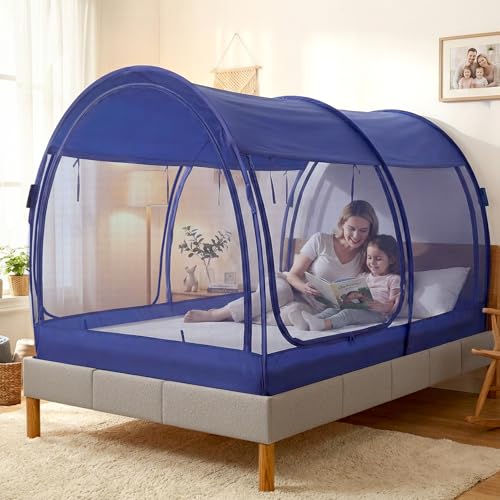
- Lightweight 4-pound pop-up frame
- Four doors and two windows
- Machine washable with carry bag
Best For: A breathable, portable twin-bed retreat for sleep or play
Galaxy Sleep Nook

- Blackout-themed twin bed enclosure
- Two doors and two windows
- Machine-washable polycotton fabric
Best For: Themed sleep and play space for toddlers and children
Spacious Fortress Design

- Three large layered doors
- 80% blackout layer with mesh ventilation
- Interior pockets and night-light hook
Best For: A customizable sleep, reading, or quiet-play space
Stable Blackout Retreat

- Insert-rod frame with 8 mm fiber poles
- Three double-zippered entrances
- Blackout layer reduces light by 93%
Best For: A structured, darker twin-bed sleep space with adjustable airflow
Cozy Twin Retreat

- Private twin-bed nook for sleep and quiet time
- Two side windows for ventilation
- Includes star lights and decorative flags
Best For: Flexible indoor sleep, reading, and calm-play spaces
Deep-Privacy Sleep Space

- Blocks up to 90% of light
- Three zippered doors with mesh ventilation
- Folds into a compact carry bag
Best For: Darker, more enclosed indoor sleep environments
Blackout Starry Hideaway
Redants Twin Bed Tent with Star Lights

- Blackout fabric for a darker private retreat
- Two windows and two doors for access and airflow
- Foldable design includes star lights
Best For: Twin-bed or floor-bed hideaways with light control
Galaxy Privacy Pick
Twin Bed Tent with Star Lights

- Blackout polycotton creates a private sleep space
- Two doors and two windows promote airflow
- Includes star lights and an interior storage pocket
Best For: Children needing a cozy, low-light twin-bed or floor space
Roomy Shared-Space Pick

- Light-blocking fabric reduces outside brightness
- Roomy interior fits two children
- Folds into a compact pouch after tool-free setup
Best For: Children needing extra room for quiet activities or shared use
Calm Corner Pick
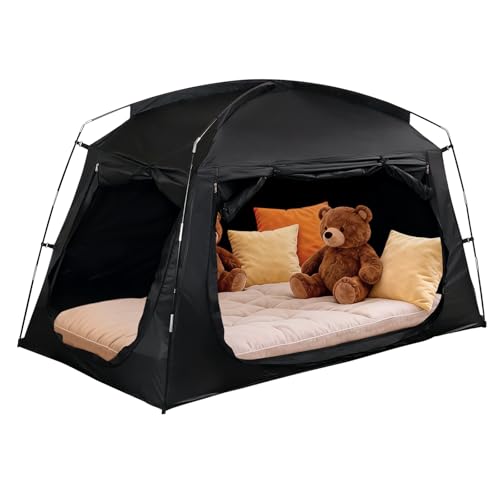
- Dark design creates a quiet private retreat
- Opens from both sides for convenient access
- Fits a twin bed or floor and sets up in about five minutes
Best For: Children needing a dedicated sensory or calm-down space
Lightweight Pop-Up Retreat – LEEDOR Bed Tent
For families comparing a bed canopy for autistic child options, the LEEDOR Bed Tent offers a lightweight, freestanding retreat that can help create a more contained space for sleep, play, or quiet time. Its breathable fabric, mesh ventilation, and four zippered doors make it practical for flexible access.
Best For: Children who may benefit from a portable, breathable twin-bed privacy and play space.
Pros:
- Pop-up design sets up in about a minute and weighs only 4 pounds.
- Four doors and two windows provide flexible access and airflow.
- Can be used on a twin mattress, on the floor, or as a daytime play tent.
- Machine washable and folds into an included carrying bag.
Cons:
- Mattress is not included.
- It is not water resistant, so it is intended for indoor use.
- The pop-up frame still requires assembly with shock-corded poles.
Choose this model if portability, ventilation, and easy entry matter most. The multiple doors can make access less restrictive, while the twin-size footprint works well in a child’s room or shared space.
Galaxy Sleep Nook – Twin Galaxy Bed Canopy Tent
This galaxy-themed twin tent is a playful bed canopy for autistic child choice that turns a standard mattress into a private sleep or play area. Its polycotton construction, blackout material, and two-door, two-window layout balance coziness with ventilation.
Best For: Toddlers and children who enjoy a themed, enclosed space for imaginative play and bedtime.
Pros:
- Fits a twin mattress and can also be used as a floor tent.
- Blackout material helps create a darker private space.
- Two doors and two windows support access and airflow.
- Machine-washable polycotton construction is convenient to maintain.
Cons:
- The product is not water resistant.
- Its themed galaxy design may not suit every bedroom.
- The supplied dimensions vary slightly between the listing fields.
This is a strong pick when a child responds well to imaginative themes and a defined personal nook. Consider the available room carefully, since it is designed for a full twin-bed footprint and may accommodate more than one child.
Spacious Fortress Design – Kids and Adults Bed Tent
The spacious rectangular design makes this bed tent a versatile bed canopy for autistic child option for sleep, reading, or quiet play. Its breathable fabric, three large doors, mesh layer, and 80% blackout layer allow families to adjust privacy, airflow, and light.
Best For: Children or families wanting a larger enclosed twin-bed space with adjustable light and privacy.
Pros:
- Three large doors provide convenient entry and exit.
- Mesh and blackout layers offer ventilation and reduced light.
- Includes interior storage pockets, a charging-cable opening, and a night-light hook.
- Floorless design makes moving the mattress and changing sheets easier.
Cons:
- At 7.4 pounds, it is heavier than the LEEDOR pop-up model.
- The listing identifies it as a one-person tent despite describing space for multiple children to play.
- It is not water resistant and requires hand or machine washing care.
This model stands out for families prioritizing customization and organization inside the tent. The layered doors and built-in accessories make it useful beyond bedtime, although its heavier frame may be less convenient to move frequently.
Stable Blackout Retreat – YAVIL Twin Bed Tent
For shoppers seeking a sturdy bed canopy for autistic child, the YAVIL Twin Bed Tent uses an insert-rod frame and 8 mm fiber poles to help retain its shape. Its three zippered entrances combine breathable mesh with a blackout layer that reduces light by 93%.
Best For: Children who need a darker, more structured twin-bed space with adjustable ventilation and access.
Pros:
- Insert-rod construction is designed to be sturdier than pop-up styles.
- Three doors open from inside or outside with double zippers.
- Mesh panels support airflow while the blackout layer reduces light by 93%.
- Includes a storage bag and interior space for small items.
Cons:
- At 8.1 pounds, it is relatively heavy to move.
- Mattress is not included, and the tent has no floor.
- Hand washing is listed as the care method.
This tent is worth considering when stability and light control are higher priorities than minimal weight. Its three entrances offer flexibility, while the layered panels let caregivers adjust the balance between privacy, darkness, and ventilation.
Cozy Twin Retreat – Sumbababy Twin Kids Bed Tent
The Sumbababy Twin Kids Bed Tent is a practical bed canopy for autistic child bedrooms where a defined, cozy space may help support quiet time and bedtime routines. Its open-bottom design fits a twin mattress, while two side windows provide ventilation without removing the enclosed feel.
Best For: Children who may appreciate a flexible private nook for sleep, reading, rest, or calm indoor play.
Pros:
- Creates a personal sleep and quiet-time space on a twin bed or floor mattress.
- Two side windows balance privacy with airflow.
- Open-bottom structure offers flexible placement and simpler setup.
- Includes star lights and decorative flags for a playful bedroom accent.
Cons:
- The semi-sheer fabric does not provide full blackout privacy.
- It is not water resistant and is intended for indoor use.
- The listed dimensions are designed for twin-size mattresses, so fit should be checked carefully.
Choose this model when you want a lightweight, washable canopy that can support several routines rather than serve only as a sleep enclosure. Its breathable, open-bottom design is especially useful for families who want flexibility in room layout.
Deep-Privacy Sleep Space – Blackout Portable Bed Tent
This blackout bed tent is a strong option for a bed canopy for autistic child use when reducing light and visual distractions is a priority. It offers 90% light blocking, multiple zippered openings, and mesh ventilation panels for a more enclosed but breathable sleeping space.
Best For: Children or adults who prefer darker, more private sleep environments and families who value portability.
Pros:
- Blackout fabric blocks up to 90% of light, according to the supplied product details.
- Three zipper doors and a side window provide access and ventilation options.
- Folds into a carry bag measuring approximately 17 x 5.9 inches.
- Thickened 9 mm fiberglass rods are designed for a stable structure.
Cons:
- The tent is not waterproof, so it is not suitable for wet conditions.
- At about 6 pounds, it is less lightweight than simpler canopy designs.
- Its more enclosed layout may not suit children who prefer an open sleeping area.
This model makes sense when light control and privacy outweigh the need for a visually open canopy. Before buying, confirm that the 78.7-by-41.3-inch footprint fits the intended twin bed or floor mattress.
Blackout Starry Hideaway – Redants Twin Bed Tent with Star Lights
The Redants Twin Bed Tent combines blackout fabric with integrated star lights, making it a bed canopy for autistic child bedrooms where a familiar, enclosed retreat may support naps, quiet play, or winding down. Its twin-size format works on standard twin beds and floor beds.
Best For: Children who enjoy a darker hideaway with a decorative, soothing bedroom atmosphere.
Pros:
- Blackout fabric helps block external light and creates a private retreat.
- Two windows and two doors provide ventilation and access.
- Includes integrated star lights for a warm, playful atmosphere.
- Foldable, portable design can be used on twin beds or floor beds.
Cons:
- It is not waterproof and is intended for indoor use.
- Blackout fabric may feel too enclosed for children who prefer more open visibility.
- The star lights and zipper openings may require checking for compatibility with a child’s sensory preferences.
Consider this canopy if light reduction and a dedicated retreat are more important than maximum openness. Its washable polyester construction and portable design also make it practical for changing bedroom layouts or occasional sleepovers.
Galaxy Privacy Pick – Twin Bed Tent with Star Lights
For families comparing a bed canopy for autistic child needs, this twin-size tent offers a dark, enclosed space for sleep, play, or quiet time. Its blackout polycotton fabric, ventilation openings, and included star lights balance privacy with a cozy atmosphere.
Best For: Children who benefit from a private, low-light space on a twin bed or floor mattress.
Pros:
- Blackout fabric helps block external light and distractions.
- Two windows and two doors support ventilation and easier access.
- Includes star lights, an interior storage pocket, and a hanging strap.
- Fits standard twin mattresses and folds for storage or travel.
Cons:
- The included lights require a suitable battery pack.
- It is not described as water resistant, so indoor use is the practical choice.
With its generous interior and adjustable airflow, this is a versatile option when privacy and a darker sleep environment are priorities. The galaxy styling and lights may also make the space feel inviting rather than restrictive.
Roomy Shared-Space Pick – Large Twin Bed Privacy Tent
This spacious tent is worth considering when shopping for a bed canopy for autistic child comfort, especially if a child needs room to read, rest, or decompress. Its light-blocking fabric, arched fiberglass frame, and star lights create an enclosed indoor retreat.
Best For: Children who want extra room for relaxing, reading, or sharing the tent with a sibling.
Pros:
- Thick fabric blocks about 90% of light for greater privacy.
- Large 77-by-42-by-53-inch interior accommodates two children.
- Built-in pockets keep small items and charging accessories accessible.
- Assembles without tools in about five minutes and folds into a carry pouch.
Cons:
- The tent is not waterproof or water resistant.
- Its larger size may require more room around the bed or floor setup.
This model emphasizes space and flexible use: it can sit on a twin or queen bed, bunk bed, mattress base, or floor mat. The 90% light-blocking claim is useful for privacy, though it may not create a fully dark room.
Calm Corner Pick – Sensory Blackout Bed Tent
Designed specifically as a quiet retreat, this sensory tent is a practical bed canopy for autistic child routines that include calming down, relaxing, or settling for sleep. The dark polyester enclosure can be placed on a twin bed or the floor and opened from either side.
Best For: Children who need a dedicated sensory space for relaxation, privacy, or bedtime.
Pros:
- Dark, light-reducing design creates a private calming area.
- Two-sided openings allow entry and exit from inside or outside.
- Works on a twin bed or floor and sets up in about five minutes.
- Strong fiberglass poles and washable polyester support repeated indoor use.
Cons:
- The care information is inconsistent: the notes mention washable polyester but also advise against machine washing and list dry-clean-only care.
- It is not waterproof or water resistant.
This is the most purpose-focused choice for a calm-down corner, with a compact twin-size footprint and a simple structure. Check the care instructions before cleaning, and use it indoors as intended.
How We Picked the Best Bed Canopy for Autistic Child
We focused on features that matter most in a sensory-friendly sleep space: controllable light, breathable construction, easy access, stable setup, washable or manageable materials, and compatibility with the child’s bed. We also considered whether each canopy supports privacy without creating an overly confined environment.
Because sensory preferences vary, no single design is ideal for every child. Blackout fabric may help children who are sensitive to light, while mesh windows or openable doors may be better for those who dislike enclosed spaces. A canopy should complement an established bedtime routine rather than replace professional guidance for sleep or sensory concerns.
Quick Comparison
| Best for | Look for | Potential trade-off |
|---|---|---|
| Light-sensitive sleepers | Blackout panels and covered entrances | Can feel too enclosed without ventilation |
| Children who need airflow | Large mesh windows and multiple doors | Less light blocking |
| Floor-bed users | Flexible floor or mattress placement | May require more room around the bed |
| Shared spaces | Portable pop-up construction | Less permanent stability |
| Sleep and play use | Roomy interiors and easy access | May provide less complete blackout |
Key Buying Factors for a Bed Canopy for Autistic Child
Sensory Control
Consider whether the child prefers darkness, muted light, visual privacy, or an open view of the room. Adjustable doors and windows are especially useful because preferences can change from bedtime to bedtime.
Ventilation and Access
Prioritize breathable panels, mesh windows, and openings that allow an adult to check in easily. Avoid designs that restrict airflow or make it difficult to reach the child quickly. Follow the manufacturer’s age, setup, and supervision guidance.
Size and Compatibility
Confirm whether the canopy is designed for a twin, full, queen, king, or floor mattress. Measure the mattress and available room space, including clearance for doors, zippers, and ventilation panels.
Materials and Upkeep
Soft, low-irritation fabrics may be more comfortable for children with tactile sensitivities. Check cleaning instructions, zipper quality, seams, poles, and whether the structure folds down for storage or travel.
Safety and Stability
Use the canopy exactly as directed and inspect it regularly for loose parts, damaged poles, broken zippers, or entanglement hazards. Keep cords, decorative lights, and accessories secured and follow all included warnings.
Who Should Buy Which Bed Canopy for Autistic Child?
Choose a blackout canopy for a child who sleeps better with reduced light or needs stronger visual separation from a busy room. Look for mesh ventilation and more than one accessible opening.
Choose a breathable, windowed tent for children who want a defined space but may feel uncomfortable in a fully enclosed design. Multiple doors can make the space feel less restrictive.
Choose a floor-compatible model if the child sleeps on a floor mattress, uses a Montessori-style setup, or needs a flexible play-and-sleep area. Verify that the base remains stable on the intended surface.
Choose a portable pop-up design for families who need to move, store, or travel with the canopy. Prioritize quick assembly and a compact folded size, but check that portability does not compromise stability.
The best Bed Canopy for Autistic Child use is the one that matches the child’s sensory preferences, mattress size, and bedtime routine. Start with the least restrictive setup that provides the desired privacy and light control, then adjust based on comfort and observation.