Finding the right bunk bed for a room with limited ceiling height means balancing sleeping space, headroom, safety, and everyday usability. Low-profile designs can make shared bedrooms and compact layouts more comfortable without giving up the convenience of a twin-over-twin setup.
These 10 options include solid-wood and metal frames, floor-style designs, built-in ladders, guardrails, and storage-friendly features. Use the guide below to compare construction, clearance, assembly, and fit before choosing a bed for your space.
Best 10 Bunk Beds for Low Ceilings Picks for 2026
Best Low-Profile Wood Pick
Max & Lily Fundamental Twin Low Bunk Bed

- 49.25-inch overall height for low-ceiling rooms
- Solid pine frame with 400-pound capacity
- 14-inch guardrails and accessible lower bunk
Best For: Families wanting a simple, compact wooden twin-over-twin bunk
Best Metal Space Saver
Zevemomo Twin Over Twin Low Bunk Bed

- 54.09-inch low-profile height
- Metal frame with 22 reinforced slats
- Flexible side ladders and floor-friendly foot pads
Best For: Small rooms needing a metal bunk with flexible ladder placement
Best Floor-Style Design
Grain & Grove Bear Low Bunk Bed

- 49.25-inch height with a 2-inch floor clearance
- 400-pound capacity per bunk
- Ladder installs on either end
Best For: Younger children and rooms needing a very low lower bunk
Lowest Ceiling-Friendly Pick

- 46.5-inch overall height
- Solid wood frame with 13.4-inch guardrails
- Convertible lower bed for play, storage, or sleep
Best For: Rooms with especially low ceilings and families wanting flexible floor use
Best Low-Ceiling Floor Bunk

- 46.5-inch low-profile height
- Guardrail and solid ladder
- 400-pound stated maximum recommendation
Best For: Low-ceiling rooms needing two twin sleeping spaces
Best Adjustable Layout
JOYMOR Solid Wood Low Bunk Bed

- 47.64-inch low-profile design
- Reversible ladder placement
- 11-inch full-length guardrails
Best For: Kids’ rooms needing flexible placement and a low bunk profile
Best Convertible Storage Design

- 46.5-inch low bunk height
- Built-in bookshelf and ladder
- Convertible lower-bed design
Best For: Compact kids’ rooms needing storage and flexible sleeping options
Best Low-Profile Metal Pick
GIANTEX Twin-over-Twin Low Bunk Bed
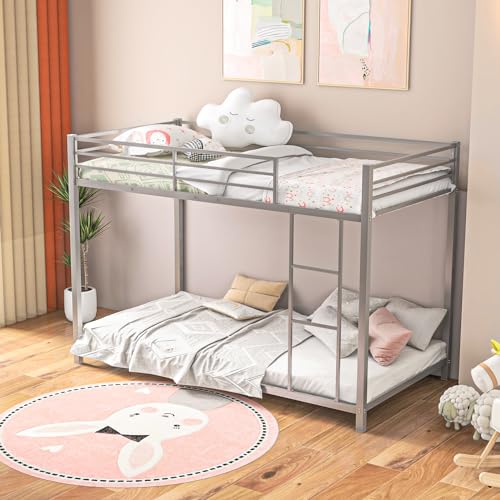
- 54-inch height for lower-clearance bedrooms
- Metal slats support up to 330 pounds per bed
- Guardrails, ladder, and no-box-spring design
Best For: Kids’ rooms and small apartments with limited ceiling height
Best Low Wooden Option
KOMFOTT Solid Pine Twin Bunk Bed

- 51-inch low-height design for limited clearance
- Solid pine frame with reinforced screw connections
- 12-inch guardrails and no-box-spring slats
Best For: Children’s rooms seeking a low-profile wood bunk bed
Best Heavy-Duty Metal Choice

- 54-inch space-saving twin-over-twin profile
- Steel frame with high stated weight capacity
- Full-length guardrails and no-box-spring slats
Best For: Shared rooms needing a sturdy, low-profile metal frame
Best Low-Profile Wood Pick – Max & Lily Fundamental Twin Low Bunk Bed
For shoppers comparing bunk beds for low ceilings, the Max & Lily Fundamental keeps its profile to 49.25 inches while using a solid-wood frame and a streamlined lower bunk. Its 5- to 8-inch mattress recommendation also helps preserve guardrail coverage and headroom.
Best For: Families wanting a compact, solid-wood twin-over-twin bunk with a simple design and easy lower-bunk access.
Pros:
- Low 49.25-inch height helps maximize headroom in rooms with low ceilings.
- Solid pine construction, strong wood slats, a metal support bar, and metal-on-metal bolt connections support stability.
- Fourteen-inch guardrails and a 400-pound capacity add practical safety and durability.
- The streamlined bottom bunk can be entered from multiple sides, and no box spring is needed.
Cons:
- The twin/twin configuration does not provide a full-size sleeping option.
- The recommended mattress range is limited to 5 to 8 inches for the best guardrail fit.
At 80 by 54.25 by 49.25 inches, this is a particularly approachable choice when ceiling clearance and straightforward access matter more than extra features.
Best Metal Space Saver – Zevemomo Twin Over Twin Low Bunk Bed
The Zevemomo is a practical option for bunk beds for low ceilings, measuring 54.09 inches high and using a metal frame with side ladders. Its low-profile structure is designed for small spaces, while reinforced slats and floor-protecting foot pads support everyday use.
Best For: Families needing a metal twin-over-twin bunk with flexible ladder placement, strong weight ratings, and a setup intended for compact rooms.
Pros:
- Low-profile design is specifically suited to small spaces and low ceilings.
- Metal construction, anti-rust powder coating, 22 reinforced slats, and sturdy legs promote stability.
- Full-length 11-inch upper guardrail and a Children’s Product Certificate standard claim provide added reassurance.
- Side ladders offer placement flexibility, and non-marring foot pads help protect floors.
Cons:
- At 54.09 inches tall, it is higher than the lowest wood options in this roundup.
- The metal frame may be less suited to shoppers specifically seeking a wood appearance.
With upper and lower weight capacities of 350 and 400 pounds, respectively, this Zevemomo model balances a compact footprint with a durable metal build and relatively quick two-person assembly.
Best Floor-Style Design – Grain & Grove Bear Low Bunk Bed
The Grain & Grove Bear is a floor-style choice among bunk beds for low ceilings, standing 49.25 inches tall with the bottom bunk just 2 inches off the ground. Its engineered-wood frame, 14-inch guardrails, and reversible ladder design suit families prioritizing a low sleeping arrangement.
Best For: Families with younger children who want a very low twin-over-twin bunk and the flexibility to position the ladder at either end.
Pros:
- 49-inch-class height and a bottom bunk only 2 inches off the floor suit low-ceiling rooms and younger sleepers.
- Each bunk has wooden slats and a metal support bar with a stated 400-pound capacity per bed.
- Fourteen-inch guardrails provide substantial upper-bunk protection.
- The ladder can be installed on either end to better fit the room layout.
Cons:
- At 87.75 inches long, it may require more floor length than shorter twin bunk frames.
- The engineered-wood construction may not appeal to shoppers specifically seeking solid wood.
- The recommended 5- to 8-inch mattress range limits mattress thickness choices.
This model is compelling when a near-floor lower bunk and adaptable ladder position are more important than minimizing the bed’s overall length.
Lowest Ceiling-Friendly Pick – Solid Wood Floor Bunk Bed
At just 46.5 inches high, this solid-wood floor bunk is one of the most ceiling-conscious options for shoppers seeking bunk beds for low ceilings. It combines full-length guardrails, a wide three-step ladder, and a convertible lower-bed design for sleeping, play, or storage.
Best For: Families needing the lowest overall height in this selection, along with a solid-wood frame and a flexible lower-bunk setup.
Pros:
- The 46.5-inch overall height leaves more clearance beneath low ceilings than taller bunk frames.
- Solid wood construction and 14 slats provide a stable, quieter sleeping surface.
- Full-length 13.4-inch guardrails and a built-in three-step wide ladder support safer access.
- The lower bed can be used for play, storage, or sleeping, and no box spring is required.
Cons:
- The gray finish offers fewer style choices than a more varied finish selection.
- The supplied notes do not specify separate upper- and lower-bunk weight capacities.
- Assembly is required, even though hardware and instructions are included.
Its 79.1-by-42-by-46.5-inch footprint and multifunctional lower section make this a strong fit when ceiling clearance and adaptable floor use are the primary priorities.
Best Low-Ceiling Floor Bunk – Majnesvon Twin Over Twin
If you need bunk beds for low ceilings, the Majnesvon Twin Over Twin Floor Low Bunk Bed keeps the upper sleeping surface close to the floor. Its 46.5-inch overall height, built-in ladder, and top guardrail make it a practical choice for shared kids’ rooms where headroom and floor-level access matter.
Best For: Families seeking a compact twin-over-twin bunk bed for low-ceiling rooms and multi-child sleeping arrangements.
Pros:
- Low-profile 46.5-inch height suits rooms with limited overhead clearance.
- Solid ladder and safety guardrail support easier, more secure access to the upper bunk.
- Solid wood and MDF construction has a stated maximum weight recommendation of 400 pounds.
- Includes assembly hardware and step-by-step instructions.
Cons:
- Mattresses are not listed as included, so twin mattresses must be purchased separately.
- The vertically stacked design does not provide built-in storage.
With its floor-level configuration and relatively low overall profile, this Majnesvon model is especially well matched to low-ceiling bedrooms. The modern gray finish and straightforward assembly add practical appeal without significantly increasing the footprint.
Best Adjustable Layout – JOYMOR Solid Wood Low Bunk Bed
The JOYMOR Solid Wood Low Twin Over Twin Bunk Bed is designed for small rooms with low ceilings. At 47.64 inches high, it offers a low-profile setup with full-length upper guardrails and a reversible ladder that can be positioned to suit the room.
Best For: Kids’ bedrooms where a low bunk, flexible ladder placement, and no-box-spring setup are priorities.
Pros:
- Low-profile design is intended for small rooms and low ceilings.
- Full-length 11-inch guardrails add protection around the upper bunk.
- Reversible ladder can be installed on either side for more flexible placement.
- Solid pine construction and hardwood slats support up to 264.5 pounds.
Cons:
- The stated weight recommendation is lower than some competing models in this roundup.
- Mattresses are not included; the manufacturer recommends 4- to 6-inch twin mattresses.
- Assembly is required, although hardware, tools, and instructions are included.
This JOYMOR bunk bed stands out when room layout is as important as ceiling clearance. Its side-switchable ladder and full-length guardrails make it adaptable for growing children, while the no-box-spring design simplifies mattress setup.
Best Convertible Storage Design – TOLEAD Low Twin Over Twin
For shoppers comparing bunk beds for low ceilings, the TOLEAD Low Twin Over Twin offers a 46.5-inch profile plus a bookshelf and ladder. Its full upper guardrails, attached three-step ladder, and convertible lower-bed design make it a versatile option for compact children’s bedrooms.
Best For: Families wanting a low bunk with added bookshelf utility and the option to adapt the lower sleeping area.
Pros:
- 46.5-inch overall height is well suited to rooms with limited ceiling clearance.
- Full-length guardrails and a securely attached three-step ladder support safer access.
- Convertible design can change the bottom bed into a twin loft arrangement.
- Built-in bookshelf adds convenient organization in a compact room.
Cons:
- The convertible configuration may require more planning than a fixed bunk setup.
- Mattresses are not listed as included.
- Assembly is required, even though instructions and components are included.
The TOLEAD is a strong choice when a low bunk needs to do more than provide two beds. Its bookshelf and convertible lower section can help make better use of a small bedroom, while the low height keeps it appropriate for reduced overhead space.
Best Low-Profile Metal Pick – GIANTEX Twin-over-Twin Low Bunk Bed
For shoppers comparing bunk beds for low ceilings, this 54-inch-tall GIANTEX frame is a compact twin-over-twin option. Its lower bunk sits close to the floor, while the metal slats support mattresses without a box spring.
Best For: Kids’ rooms, small apartments, and bedrooms where overhead clearance is a priority.
Pros:
- 54-inch overall height suits many low-ceiling spaces.
- Heavy-duty metal frame and slats support up to 330 pounds per bed.
- Full-length 10-inch guardrails and a built-in three-step ladder add practical safety features.
- Mattresses can be used directly on the slats without a box spring.
Cons:
- The upper bunk is recommended for mattresses no more than 5 inches thick.
- The silver metal finish may not suit every room style.
With its modest height, compact footprint, and straightforward metal construction, this is a practical choice when ceiling clearance and floor space matter most.
Best Low Wooden Option – KOMFOTT Solid Pine Twin Bunk Bed
This KOMFOTT wooden bunk bed is a strong candidate for shoppers seeking bunk beds for low ceilings without giving up a warmer furniture look. Its 51-inch low-height design, solid pine frame, and integrated ladder are suited to compact children’s rooms.
Best For: Children’s bedrooms, dormitories, and apartments needing a low-profile wood frame.
Pros:
- 51-inch design helps conserve vertical clearance.
- Solid pine construction and durable screw connections provide a sturdy frame.
- Full-length 12-inch guardrails and a smooth-edged two-step ladder support safer use.
- 14+7 plywood slats provide a mattress foundation without a box spring.
Cons:
- Mattresses are not included and should be no more than 6 inches thick.
- The wooden frame may require more assembly effort than a simpler metal design.
The especially low profile makes this one of the better choices for limited headroom, while the pine construction offers a softer, more traditional appearance than metal.
Best Heavy-Duty Metal Choice – KOMFOTT Twin Low Bunk Bed
For low-ceiling rooms that also need a durable metal frame, this KOMFOTT twin-over-twin bunk bed combines space-efficient stacking with heavy-duty steel slats. Its 54-inch height and built-in ladder make it practical for children, teens, adults, apartments, or dormitories.
Best For: Shared rooms and temporary living spaces where sturdy metal construction and efficient use of floor space are priorities.
Pros:
- 54-inch height helps make it suitable for rooms with limited overhead space.
- Heavy-duty steel construction and slats support up to 400 pounds per layer according to the product description.
- More than 20 slats per level eliminate the need for a box spring.
- Built-in ladder and raised 10-inch guardrails provide useful safety features.
Cons:
- The supplied details also list a 330-pound maximum recommendation, so weight limits should be confirmed before purchase.
- Mattresses should be less than 5 inches thick.
- The silver metal style may feel less warm than a wood bunk bed.
This model stands out for shoppers prioritizing metal durability and higher stated load capacity while still needing a relatively low 54-inch bunk configuration.
How We Picked These Bunk Beds for Low Ceilings
We focused on features that matter most in rooms with restricted vertical space: overall bed height, usable clearance, guardrail coverage, ladder design, frame construction, and the need for a box spring. The selection includes solid-wood and metal models, floor bunk beds, and designs with shelves or other space-saving details.
Because manufacturer dimensions and safety specifications can vary, always verify the current measurements, recommended mattress thickness, weight limits, and assembly instructions before ordering. A low profile does not automatically mean the top bunk is suitable for every child.
Quick Comparison
| Feature | What to compare | Why it matters |
|---|---|---|
| Frame material | Solid wood or metal | Influences stability, appearance, durability, and weight. |
| Bed style | Raised low bunk or floor bunk | Determines climbing height and available under-bed space. |
| Safety features | Full-length guardrails and fixed ladders | Helps reduce fall risk and makes access more predictable. |
| Support | Slats and mattress requirements | Confirms whether a box spring is unnecessary and supports the mattress correctly. |
| Extras | Bookshelves, storage, or compact ladder placement | Can improve organization in small bedrooms. |
Key Buying Factors for Bunk Beds for Low Ceilings
Measure the Complete Setup
Measure from the floor to the ceiling, then account for the mattress thickness, bedding, guardrail height, and the space needed for a child to sit up. Also check ceiling fans, light fixtures, sloped ceilings, and nearby windows. Compare the assembled height rather than relying only on a product name such as “low” or “floor.”
Prioritize Guardrails and Access
Look for a securely attached, full-length guardrail on the upper bunk and a ladder that is easy to grip. Consider where the ladder sits in relation to doors, walls, and other furniture. Younger children may benefit from a floor-style lower bunk, but the upper bunk should still be used only when appropriate for the child’s age and the manufacturer’s guidance.
Choose the Right Construction
Solid wood can provide a warm look and substantial feel, while metal frames may offer a lighter, streamlined design. In either case, inspect the slat system, fasteners, center supports, and stated weight capacity. Retighten hardware periodically, especially after the first few weeks of use.
Check Mattress and Assembly Requirements
Confirm that both mattresses match the specified twin dimensions and maximum thickness. Many listed frames use slats instead of a box spring, but that should be verified for the exact model. Allow time for careful assembly and make sure the finished frame sits level before use.
Who Should Buy Which Bunk Beds for Low Ceilings?
- For the lowest climbing height: Choose a floor-style or especially low twin-over-twin frame, particularly for younger children who need easier access.
- For traditional bedroom styling: Solid-wood options are a practical choice when you want a warmer appearance and substantial frame construction.
- For a lighter modern look: Metal low-profile beds can suit contemporary rooms and may be easier to coordinate with existing furniture.
- For small bedrooms: Consider models with built-in shelves, compact ladder placement, or a design that leaves useful floor space around the bed.
- For growing children: Favor full-length guardrails, sturdy slats, a clearly stated weight limit, and enough surrounding clearance for comfortable everyday use.
The best choice is the model that fits the room’s measured ceiling clearance while meeting the child’s safety, mattress, and access needs. Recheck dimensions and current specifications before purchase, since listings and configurations can change.