A compact drafting table can give you a more comfortable surface for drawing, crafting, studying, or design work without taking over a bedroom, dorm, or home office.
We compared 10 space-conscious options by looking at adjustability, tabletop size, storage, portability, mobility, and everyday usability.
Best 10 Drafting Tables for Small Spaces Picks for 2026
Storage-Packed Pick
Yaheetech Adjustable Drafting Table

- 0–60° tilting tabletop with flat-desk use
- Two drawers plus pull-out auxiliary surface
- Includes matching stool and pencil ledge
Best For: Artists and students who need storage and seating
Most Compact Folding Pick
GreenForest Small Folding Desk

- Folds to just 3.8 inches thick
- 0–90° gas-strut tilting tabletop
- Four lockable rolling casters
Best For: Dorms, apartments, and temporary workspaces
Classic Wood Pick
MEEDEN Adjustable Drafting Table

- Height adjusts from 29.7 to 38.4 inches
- Tabletop tilts for flat or angled work
- Includes pencil ledge and 24-inch T-square
Best For: Artists who prefer a traditional wooden work surface
Most Versatile Pick
3-in-1 Electric Standing Drafting Desk

- Electric height adjustment with three presets
- 0–90° dry-erase tilting desktop
- Rolling base with four lockable wheels
Best For: Flexible home offices, classrooms, and creative work
Best for Easy Setup
Yaheetech Adjustable Drafting Table

- 0–60° adjustable tabletop
- Three drawers and built-in shelf
- Includes padded stool
Best For: Artists needing organized storage in one workstation
Foldaway Budget Pick

- Folds for easier storage
- Four-step panel adjustment
- Telescopic legs for height changes
Best For: Dorms, bedrooms, and compact rental spaces
Portable Surface Pick
Nnewvante Foldable Bamboo Desk
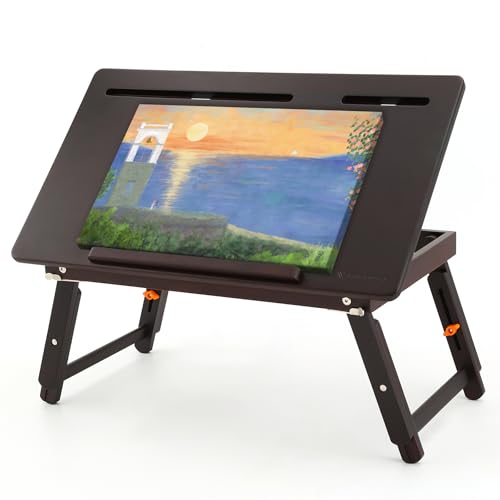
- 0–65° angle adjustment
- Folds into a tabletop easel
- Tablet and phone slots
Best For: Bed, floor, and portable drafting setups
Best Overall
VEVOR Adjustable Drafting Table

- 0°–90° tilting desktop
- Large 35.43-by-23.62-inch work surface
- Adjustable feet and sturdy H-frame
Best For: Artists needing a versatile, stable workstation
Best With Storage
Garvee Height Adjustable Drafting Table

- 0°–75° tilting desktop
- Height adjusts from 26.77 to 35.82 inches
- Two drawers plus shelves and trays
Best For: Organized home offices and art spaces
Best Mobile Option
VECELO Vintage Tilting Art Desk

- Lockable rolling wheels
- 0°–45° adjustable tabletop
- Pencil ledge and removable supply tray
Best For: Lightweight, movable craft and study setups
Storage-Packed Pick – Yaheetech Adjustable Drafting Table
If you need drafting tables for small spaces but still want dedicated storage, the Yaheetech combines an adjustable work surface with two drawers and a pull-out auxiliary shelf. Its tabletop adjusts from flat to a 60-degree angle, while the included stool creates a ready-to-use art or study station.
Best For: Artists, students, and crafters who want an adjustable table with built-in organization and a matching seat.
Pros:
- Tabletop tilts from 0 to 60 degrees and can also function as a flat desk.
- Two drawers and a retractable side surface provide storage for supplies or a laptop.
- Includes a matching stool and an adjustable pencil ledge.
- Metal frame supports a listed maximum load of 220.5 pounds.
Cons:
- At 47.5 inches wide, it needs more floor space than the other compact options.
- Manual height adjustment requires physical repositioning.
- The 51.8-pound weight may make moving it less convenient.
This is the most storage-oriented choice in the group. It is a strong fit when organization and a complete seating setup matter more than having the smallest possible footprint.
Most Compact Folding Pick – GreenForest Small Folding Desk
For especially tight rooms, the GreenForest is one of the more space-conscious drafting tables for small spaces. It folds to 3.8 inches thick for storage, rolls on four lockable casters, and offers a gas-strut tabletop that tilts from 0 to 90 degrees.
Best For: Apartment, dorm, and tiny-home users who need a portable occasional desk for drawing, studying, or laptop work.
Pros:
- Folds flat for storage under a bed, in a closet, or behind furniture.
- Four lockable wheels make relocation between rooms straightforward.
- Gas-spring tilt adjustment and an anti-slip guardrail support drawing and reading.
- Assembly includes tools, illustrated instructions, and pre-labeled parts.
Cons:
- The 31.5-by-16.5-inch work area is relatively narrow.
- It is intended for light-to-moderate use rather than heavy-duty loads.
- The notes caution that minor wobble may occur with heavy loads.
Choose this model when storage and mobility are the top priorities. Its folding profile is particularly useful if the workspace must disappear after each use.
Classic Wood Pick – MEEDEN Adjustable Drafting Table
The MEEDEN offers a traditional wood look in a moderate-size drafting surface, making it a practical option among drafting tables for small spaces. Its height adjusts from 29.7 to 38.4 inches, the top tilts up to 60 degrees, and the built-in pencil ledge helps keep tools in place.
Best For: Home artists, hobbyists, and students who prefer a stable wooden desk with straightforward manual adjustment.
Pros:
- Height-adjustable design accommodates different users and working positions.
- Tilting surface supports flat work or angled drawing.
- Solid beech legs and cross supports are designed to reduce lateral movement.
- Includes a 24-inch T-square with inch and metric calibrations.
Cons:
- It lacks drawers or enclosed storage.
- Assembly is recommended for two people.
- The maximum listed weight recommendation is 44 pounds.
This is a sensible choice if you value a wood aesthetic and a stable, dedicated art surface. Plan to provide separate storage for supplies and allow room for the wide tabletop.
Most Versatile Pick – 3-in-1 Electric Standing Drafting Desk
The 3-in-1 desk combines a drafting surface, electric standing desk, and dry-erase whiteboard in a 35.4-by-23.6-inch footprint. For people comparing drafting tables for small spaces, its rolling base and upright 90-degree tilt offer flexible use and more compact storage between projects.
Best For: Remote workers, teachers, students, and creatives who want one mobile station for writing, standing work, sketching, and brainstorming.
Pros:
- Electric height adjustment ranges from 28.4 to 45.7 inches with three presets.
- Whiteboard desktop tilts from 0 to 90 degrees for drafting and reading.
- Four lockable casters allow movement while keeping the desk secure during use.
- Includes an adjustable stopper and storage bag for supplies.
Cons:
- At 42 pounds, it is not the lightest mobile option.
- The feature-rich design may be more than needed for simple drafting.
- Whiteboard care excludes alcohol, strong acids or alkalis, and abrasives.
This model stands out for multifunctionality rather than minimal weight. It is a compelling fit when a small room needs a single workstation that can shift between sitting, standing, drawing, and presentation tasks.
Best for Easy Setup – Yaheetech Adjustable Drafting Table
If you need drafting tables for small spaces but still want dedicated storage, the Yaheetech combines an adjustable work surface with drawers, a shelf, and an included stool. Its tabletop tilts from 0 to 60 degrees, so it can support writing, drafting, sketching, or painting.
Best For: Artists and students who want a compact workstation with built-in organization.
Pros:
- Tabletop adjusts from flat to a 60-degree easel position.
- Includes three drawers, a shelf, and a side auxiliary table.
- Works as a drafting, writing, reading, computer, or painting table.
- Includes a padded round stool.
Cons:
- Its approximately 24-inch depth and 47.6-pound weight may be substantial for very tight rooms.
- Assembly is required.
This is the most fully equipped option here, especially if replacing several pieces of furniture with one organized workstation matters more than having the smallest footprint.
Foldaway Budget Pick – Small Folding Drafting Table
Small Folding Drafting Table,Portable Ergonomic Drawing Desk for Study,Dorm,Bedroom
Check Price On AmazonFor rooms where every inch matters, this small folding drafting table is designed for easy storage in a dorm, bedroom, rental, or small apartment. Its adjustable panel, telescopic legs, and sliding rails provide flexibility for study, drawing, dining, or computer use.
Best For: Space-conscious users who need a table that can be folded away between uses.
Pros:
- Folding design helps conserve floor space.
- Four-step panel adjustment supports different working positions.
- Telescopic legs and sliding rails allow height changes.
- Can function as a drafting, dining, study, or computer table.
Cons:
- The supplied details do not specify the tabletop dimensions.
- It provides no stated drawers, shelves, or other built-in storage.
This is a practical choice when portability and foldaway storage take priority. Verify the working dimensions before buying if you need room for large drawing sheets or equipment.
Portable Surface Pick – Nnewvante Foldable Bamboo Desk
The Nnewvante is a tabletop-sized option for anyone comparing drafting tables for small spaces, bed work, or floor use. Its 23.6-by-13.8-inch bamboo surface adjusts from 0 to 65 degrees, while the legs fold for easier storage and transport.
Best For: Bedside, floor, or portable drafting and laptop work where a full-size desk is impractical.
Pros:
- Offers seven angle settings from 0 to 65 degrees.
- Height adjusts between 9.3 and 12.6 inches with four locking positions.
- Folds into a tabletop easel and includes tablet and phone slots.
- Includes a mouse pad and uses a smooth bamboo surface.
Cons:
- Its low height is intended for bed or floor use rather than standard-chair seating.
- The 23.6-by-13.8-inch surface may be limiting for larger projects.
Choose this model when portability and flexible positioning matter most. It offers useful drafting features in a smaller package, but it is not a substitute for a full-height studio desk.
Best Overall – VEVOR Adjustable Drafting Table
For drafting tables for small spaces, the VEVOR offers a practical balance of a generous work surface and a relatively compact 23.62-inch depth. Its 0°–90° tilt range supports drawing, writing, crafting, and everyday desk work.
Best For: Artists and home-office users who want a sturdy, highly adjustable workstation with a large drawing surface.
Pros:
- Tilts from 0° to 90° for flexible working angles.
- 35.43-by-23.62-inch desktop accommodates A1-sized paper.
- Adjustable feet help stabilize the table on uneven floors.
- H-frame metal support provides an 88-pound maximum recommended capacity.
Cons:
- The 35.43-inch width may require more wall or floor space than ultra-compact desks.
- Assembly is required.
This is a strong all-purpose choice when you need a small-space-friendly depth without giving up drawing room. The built-in pen holder and multifunctional design also make it useful beyond drafting.
Best With Storage – Garvee Height Adjustable Drafting Table
Among drafting tables for small spaces, the Garvee makes its 23.62-inch depth more useful by adding built-in organization. The desktop tilts from 0° to 75°, while adjustable height and storage support both creative work and home-office tasks.
Best For: Artists, students, and remote workers who need drawers and trays to keep supplies organized.
Pros:
- Height adjusts from 26.77 to 35.82 inches.
- Desktop tilts from flat to 75°.
- Includes two drawers, a side storage area, a retractable document board, and a bottom shelf.
- Included stool supports up to 330 pounds.
Cons:
- At 38.58 inches wide and 53.4 pounds, it is less compact and less portable than simpler tables.
- Fabric drawers are each rated for 6.6 pounds.
The Garvee is a practical pick when organization matters as much as the work surface. Its extra storage can reduce clutter in a small room, though the wider footprint should be measured carefully before purchase.
Best Mobile Option – VECELO Vintage Tilting Art Desk
The VECELO is worth considering when shopping for drafting tables for small spaces and you want easy repositioning. Its 23.63-inch depth, rolling wheels, and slim metal-frame design suit craft rooms, offices, and multipurpose areas.
Best For: Hobbyists and students who want a lightweight drafting surface that can move between rooms.
Pros:
- Lockable rolling wheels make repositioning convenient.
- Desktop adjusts from 0° to 45°.
- Pencil ledge helps secure paper and supplies when tilted.
- Removable side tray includes slots and pen holes for organization.
Cons:
- The 40.16-inch width may not suit very tight spaces.
- Its maximum tilt is lower than tables offering 75° or 90° adjustment.
- It does not offer built-in drawers or enclosed storage.
At 20.6 pounds, this is the lightest option in the group and a convenient choice for flexible setups. Its rolling base and accessory tray add functionality, while the 45° tilt is best suited to general drawing, writing, and crafts.
How We Picked the Best Drafting Tables for Small Spaces
We focused on tables that balance useful work area with a manageable footprint. Each selected model offers at least one space-saving advantage, such as folding construction, casters, adjustable height, a tilting top, built-in storage, or a compact design suited to bedrooms and apartments.
We also considered how easily each table can adapt to different activities. A good drafting surface should support sketching and drafting, but may also work for crafting, laptop use, journaling, or studying. Stability, assembly requirements, edge features such as pencil ledges, and the table’s ability to fit around existing furniture were important practical considerations.
Quick Comparison
| Best For | Features to Prioritize | Potential Trade-Off |
|---|---|---|
| Small bedrooms and dorms | Folding frame, compact depth, casters | Less room for large projects |
| Artists and illustrators | Wide tilt range, stable top, pencil ledge | May require more floor clearance |
| Shared workspaces | Locking wheels, adjustable height, foldability | Extra adjustment parts can add setup time |
| Crafting and organization | Drawers, shelves, side storage | Storage may increase overall bulk |
| Flexible laptop or study use | Near-flat adjustment, comfortable height | Not every drafting surface includes cable management |
Key Buying Factors for Drafting Tables for Small Spaces
Measure the Full Footprint
Check the tabletop dimensions, base width, and depth before ordering. For a tight room, also account for chair clearance, drawer openings, wheel movement, and the extra space needed when the top is tilted. A folding table is especially useful when the surface must be stored after use.
Choose the Right Tilt and Height Range
Adjustable tilt helps reduce wrist strain and improves viewing angles for drawing. A broad range, including a near-flat position, is more versatile for writing and laptop work. Height adjustment matters when multiple people will use the table or when you want to alternate between sitting and standing.
Balance Storage with Portability
Drawers and shelves keep tools within reach, but they can make a small table heavier and harder to relocate. Wheels are useful only when they lock securely; otherwise, a lightweight folding design may be the better choice for a shared room.
Consider Stability and Surface Usability
A compact table should not wobble under normal drawing pressure. Look for a sturdy base, reliable adjustment hardware, and a surface large enough for your paper, tools, and reference materials. A raised lip or pencil ledge can prevent supplies from sliding when the top is angled.
Who Should Buy Which Drafting Tables for Small Spaces?
Choose a folding or wheeled model if you need to clear floor space frequently or move your workspace between rooms. A table with drawers or a dedicated shelf is better for artists and crafters who want supplies close at hand. If comfort is the priority, select a model with both height and angle adjustment rather than tilt alone.
For occasional sketching, studying, or dorm use, a simple portable table can provide the best value and easiest storage. For daily professional or hobby work, prioritize stability, a comfortable work height, and a tabletop that accommodates your usual paper size without forcing tools to the floor.