The best light boxes for children turn drawing, tracing, pattern play, and sensory activities into hands-on creative experiences. This roundup compares 10 options across compact tracing pads, tabletop light tables, and larger sand-painting designs.
Whether you need a birthday gift, an open-ended art station, or a rechargeable pad for travel, the right choice depends on a child’s age, available space, preferred activities, and how much versatility you need.
Best 10 Light Boxes for Children Picks for 2026
Best Creative Starter
Crayola Blue Light-Up Tracing Pad

- Includes pencils, tracing sheets, and blank paper
- LED surface and non-slip frame support tracing
- Designed for kids ages 6 and up
Best For: Guided tracing, sketching, and beginner animation practice
Best Sensory Learning Table

- Three color modes and 10 brightness levels
- Supports sensory, STEM, tracing, and craft activities
- A4-sized surface for home or classroom use
Best For: Adjustable sensory and creative learning activities
Best Portable Art Kit
Crayola Pink Light-Up Tracing Pad

- Includes pencils and 20 activity sheets
- Compact design supports creativity on the go
- Suitable for children ages 6 and up
Best For: Portable guided tracing and drawing projects
Best Guided Early Learning

- Includes 87 translucent blocks and 46 cards
- Supports early math and spatial reasoning
- Recommended for ages 3 to 8
Best For: Structured pattern, tracing, and sensory learning
Best All-in-One Learning Set

- Includes 50 shapes and six puzzle films
- Six colors and two brightness levels
- Battery-powered with automatic sleep mode
Best For: Preschool learning, sensory play, and creative activities
Best for Sensory Sand Art
16-Inch Sand Painting Light Box

- Large 16-inch light table surface
- Includes two packs of fine sand and tools
- Three color temperatures and adjustable brightness
Best For: Sand painting, sensory play, and classroom activity centers
Best Portable Tracing Pad

- Rechargeable for approximately four to six hours
- Includes padded case, stand, and paper clip
- Six brightness levels plus stepless dimming
Best For: Tracing, drawing, diamond painting, and portable art
Bright Learning Station

- 10 brightness levels and three color temperatures
- Displays translucent toys and supports tracing
- USB-powered, 15.74-by-11.81-inch acrylic surface
Best For: Color discovery, tracing, and mixed craft activities
STEAM Sensory Studio
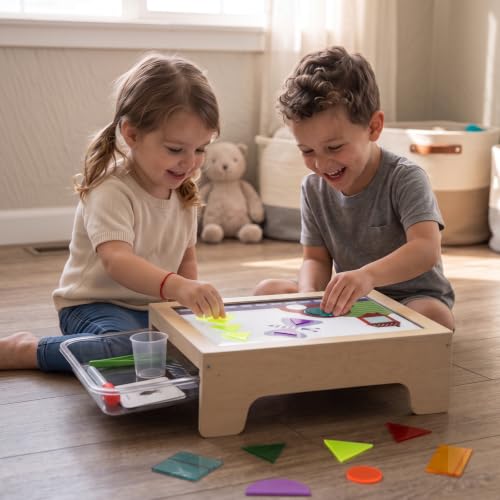
- Combines light play with sandbox-style activities
- Includes 50+ pieces and exploration tools
- 10 lighting levels for drawing and discovery
Best For: Sensory play and STEAM activities for ages 3–10
Sand Art Starter
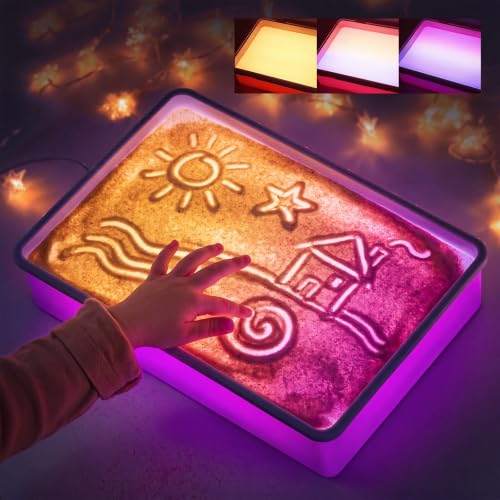
- Includes two sand packs, broom, and dustpan
- Three color temperatures and 10 brightness levels
- Safe 5V operation for ages 3 and up
Best For: Beginner sand art at home or in the classroom
Best Creative Starter – Crayola Blue Light-Up Tracing Pad
The Crayola Light Up Tracing Pad is one of the more approachable light boxes for children who are ready to practice tracing, sketching, lettering, and basic animation. Its LED surface, included pencils, and mix-and-match tracing sheets let kids begin creating right away, while the lightweight frame makes it practical for indoor use.
Best For: Children ages 6 and up who want a portable, guided introduction to tracing and drawing.
Pros:
- Includes 12 colored pencils, tracing sheets, blank sheets, and a graphite pencil.
- Uniform LED illumination supports precise tracing and transferring designs.
- Lightweight build with a non-slip frame suits home or classroom creative play.
- Additional designs are available online for continued practice.
Cons:
- Requires three AA batteries, which are sold separately.
- It has no manufacturer warranty.
This is a straightforward art-focused option for families seeking a ready-to-use light box for children rather than a sensory play table. The included materials add value, although battery preparation is necessary before use.
Best Sensory Learning Table – Odoorgames Cyan Light Table
The Odoorgames Young Explorers Light Table is a versatile choice among light boxes for children, combining adjustable illumination with open-ended sensory and color exploration. Its A4-sized surface also supports tracing, drawing, calligraphy, scrapbooking, and other classroom or home activities.
Best For: Children and classrooms needing adjustable light for sensory exploration, early learning, and creative projects.
Pros:
- Offers three color modes and 10 brightness levels.
- Uniform LED lighting is designed for varied lighting environments and visual sensitivities.
- Supports exploration of colors, shapes, patterns, and mixing with translucent materials.
- Compact 13.2-by-10.2-inch surface fits A4 paper and weighs 1.2 pounds.
Cons:
- Uses corded electric power, so it is less convenient for travel.
- The notes do not specify that translucent toys or other accessories are included.
Choose this model when adjustable lighting and flexible learning activities matter more than a bundled art kit. Its compact footprint works well on a desk or floor, while the six-month warranty provides some added coverage.
Best Portable Art Kit – Crayola Pink Light-Up Tracing Pad
The pink Crayola Light-Up Tracing Pad is a compact art kit for children who enjoy guided drawing projects at home or on the go. As light boxes for children go, it stands out for pairing a bright LED tracing surface with pencils, paper, and ready-to-use designs for ages 6 and up.
Best For: Kids who want a portable tracing and drawing kit for birthdays, travel, or everyday creative play.
Pros:
- Includes a tracing pad, 12 colored pencils, 10 tracing sheets, 10 blank sheets, and a graphite pencil.
- LED lighting illuminates designs for easier tracing and transferring.
- Lightweight, compact design includes a no-slip frame and uniform lighting.
- Introduces sketching, lettering, and 2D animation concepts.
Cons:
- Requires three AA batteries, sold separately.
- There is no manufacturer warranty.
This is a practical pick when portability and an all-in-one starter supply set are priorities. It offers less flexibility than a larger sensory table, but its included materials make it easy to start an art activity without assembling extra supplies.
Best Guided Early Learning – Blue Pattern Block Light Box
This pattern-block light box offers a more structured learning experience than many light boxes for children. Its adjustable brightness and color temperature support tracing and sensory play, while 87 translucent blocks and 46 double-sided activity cards guide matching, sequencing, shape recognition, and creative challenges.
Best For: Children ages 3 to 8 who benefit from hands-on early math, spatial reasoning, and guided pattern activities.
Pros:
- Includes 87 translucent blocks in six shapes and six colors.
- Provides 46 double-sided cards for tracing, matching, sequencing, and creative tasks.
- Adjustable brightness and color temperature support varied activities.
- Rounded edges and flicker-free LEDs contribute to a child-focused design.
Cons:
- Designed for indoor use and requires electric power.
- The structured activity focus may be less suitable for children seeking an open-ended art pad.
Families looking for a light box that doubles as an early-learning station should find this set especially useful. The substantial block-and-card collection gives children clear activities to follow, while the illuminated surface remains available for tracing and sensory exploration.
Best All-in-One Learning Set – PLAY Light Box for Kids
If you want light boxes for children that combine guided activities with open-ended play, this PLAY light box is a versatile option. It includes 50 translucent shapes, six puzzle films, a detachable drawer, and a storage bag, giving preschoolers materials for tracing, matching, and creative exploration.
Best For: Preschool learning, Montessori-inspired activities, sensory play, and portable creative projects.
Pros:
- Includes a broad starter set of shapes and puzzle films.
- Offers six light colors and two adjustable brightness levels.
- Battery operation makes it usable away from an outlet.
- Automatically enters sleep mode after about 20 minutes of inactivity.
Cons:
- Requires three AA batteries, which are not included.
- Its activity-focused design may be less suitable for large-format artwork.
This is a strong pick for families and classrooms seeking a ready-to-use educational light table. The included manipulatives add value, while the adjustable colors support imaginative and sensory activities.
Best for Sensory Sand Art – 16-Inch Sand Painting Light Box
Among light boxes for children, this 16-inch model stands out for tactile sand play and larger creative setups. It includes two packs of ultra-fine sand, a broom, and a dustpan, while adjustable color temperatures and brightness help children explore light, texture, shapes, and lines.
Best For: Sand painting, sensory play, classroom activity centers, and calm creative exploration.
Pros:
- Provides a larger 16-inch surface for sand art and translucent materials.
- Includes sand, a broom, and a dustpan for immediate play.
- Offers three color temperatures and multiple brightness settings.
- Can also support magnetic and stacking toys.
Cons:
- Sand play may require more cleanup than a standard tracing light box.
- The supplied notes describe it primarily for sensory and sand activities rather than detailed tracing.
This light table is a practical choice when tactile engagement is the priority. Its generous surface and included sand supplies make it especially well suited to supervised home or classroom sensory stations.
Best Portable Tracing Pad – Rechargeable A4 Light Box
For older children, budding artists, or families wanting light boxes for children that can travel, this rechargeable A4 model offers a more art-focused setup. It includes a padded case, built-in stand, paper clip, tracing materials, and a battery designed to provide approximately four to six hours of wireless use after charging.
Best For: Tracing, drawing, animation, diamond painting, and portable art projects.
Pros:
- Rechargeable battery supports approximately four to six hours of wireless use.
- Padded carry case helps protect the light pad during transport.
- Includes a built-in stand and top clip for more comfortable, secure work.
- Provides six brightness levels plus stepless dimming.
Cons:
- Charging adapter is not included.
- The stand has only one angle.
- It is an A4 art pad rather than a preschool activity table with manipulatives.
This model makes the most sense for children who are ready for structured art projects and tracing. Its rechargeable design and protective case add portability, while the clip and stand support longer drawing sessions.
Bright Learning Station – Adjustable LED Light Table
If you want light boxes for children that support both play and creative projects, the PreTrans Bright LED Light Table offers a versatile 16-inch surface for exploring color, shape, and light. Its evenly distributed LEDs, adjustable brightness, and three color temperatures make it suitable for translucent toys, tracing, and detail-oriented crafts.
Best For: Kids who enjoy color-and-light discovery, tracing, and varied art activities at home or in educational settings.
Pros:
- Provides 10 brightness levels and three color temperatures.
- Works with translucent blocks, tiles, beads, shapes, and X-rays.
- Supports tracing, sketching, calligraphy, sewing, scrapbooking, and other crafts.
- Includes a USB cable and adapter for corded plug-and-play use.
Cons:
- Requires continuous power because it is not rechargeable.
- Its broad craft-focused feature set may be more than needed for simple light play.
With a 15.74-by-11.81-inch acrylic panel and up to 6100 lux illumination, this is a flexible choice for families seeking one light table for sensory exploration and creative work.
STEAM Sensory Studio – Sand Painting Light Table
Among light boxes for children, the bopoobo Light Table stands out as a larger sensory activity station that combines illuminated art with sand-play tools and exploration accessories. It is designed for children ages 3 to 10 and includes more than 50 pieces for open-ended indoor activities.
Best For: Young children who benefit from a hands-on mix of sand art, pretend experiments, nature exploration, and drawing.
Pros:
- Combines a light table with a sandbox-style sensory activity setup.
- Includes tools such as basins, tweezers, droppers, insect X-rays, and marine figures.
- Offers 10 light-and-dark adjustment levels.
- Wooden construction provides a substantial, classic-style design.
Cons:
- Drawing or placing colored sand directly on the flat panel can reduce its service life.
- Requires the included transparent PVC sheet for drawing and sand activities.
- At 4.8 pounds, it is less lightweight than a basic portable light box.
This is a feature-rich option when sensory play matters as much as illumination, though parents will need to follow the surface-use guidance to protect the table.
Sand Art Starter – Purple Creative Light Box
For families comparing light boxes for children, the PreTrans Sand Painting Light Box offers a focused introduction to illuminated sand art. It includes two packs of fine sand, a small broom, and a mini dustpan, while its LED surface provides three color temperatures and 10 brightness levels for home or classroom use.
Best For: Children age 3 and up who want a simple sand-art activity with adjustable lighting.
Pros:
- Includes sand and basic cleanup tools for getting started.
- Provides three color temperatures and 10 brightness levels.
- Uses a safe 5V operating voltage.
- Can also support exploration with separately added translucent learning accessories.
Cons:
- The product image accessories are not included in the actual packaging.
- Its included kit is limited to five pieces, so additional accessories may be needed for broader activities.
- The 15.74-by-11-inch surface is better suited to individual use than group projects.
This compact purple light box is a practical pick for sand-art beginners, especially when adjustable illumination and a classroom-friendly design are priorities.
How We Picked the Best Light Boxes for Children
We organized these light boxes around the features that matter most for everyday use: illuminated surface size, brightness control, included accessories, portability, power source, durability, and the types of play each model supports. We also considered whether a product is best suited to tracing, structured activities, sensory exploration, or open-ended art.
Because children use light tables in different ways, no single design is ideal for every family. A compact tracing pad may suit a young artist with limited desk space, while a larger table can support collaborative play and sand-based activities.
Quick Comparison
| Type | Best for | What to look for |
|---|---|---|
| Tracing pad | Drawing, copying, and travel | Even lighting, clip or stand, comfortable size |
| Light table | Open-ended play and sensory activities | Large surface, sturdy construction, easy cleaning |
| Pattern-block set | Guided puzzles and early learning | Included cards, translucent pieces, organized storage |
| Sand-painting table | Tactile art and imaginative play | Raised edges, washable materials, brightness adjustment |
Key Buying Factors for Light Boxes for Children
Surface Size and Setup
Measure the play area before buying. A4-style pads are easier to store and carry, whereas 16-inch tables provide more room for shapes, sand, or shared projects. Check whether the unit needs a dedicated outlet or can be used away from a desk.
Brightness and Color Controls
Multiple brightness levels help children see tracing lines without excessive glare and make the surface more adaptable for translucent objects. Adjustable colors can add sensory variety, but simple, evenly distributed white light may be preferable for detailed drawing.
Included Creative Materials
Pattern cards, blocks, puzzle films, shapes, clips, and sand can make a light box more useful immediately. If accessories are limited, factor in the cost of buying compatible translucent materials separately.
Safety, Cleaning, and Durability
Look for stable bases, rounded edges, cool-running LEDs, and controls that are easy for adults to supervise. Sand and messy sensory play require a rim or tray and surfaces that can be wiped clean. Always follow the manufacturer’s recommended age range and use instructions.
Power and Portability
Rechargeable models are convenient for travel and flexible play, while USB or plug-in designs may work best in a permanent art area. A padded case, built-in stand, or clip can improve portability and usability.
Who Should Buy Which Light Boxes for Children?
Choose a compact tracing pad for children who enjoy drawing, copying pictures, or working at a small desk. Pick a pattern-block or puzzle-focused set for guided play, early geometry, and screen-free learning. A larger LED light table is a better fit for siblings, group activities, and open-ended exploration. For children who enjoy tactile projects, a sand-painting light box offers a more sensory experience, provided you have space for setup and cleanup.
When in doubt, prioritize the activity your child returns to most often, then match the light box’s size, accessories, and power design to your home and supervision routine.