The best printmaking press for a small studio should deliver consistent pressure without taking over your workspace. Compact slab rollers, tabletop etching presses, and hand-lever models each suit different techniques and project sizes.
We compared 10 manual presses for lino, relief, etching, lithography, and general block printing to help you find a practical fit for your available space, materials, and budget.
Best 10 Printmaking Presses for Small Studios Picks for 2026
Adjustable Tabletop Workhorse

- Handwheel-controlled pressure
- Adjustable roller height
- Anti-slip tabletop feet
Best For: Small studios needing a stable press for relief and gravure work
Folding Lino Specialist

- Folds for compact storage
- Anti-tipping design
- A2 printing size
Best For: Lino printers with limited studio storage
Accessory-Ready Compact Roller
Maisutseb Tabletop Slab Roller

- Even handwheel pressure
- Adjustable feet and roller
- Includes protective felt
Best For: Home and teaching studios wanting a ready-to-use tabletop roller
Lightweight All-Steel Starter
Creative Mark Basic Etching Press

- Weighs about 20 pounds
- Supports several techniques
- Includes felt blanket
Best For: Small studios and classrooms needing a versatile compact press
Compact Workshop Press
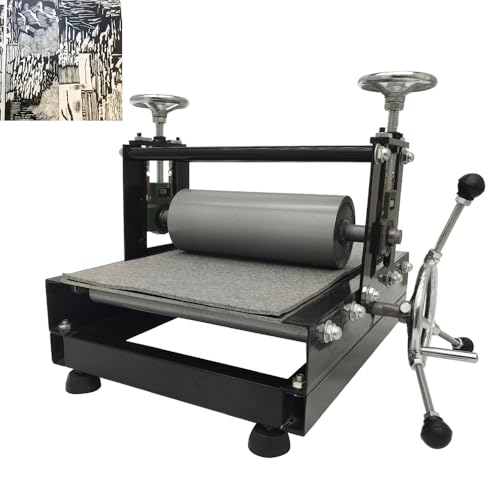
- Tabletop 19.7 × 12.6-inch panel
- Manual, electricity-free operation
- Adjustable roller height and leveling feet
Best For: Small studios processing relief and embossed plates
Classic Block Printing Pick

- Handles prints up to 6 × 8 inches
- Two adjustable height settings
- Portable steel design weighs about 5.7 pounds
Best For: Home, classroom, and beginner block printing
Beginner Linocut Choice

- Fits A5 papers and 25 mm blocks
- Even manual lever pressure
- Includes pads, roller, and wrenches
Best For: Small linocut and relief-print projects
Best All-Around Choice

- Three pressure settings for blocks up to 25 mm
- Stable beech wood and stainless steel construction
- Compact tabletop design for A4 projects
Best For: Beginners and small studios needing a versatile A4 press
Best Accessory Bundle

- Includes roller, pads, and wrenches
- Handles A4 paper and blocks around 25 mm
- Alloy steel frame supports stable pressing
Best For: Beginners wanting useful accessories with an A4 press
Best Portable Option

- Weighs about 5.17 pounds for easier transport
- Adjustable height for flexible operation
- Supports prints up to 6 x 8 inches
Best For: Mobile makers and small-format home or school projects
Adjustable Tabletop Workhorse – TECHTONGDA Slab Roller Press
For printmaking presses for small studios, the TECHTONGDA slab roller offers a moderately sized tabletop format with handwheel-controlled movement. Its 19.7-by-12.6-inch panel, adjustable roller height, and anti-slip feet make it suited to artists who need controlled pressing without a full-size floor unit.
Best For: Small studios handling relief plates, gravure work, and other pressed artworks on a tabletop.
Pros:
- Handwheel operation is designed to provide even pressure.
- Roller height adjusts by about 1.57 inches to accommodate different materials.
- Anti-slip feet help stabilize the 58-pound press during use.
- Iron framing and a PVC work surface are intended for repeated use.
Cons:
- At 58 pounds, it is heavy for a portable tabletop machine.
- The supplied panel is smaller than the press’s overall package dimensions suggest.
This is a practical choice when stability and adjustable clearance matter more than easy lifting. Confirm that your workbench can support its weight and footprint before buying.
Folding Lino Specialist – Speedball Woodzilla A2 Press
The Speedball Woodzilla A2 is one of the more storage-friendly printmaking presses for small studios. It is designed to fold between uses, mount to a table or workbench, and apply substantial pressure without an anti-tipping design that risks the press tipping during operation.
Best For: Lino printers who want an A2-size press with a compact folding design.
Pros:
- Folds for compact storage when not in use.
- Anti-skid shoes help with stability and protect the printing surface.
- Designed to allow strong pressure without tipping.
- Steel construction and Dutch manufacture emphasize durability and craftsmanship.
Cons:
- The A2 size still requires a suitable table or workbench when deployed.
- It is primarily described for lino printing, so its broader technique range is less clearly specified.
Choose the Woodzilla when storage space is a major constraint but you still want a larger lino-printing format. Its folding construction is especially useful for shared or multipurpose studios.
Accessory-Ready Compact Roller – Maisutseb Tabletop Slab Roller
The Maisutseb tabletop slab roller is a compact option among printmaking presses for small studios, combining a 19.7-by-12.6-inch panel with handwheel control and adjustable feet. It also includes a felt sheet to help protect the layout and printmaking materials during pressing.
Best For: Home studios, galleries, and teaching spaces needing an adjustable tabletop roller with included felt.
Pros:
- Handwheel control supports smooth movement and even pressure.
- Adjustable feet and roller height help accommodate different tables and material thicknesses.
- Includes a 19.7-by-12.6-by-0.2-inch felt sheet.
- PVC layout and painted iron framing are designed for repeated use.
Cons:
- Its 53.9-pound weight makes frequent relocation inconvenient.
- The 19.7-by-12.6-inch panel limits the maximum working area.
This model makes the most sense for a dedicated work surface where the included felt and adjustable setup add convenience. Measure both your table and typical print size before committing.
Lightweight All-Steel Starter – Creative Mark Basic Etching Press
For artists comparing printmaking presses for small studios, the Creative Mark Basic Etching Press stands out for its compact 20-pound all-steel construction and tabletop mounting. It can print up to 9 by 15 inches and is designed for etching, collagraphy, embossing, relief blocks, and paper lithography.
Best For: Home studios, schools, and beginners seeking a lighter press for varied printmaking techniques.
Pros:
- Weighs about 20 pounds, making it easier to position than heavier slab rollers.
- All-steel construction and smooth 360-degree action support straightforward operation.
- Works with etching, collagraphy, embossing, wood and lino relief, and paper lithography.
- Includes a 10.5-by-16.5-inch felt blanket made from 80% wool and 20% polyester.
Cons:
- Maximum print size is limited to 9 by 15 inches.
- The 90-day warranty is relatively brief.
- Its compact design may be less suitable for larger-format work.
This is the most approachable option here for studios that value low weight, broad technique compatibility, and a supplied blanket. Its smaller print capacity should be checked against your usual plate and paper sizes.
Compact Workshop Press – Portable Manual Slab Roller
For small studios needing printmaking presses for small studios, this tabletop manual slab roller offers a sturdy, space-conscious setup for relief, intaglio, and other embossed artwork. Its adjustable roller height and large handwheel provide manual pressure control without requiring electricity.
Best For: Artists who need a tabletop press for plate processing, positioning, and small-batch printmaking.
Pros:
- Compact tabletop footprint with a 19.7 × 12.6-inch panel.
- Manual operation needs no electricity and uses a large handwheel.
- Adjustable roller height supports materials up to about 1.57 inches.
- Adjustable nonslip feet help stabilize the painted iron frame.
Cons:
- At 48.9 pounds, it is less portable than smaller hand presses.
- Its larger tabletop size may still require dedicated workspace.
This is a capable choice when pressure adjustment and a broad working panel matter more than easy transport. The manual design suits studios without convenient access to power.
Classic Block Printing Pick – Speedball Model B Steel Press
Speedball Block Printing Press - Adjustable Height Model B Steel Press For Printmaking
Check Price On AmazonThis Speedball steel press is a straightforward option for printmaking presses for small studios, classrooms, and home workspaces. It is designed for reproducing prints up to 6 × 8 inches and applies firm, even pressure with a simple pull-down handle.
Best For: Beginners and hobbyists making small block prints on hard or soft substrates.
Pros:
- Supports reproduction of prints up to 6 × 8 inches.
- Two adjustable height settings simplify setup.
- Steel construction is sturdy for regular hobby use.
- At about 5.7 pounds, it is easy to move or transport.
Cons:
- The small print area limits larger-format projects.
- It has only two adjustable height settings.
- No warranty is listed in the supplied details.
Choose this model for compact, repeatable block printing rather than oversized work. Its light weight and uncomplicated lever action make it especially practical for home or school use.
Beginner Linocut Choice – TOPOWN Mini Lever Press
For artists comparing printmaking presses for small studios, the TOPOWN Mini Linocut Press provides a compact manual lever setup for A5 papers and blocks up to 25 mm thick. The included felt cushion is designed to protect carved surfaces while helping distribute pressure evenly.
Best For: Beginners and artists working on linocut, woodcut, rubber, or other small relief-print projects.
Pros:
- Compatible with A5-size printing, felt, and art papers.
- Accommodates carving blocks up to 25 mm thick.
- Lever operation is designed to transmit pressure evenly.
- Includes a felt pad, rubber roller, rubber pad, and wrenches.
Cons:
- Blocks are not included.
- A5 compatibility limits the working area compared with larger presses.
- It requires manual operation for every impression.
This is a practical entry-level press for small relief work and hands-on studio practice. Its included accessories reduce setup needs, while the A5 format keeps projects focused and manageable.
Best All-Around Choice – A4 Beech Wood Linocut Press
For small studios seeking printmaking presses for small studios, this compact manual model combines an A4 format with adjustable pressure and a sturdy tabletop design. Its beech wood pressure plate, stainless steel frame, and felt pad are suited to recurring linocut and relief-printing projects.
Best For: Beginners, home studios, classrooms, and artists printing A4-sized work.
Pros:
- Three pressure settings accommodate blocks up to 25 mm thick.
- Solid beech wood and a rust-resistant 304 stainless steel frame provide a stable structure.
- Felt padding helps protect blocks and support even ink transfer.
- Suitable for linocut, woodcut, letterpress, rubber printing, and crafts.
Cons:
- At 13 pounds, it is less portable than the lighter option in this roundup.
- The A4 format may not suit larger prints.
This is a practical choice when stability, adjustable pressure, and broad craft versatility matter more than minimum weight. Its included two-year manufacturer warranty is also useful for frequent studio use.
Best Accessory Bundle – TOPOWN A4 Hand Lever Press
This TOPOWN model is a sensible contender among printmaking presses for small studios, especially if you want several basic accessories included. It supports A4 papers and blocks about 25 mm thick, with a manual lever designed for even, low-effort pressing.
Best For: Beginners and studios wanting an A4 press with starter accessories.
Pros:
- Package includes a rubber roller, felt pad, rubber pad, and wrenches.
- Powder-coated alloy steel frame is designed for durability and stability.
- Felt cushioning helps protect carving blocks during pressing.
- Works with linocut, woodcut, letterpress, rubber, cardboard, string, label, and cork printing.
Cons:
- Blocks are not included.
- The one-year warranty is shorter than the two-year warranty listed for the beech wood model.
- Its engineered-wood pressure plate may appeal less to buyers seeking solid natural wood.
The included tools and pads make this a convenient starting package, while its A4 capacity keeps it appropriate for compact workspaces. Consider it when accessory value is a priority.
Best Portable Option – Lounsweer Compact Block Press
For artists prioritizing portability, this compact Lounsweer press is one of the more travel-friendly printmaking presses for small studios. It weighs about 5.17 pounds, accommodates prints up to 6 x 8 inches, and uses an adjustable-height hand lever for controlled pressure.
Best For: Home, school, and mobile printmaking projects using smaller formats.
Pros:
- Lightweight design is easier to transport than the 13-pound alternatives.
- Adjustable height supports different printing surfaces and substrates.
- Steel construction is designed to handle both hard and soft materials.
- Suitable for ink block printing, woodcut, and letterpress applications.
Cons:
- Its maximum stated print size is 6 x 8 inches, smaller than the A4 models.
- The notes recommend placing a rubber or carpet mat underneath to protect the work surface.
- The supplied notes do not mention included pads or other accessories.
This is the strongest fit for makers who need a press they can move easily or use in a classroom. Its smaller print area is the main trade-off for that portability.
How We Picked the Best Printmaking Presses for Small Studios
We focused on manual presses that are realistic for home workrooms, classrooms, and compact artist studios. Our comparison considers print area, press style, construction, adjustability, portability, ease of use, and the techniques each design can support. We included options ranging from simple hand-lever linocut presses to sturdier steel etching presses and slab rollers.
Because specifications and included accessories can vary by seller, confirm the listed dimensions, working capacity, and setup requirements before ordering.
Quick Comparison
| Press type | Best suited to | Main advantage | Potential limitation |
|---|---|---|---|
| Slab roller | Clay-related printmaking and larger flat work | Broad working surface | Requires more bench space |
| Etching press | Etching, relief, and lithography | More controlled pressure | Heavier and less portable |
| Block press | Lino and relief printing | Simple, accessible operation | Less versatile for some print processes |
| Hand-lever press | Small lino and craft projects | Compact and easy to store | Limited print size and pressure |
Key Buying Factors for Printmaking Presses for Small Studios
Print Size and Workspace
Check both the maximum print area and the press’s overall footprint. A press that handles A4 or larger work may need substantial clearance around the bed, handle, or roller. Measure your table and storage area before choosing.
Technique and Pressure Control
Hand-lever models are convenient for linocut and relief printing, while etching presses offer more even, adjustable pressure for plates, blankets, and varied substrates. Slab rollers may be preferable when a wide, flat surface matters more than compact storage.
Construction and Stability
Steel frames generally provide greater rigidity and durability, but they add weight. Wood presses can be lighter and attractive for beginner work, though stability depends on the base and clamping arrangement. A non-slip mat or secure mounting surface can improve control.
Portability and Maintenance
If you share a room or pack away equipment after each session, prioritize manageable weight and a compact design. Look for accessible adjustment points, smooth-moving rollers or levers, and surfaces that are easy to clean after using ink.
Who Should Buy Which Printmaking Presses for Small Studios?
Choose a compact hand-lever press if you mainly make small lino or relief prints and need easy storage. These are usually the simplest starting point for beginners and occasional printmakers.
Choose an adjustable block press if you want a dedicated solution for repeatable relief printing with more flexibility than a basic craft press.
Choose an etching press if you work across etching, lithography, and relief techniques or need more consistent pressure for larger prints. Be prepared for greater weight and a more permanent setup.
Choose a slab roller if a broad tabletop working area and manual control are more important than maximum portability. These models can suit artists handling larger pieces in a small but organized studio.
For most buyers, the best choice balances the largest print size you actually make with the smallest footprint that still provides stable, repeatable pressure.