Room dividers with fabric can create privacy, define work zones, and refresh an open room without the permanence of a wall. The best option depends on your available space, desired coverage, and whether you need portability or a more decorative look.
We’ve selected 10 folding screens, freestanding panels, wheeled designs, and curtain-style solutions for bedrooms, home offices, studios, and shared living areas.
Best 10 Room Dividers with Fabric Picks for 2026
Best Stable Folding Divider

- Opaque 240g polyester fabric
- Powder-coated steel frame
- Folds for compact storage
Best For: Wide, stable privacy separation in homes and offices
Best Adjustable Single Panel
Height-Adjustable Fabric Divider
- Adjustable height design
- Opaque privacy fabric
- Tool-free setup
Best For: Small spaces needing one flexible privacy panel
Best Mobile Divider
4-Panel Screen with Locking Wheels

- Quiet lockable wheels
- Opaque coated polyester fabric
- Folds into flexible shapes
Best For: Frequently repositioned indoor partitions
Best Decorative Screen
Japanese Geometric Fabric Divider

- Natural paulownia wood frame
- Decorative geometric fabric
- Folds flat for storage
Best For: Style-conscious room separation and light filtering
Lightweight Steel-Frame Divider
RANTILA Large Panel Privacy Screen

- Large 71-by-69.5-inch fabric panel
- Waterproof, UV-protected, easy-clean fabric
- Lightweight steel-frame design moves easily
Best For: Offices and rooms needing flexible freestanding privacy
Blackout No-Drill Curtain

- 100% blackout, 100-by-84-inch fabric panel
- Adjustable no-drill tension rod included
- Triple-weave fabric helps dampen sound
Best For: Renters and shared spaces needing temporary blackout privacy
Foldable Four-Panel Screen
Portable 6FT Fabric Privacy Divider

- Non-see-through fabric for full visual privacy
- Four panels adjust into different shapes
- Steel frame folds for moving and storage
Best For: Shared indoor spaces needing configurable portable privacy
Natural Bamboo Privacy

- Wide 79.9-inch coverage
- Folds flat with no assembly
- Bamboo and wood construction
Best For: Natural-style indoor privacy and room separation
Soft Linen Zoning

- Linen panels soften light
- Two-way hinges bend around furniture
- 67 inches tall and freestanding
Best For: Flexible partitions for rentals, studios, and cozy spaces
Stable Fabric Separation

- 88-inch-wide polyester partition
- Three wide bases add stability
- Folds for compact storage
Best For: Everyday indoor privacy with easy-clean fabric panels
Best Stable Folding Divider – 4-Panel Privacy Screen
If you need room dividers with fabric for a bedroom, office, or shared living area, this four-panel HOMSCREENER model prioritizes stability and privacy. Its powder-coated steel frame, widened feet, and opaque polyester screen make it a practical temporary wall.
Best For: Creating a wide, no-see-through partition in bedrooms, offices, classrooms, or living spaces.
Pros:
- 240g polyester fabric with PA coating is opaque, wrinkle-resistant, water-resistant, and easy to wipe clean.
- Powder-coated steel frame and extended feet help reduce wobbling.
- Triple-buckle hinges allow flexible positioning and folding for storage.
- Four panels span up to 88 inches wide.
Cons:
- At about 71 inches high, it may not provide ceiling-height separation.
- Assembly requires tightening components with the included tool.
This is a strong choice when a broad fabric divider and a steadier floor footprint matter more than ultra-compact storage.
Best Adjustable Single Panel – Height-Adjustable Fabric Divider
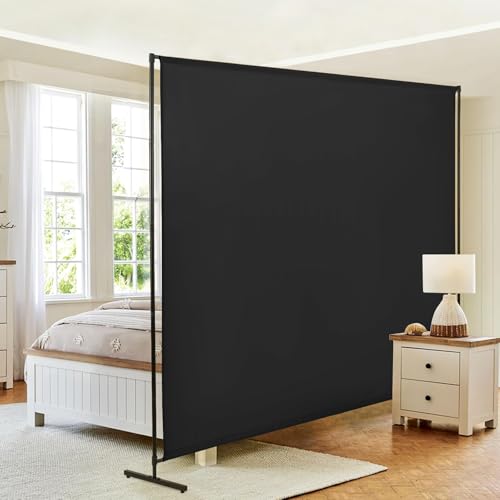
For shoppers seeking room dividers with fabric in a compact, single-panel format, this freestanding screen offers adjustable height and a 71-inch width. Its opaque fabric and removable feet make it useful for flexible room separation without permanent installation.
Best For: Apartments, dorms, home offices, dressing areas, and other spaces that need one movable privacy panel.
Pros:
- Height can be adjusted to suit different layouts and privacy needs.
- High-density opaque fabric blocks visibility.
- Removable feet support stability and easier repositioning on different floor types.
- Designed for quick setup without tools.
Cons:
- A single panel provides less coverage than multi-panel screens.
- The supplied dimensions list a maximum 71-inch height and width.
Choose this model when straightforward placement and adjustable height are more important than creating a large, folding partition.
Best Mobile Divider – 4-Panel Screen with Locking Wheels
These room dividers with fabric are designed for frequent repositioning. The SUNALLY four-panel screen combines opaque 240gsm polyester, a powder-coated steel frame, and quiet wheels with locking brakes, making it convenient for rooms that change function.
Best For: Offices, studios, classrooms, bedrooms, and other indoor areas where a wide divider needs to move easily.
Pros:
- Lockable PE wheels glide quietly and help keep the screen in place.
- 240gsm polyester with PA coating improves opacity, wrinkle resistance, abrasion resistance, and water repellency.
- Widened feet and a powder-coated steel frame support stability and durability.
- Double hinges allow angled configurations and folding for storage.
Cons:
- The supplied notes mention that fabric stains may fade over time in a well-ventilated area.
- At 7.51 kg, it is heavier than a lightweight fabric-only screen.
This is the most practical pick for users who want full-width separation but still need to roll the divider between locations.
Best Decorative Screen – Japanese Geometric Fabric Divider
If appearance matters as much as separation, these room dividers with fabric add a Japanese-inspired geometric pattern to the room. The four-panel Svimi screen uses a paulownia wood frame and non-woven fabric for a lightweight, freestanding partition with light filtering.
Best For: Bedrooms, living rooms, studios, reading nooks, tea rooms, and decor-focused work areas.
Pros:
- Geometric fabric panels create a decorative visual boundary.
- Paulownia wood and fabric construction gives the screen a natural look.
- Bi-directional hinges support straight, zigzag, or angled arrangements.
- Folds flat for storage and requires no wall mounting.
Cons:
- Light-filtering fabric is not described as fully opaque.
- At 66.93 inches high and 63 inches wide, it covers less area than the wider steel-frame options.
- Care instructions call for wiping with a dry cloth.
This screen suits buyers who want a portable divider that complements the room rather than looking like a purely utilitarian privacy wall.
Lightweight Steel-Frame Divider – RANTILA Large Panel Privacy Screen
If you need room dividers with fabric for an office, bedroom, or shared space, this RANTILA screen offers a broad single-panel barrier without a complicated setup. Its 71-by-69.5-inch format is lightweight enough to move or store, while the fabric is UV protected and waterproof for easier upkeep.
Best For: Offices and rooms that need a movable, freestanding privacy screen with a modern look.
Pros:
- Large 71-by-69.5-inch single-panel coverage.
- Lightweight, flexible design is easy to reposition or store.
- Waterproof, UV-protected fabric is easy to clean.
- Steel frame is designed for durability and stability.
Cons:
- As a single panel, it may not provide fully enclosed separation.
- Assembly is required.
This is a practical pick when flexibility matters more than creating a multi-panel enclosure. The included instructions and classic-modern styling make it suitable for straightforward office or home use.
Blackout No-Drill Curtain – AJAZZ Fabric Room Separator
For renters or anyone avoiding wall damage, these room dividers with fabric combine a 100% blackout curtain with an adjustable tension rod. The 100-by-84-inch panel can create a private zone, and its dense triple-weave construction is intended to help absorb echo and room noise.
Best For: Renters, dorm rooms, shared workspaces, podcast corners, and sleeping areas needing blackout coverage.
Pros:
- No-drill tension rod adjusts from 43 to 120 inches high and 35 to 100 inches wide.
- 100% blackout fabric helps block light and views.
- Triple-weave construction helps dampen echo and room noise.
- Can also cover closets, corners, or ceiling-style openings.
Cons:
- The curtain is a single panel rather than a folding screen.
- Hand washing is recommended for care.
- Tension-rod installation depends on suitable opposing surfaces.
This AJAZZ setup is best when a temporary, space-saving separator is more useful than a rigid partition. The adjustable rod and blackout fabric offer strong flexibility for rental spaces and shared rooms.
Foldable Four-Panel Screen – Portable 6FT Fabric Privacy Divider
These room dividers with fabric are a useful choice when you want a taller, freestanding partition that can be reshaped as needed. This four-panel screen measures 80 by 71 inches, uses non-see-through fabric, and folds for repositioning or compact storage.
Best For: Bedrooms, dorms, offices, classrooms, clinics, and other shared indoor spaces requiring adaptable privacy.
Pros:
- Non-see-through, tear-resistant, wrinkle-resistant fabric provides strong coverage.
- Four connected panels can be angled into different shapes.
- Powder-coated steel frame and wide feet support stability.
- Folds for easier moving and storage.
Cons:
- Assembly takes about 15 minutes.
- The 80-inch width may not cover larger openings by itself.
- Designed for indoor use.
Choose this screen if you value configurable coverage and portability. Its flexible hinges let you adapt the layout to different spaces, while the dense fabric prioritizes visual privacy and a neat appearance.
Natural Bamboo Privacy – 4-Panel Woven Room Divider
If you want room dividers with fabric alternatives in a natural style, this woven bamboo and wood screen offers a warm-looking way to separate space. Its four panels fold flat for storage, require no installation, and provide broad coverage for bedrooms, living areas, offices, or dressing spaces.
Best For: Shoppers who prefer a lightweight, freestanding bamboo screen with a wide footprint and traditional Japanese-inspired styling.
Pros:
- Four panels span approximately 79.9 inches wide and 70.9 inches high.
- Folds flat and needs no tools or assembly.
- Wooden frame and bamboo construction provide a natural decorative appearance.
- Hinges allow the panels to unfold in either direction.
Cons:
- Uses woven bamboo rather than fabric, so it may not suit shoppers specifically seeking a soft textile screen.
- Designed for indoor use only.
This is a practical choice when coverage, portability, and natural materials matter most. The freestanding design makes it easy to reposition, while the broad four-panel layout helps create a more private zone.
Soft Linen Zoning – 6-Panel Fabric Room Divider
Among room dividers with fabric, this six-panel linen screen stands out for its soft visual effect and flexible layout. Two-way hinges let it bend around furniture or fit into corners, making it useful for dividing bedrooms, studios, offices, and other indoor spaces without permanent changes.
Best For: Renters, studio dwellers, and anyone wanting a lightweight linen screen for flexible room zoning.
Pros:
- Linen fabric softens light and creates a gentler visual partition.
- Six panels and two-way hinges support multiple configurations.
- At 67 inches tall, it can define a bedroom nook, workspace, or reading corner.
- Anti-slip pads help keep the freestanding screen steady and protect floors.
Cons:
- Its 63-inch overall width is narrower than some four-panel alternatives.
- The 67-inch height may provide less coverage for taller users or spaces.
This screen prioritizes adaptable styling over maximum height or coverage. Its linen panels and walnut-colored wood frame suit cozy interiors, while the folding construction makes layout changes simple.
Stable Fabric Separation – 4-Panel Wide-Foot Screen
This four-panel polyester screen is a practical option for shoppers comparing room dividers with fabric for everyday privacy. Its panels are described as wrinkle-resistant, wear-resistant, and waterproof, while three wide bases help provide stability across bedrooms, offices, dressing rooms, and other indoor settings.
Best For: Buyers who want a wide, wipe-clean polyester divider with flexible positioning and reinforced floor support.
Pros:
- Four polyester panels provide a private barrier with an approximately 88-inch width.
- Waterproof, wear-resistant panels can be wiped with a damp cloth.
- Three longer, wider feet are designed to reduce shaking and tipping.
- Panels can be rearranged into different shapes and fold to about 22 by 67.5 inches for storage.
Cons:
- Assembly is required, although the product includes instructions.
- The white polyester design may show marks more readily than darker colors.
- Intended for indoor use.
Choose this model when stability and easy maintenance are higher priorities than a decorative natural-material finish. Its wide layout and flexible connectors make it useful for creating temporary private areas in open rooms.
How We Picked These Room Dividers with Fabric
We focused on practical differences that matter in everyday use: overall width and height, panel construction, portability, stability, visual privacy, setup requirements, and suitability for specific rooms. The selection includes compact single panels, wide four-panel screens, wheeled models, fabric curtains, and designs that combine textile panels with wood or bamboo frames.
Because room layouts vary, no single divider is best for everyone. We considered whether each style can separate a workspace, conceal a bed or dressing area, reduce visual distractions, or add a decorative accent without requiring permanent installation.
Quick Comparison
- Best for broad coverage: Four-panel folding screens with widths around 80 to 88 inches.
- Best for flexible positioning: A wheeled divider that can be moved without lifting.
- Best for a minimalist setup: A single large freestanding panel.
- Best for renters: A curtain-style divider with a tension rod and no drilling.
- Best for decorative warmth: Fabric panels paired with wood, bamboo, or woven details.
Key Buying Factors for Room Dividers with Fabric
Size and Coverage
Measure both the area you want to screen and the storage space available when the divider is folded. A taller panel offers better visual separation, while a wider multi-panel design can cover a bed, desk, or room opening more effectively. Check the listed dimensions carefully because product width may describe the fully extended screen rather than its practical, angled footprint.
Privacy and Light Control
Opaque fabric is generally better for changing areas, sleeping spaces, and video-call backgrounds. Lighter or more open materials may preserve daylight but provide less privacy. If reducing glare or distractions matters, prioritize denser fabric and a taller design.
Stability and Mobility
Look for broad feet, balanced panel hinges, or locking casters if the divider will be moved often. Folding screens are convenient, but they are more stable when arranged in a slight zigzag rather than completely flat. Keep the screen away from high-traffic paths where it could be bumped.
Setup and Maintenance
Freestanding models are usually quickest to install, while curtain systems require suitable rod placement and a compatible surface. Review cleaning instructions before buying: removable or wipeable fabric is more convenient in homes with pets, children, or frequent use.
Who Should Buy Which Room Dividers with Fabric?
Choose a wide four-panel screen if you need substantial coverage for a bedroom, studio, or open-plan office. A single large panel is a better fit when you need a narrow visual barrier behind a desk or beside a bed. Select a wheeled model for spaces that change frequently, such as shared offices or multipurpose rooms.
For renters and anyone avoiding floor space, a curtain divider can be the simplest solution, provided the tension rod can span the opening securely. If appearance is as important as privacy, consider a fabric screen with bamboo, wood, or geometric detailing. Before ordering, confirm the unfolded dimensions, folded depth, frame material, and return policy so the divider fits both your room and your routine.