Finding useful storage for a tight room can be challenging, especially when a full-size buffet or credenza overwhelms the available floor space. The best sideboards for narrow spaces add concealed storage and serving surface without blocking walkways.
This roundup compares 10 compact options in modern, mid-century, farmhouse, and walnut-inspired styles. Before choosing, measure the wall, check door clearance, and match the cabinet’s storage layout to how you plan to use it.
Best 10 Sideboards for Narrow Spaces Picks for 2026
Flexible Urban Storage

- 11.8-inch depth for tighter spaces
- Two doors with two adjustable shelves
- Modern black finish with anti-tip design
Best For: Compact living rooms, entryways, and coffee-bar setups
Walnut Style and Adjustability
Smuxee Walnut Narrow Sideboard

- 14.9-inch-deep freestanding design
- Shelf adjusts to three heights
- Grooved doors with walnut and gold detailing
Best For: Modern hallways and living rooms needing flexible storage
Ultra-Slim Coffee-Bar Storage
KEIKI 39-Inch Fluted Sideboard

- Extra-shallow 9.25-inch depth
- Four drawers plus one shelf
- Two rear outlet holes for cable access
Best For: Narrow coffee bars, kitchens, and entryways
Modular Slim Storage
LKTART 39-Inch Narrow Sideboard

- 9.25-inch-deep compact profile
- Expandable with 39-, 78-, or 117-inch configurations
- Geometric veneer doors with cable access
Best For: Shallow spaces needing expandable storage
Best Sliding-Door Pick

- 11.8-inch depth suits tight layouts
- Sliding doors need no swing clearance
- 100-pound top with anti-tip kit
Best For: Entryways, hallways, and small apartments
Best Modular Option
39-inch Real-Wood-Veneer Narrow Sideboard

- Only 9.3 inches deep
- Rear outlet holes support appliance cords
- Can be combined side by side
Best For: Outlet-adjacent hallways, kitchens, and foyers
Best Decorative Design
39-inch Slatted-Door Walnut Sideboard

- 9.25-inch shallow profile
- Real wood veneer with slatted doors
- Two cable holes and anti-tip hardware
Best For: Narrow rooms where style and concealed storage both matter
Best Slim Modular Pick
LKTART Narrow Farmhouse Sideboard

- 11.9-inch-deep profile for tight layouts
- Open cubbies and adjustable hidden shelf
- Anti-tip kit and cord-management hole included
Best For: Compact entryways, kitchens, and modular media storage
Best for Ultra-Narrow Hallways
Ball & Cast 39-Inch Walnut Sideboard

- Only 9.25 inches deep
- Fluted doors with two interior shelves
- Two outlet holes and anti-tip construction
Best For: Hallways, entryways, and sofa-back storage
Best Large-Capacity Option
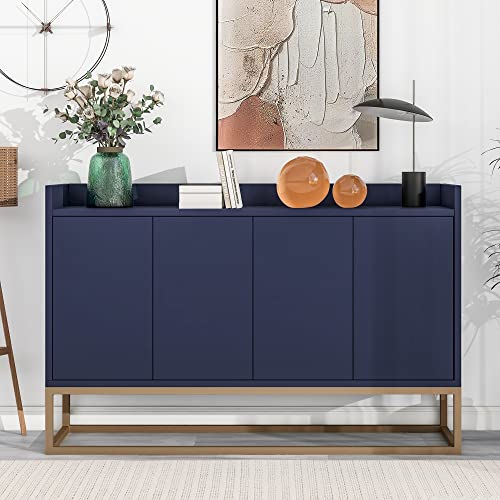
- 11.8-inch depth with four-door storage
- Push-to-open doors save handle clearance
- 75-pound countertop capacity and steel base
Best For: Narrow dining rooms and kitchens needing substantial enclosed storage
Flexible Urban Storage – TaoHFE Black Narrow Sideboard
For sideboards for narrow spaces, the TaoHFE Black Buffet Cabinet offers a practical 11.8-inch-deep footprint with a versatile modern look. Its two doors, two shelves, and flat top provide concealed storage while leaving room for decor, a coffee setup, or serving items.
Best For: Living rooms, entryways, kitchens, or compact coffee-bar areas needing enclosed storage.
Pros:
- Shallow 11.8-inch depth suits tighter layouts.
- Two cabinet doors and two adjustable shelves provide organized storage.
- Black finish and metal handles complement many decorating styles.
- Includes anti-tip hardware and labeled parts for assembly.
Cons:
- Engineered-wood construction may not offer the feel of solid wood.
- The 30.7-inch height may provide less vertical storage than taller cabinets.
This is a well-rounded choice when you want a slim, enclosed cabinet that can move between rooms. Its adaptable styling and safety-focused design make it especially useful for multifunctional spaces.
Walnut Style and Adjustability – Smuxee Walnut Narrow Sideboard
Among sideboards for narrow spaces, the Smuxee Walnut Sideboard combines a relatively compact 14.9-inch depth with a warm walnut finish and distinctive line-groove doors. Its adjustable interior shelf helps tailor the cabinet to different storage needs.
Best For: Hallways, living rooms, entryways, or rooms that need flexible storage with a mid-century modern look.
Pros:
- Adjustable shelf offers three height positions.
- Walnut finish, grooved doors, and gold handles add visual interest.
- Can function as a sideboard, TV stand, entryway cabinet, or office storage unit.
- Scratch- and water-resistant MDF is designed for easier maintenance.
Cons:
- At 14.9 inches deep, it needs more clearance than the slimmest options.
- Only two compartments may limit organization for smaller items.
The Smuxee is a strong fit when appearance matters as much as storage flexibility. Its adjustable shelf and multifunctional format make it more adaptable than a basic fixed-layout cabinet.
Ultra-Slim Coffee-Bar Storage – KEIKI 39-Inch Fluted Sideboard
For especially tight sideboards for narrow spaces, the KEIKI cabinet stands out with a 9.25-inch depth. Four drawers, a shelf, and two rear outlet holes make this fluted cabinet useful for compact coffee stations, entryways, and living areas.
Best For: Very narrow walls, coffee bars, kitchens, and entryways where shallow storage and cord access are priorities.
Pros:
- 9.25-inch depth is suited to exceptionally narrow areas.
- Four drawers and one shelf divide storage between smaller and larger items.
- Two outlet holes help route cords for coffee makers, chargers, and other devices.
- Anti-tip back panel adds stability for homes with children or pets.
Cons:
- The shallow profile may limit storage for bulky items.
- Its 39-inch width requires sufficient horizontal wall space.
The KEIKI is one of the more space-conscious choices in this group. Its outlet access and mixed drawer-and-shelf layout make it particularly practical for a narrow coffee or charging station.
Modular Slim Storage – LKTART 39-Inch Narrow Sideboard
The LKTART 39-inch cabinet is designed specifically for sideboards for narrow spaces, with a 9.25-inch depth and a modular format. Its geometric solid-wood veneer doors, cable hole, and anti-tip device support both style and everyday utility.
Best For: Slim entryways, compact dining areas, coffee bars, or modular wall storage that may need to expand later.
Pros:
- 9.25-inch profile fits shallow areas.
- Units can be combined into 78- or 117-inch arrangements.
- Solid wood veneer and geometric door detailing add a refined finish.
- Cable hole and anti-tip hardware improve practical, secure placement.
Cons:
- Its narrow depth may not accommodate larger serving or kitchen items.
- Expanding the layout requires purchasing additional units.
- The supplied details do not specify the complete shelf configuration.
Choose the LKTART when you want an exceptionally slim cabinet with room to build a larger storage run over time. Its modular sizing gives it an advantage for evolving living-room or entryway layouts.
Best Sliding-Door Pick – 32-inch Walnut Slim Sideboard
For sideboards for narrow spaces, this 32-inch cabinet stands out for its compact 11.8-inch depth and sliding doors, which do not require extra clearance. Its walnut finish and concealed storage suit entryways, hallways, dining areas, and small apartments.
Best For: Tight areas where you need concealed storage without door-swing clearance.
Pros:
- Space-saving sliding doors work well in narrow passageways.
- Two-tier interior storage accommodates books, dinnerware, toys, and decor.
- Top supports up to 100 pounds and includes an anti-tipping kit.
- Integrated cable management adds flexibility for electronics or small appliances.
Cons:
- Engineered-wood construction may not offer the feel of solid wood.
- At 32 inches wide, storage capacity is more limited than larger sideboards.
This is a practical choice when depth and door clearance are your main concerns. The compact footprint, sliding doors, and warm walnut styling make it especially adaptable for small homes.
Best Modular Option – 39-inch Real-Wood-Veneer Narrow Sideboard
This 39-inch sideboard is designed for sideboards for narrow spaces, measuring just 9.3 inches deep. Its real-wood-veneer detailing, outlet openings, and modular design make it useful along walls in hallways, foyers, kitchens, and dining rooms.
Best For: Buyers who want shallow storage that can be paired side by side or positioned near outlets.
Pros:
- Ultra-shallow 9.3-inch profile fits narrow wall spaces.
- Rear outlet holes help prevent cord blockage and support small appliances.
- Two shelves provide organized interior storage.
- Included anti-tip hardware and labeled parts simplify installation.
Cons:
- The supplied notes do not specify the cabinet’s full weight capacity.
- Wall anti-tip installation may require more planning than a simple freestanding setup.
Choose this model if shallow depth and expandable storage matter most. Its outlet-friendly design is particularly useful for creating a compact coffee, bar, or appliance station.
Best Decorative Design – 39-inch Slatted-Door Walnut Sideboard
Among sideboards for narrow spaces, this 39-inch accent cabinet combines a shallow 9.25-inch profile with real wood veneer and decorative slatted doors. It offers concealed two-tier storage while fitting narrow entryways, hallways, living rooms, dining rooms, and studies.
Best For: Style-conscious shoppers seeking a slim cabinet that can also serve as a compact coffee bar or wine cabinet.
Pros:
- 9.25-inch depth works well in tight floor plans.
- Real wood veneer provides natural grain and a scratch-resistant, wear-resistant surface.
- Two cable holes support small appliances, bar accessories, and mobile devices.
- Anti-tipping hardware adds safety for households with children or pets.
Cons:
- Its 39-inch width may still require a relatively long wall section.
- Engineered-wood construction is not the same as a solid-wood cabinet.
This cabinet is a strong fit when appearance matters as much as footprint. The slatted walnut-front design adds visual interest, while the shallow depth preserves valuable walking space.
Best Slim Modular Pick – LKTART Narrow Farmhouse Sideboard
For sideboards for narrow spaces, the LKTART cabinet stands out with an 11.9-inch depth and useful vertical storage. Its open cubbies, concealed adjustable shelf, outlet-friendly cord hole, and modular design make it practical for compact entryways, kitchens, or living rooms.
Best For: Small spaces needing flexible storage, display shelving, and the option to combine multiple units into a longer console.
Pros:
- Very slim 11.9-inch depth helps conserve floor space.
- Combines open display cubbies with hidden adjustable storage.
- Cord-management hole and included anti-tip kit support tidy, family-friendly placement.
- Can be used alone or combined with additional units as a media console.
Cons:
- Its single-door configuration provides less enclosed storage than larger multi-door cabinets.
- Assembly and wall anchoring are required.
This is a strong choice when every inch matters. The floor-flush base, narrow profile, and multiple placement options make it especially versatile, while the black wood-look finish suits farmhouse, rustic, and mid-century-inspired rooms.
Best for Ultra-Narrow Hallways – Ball & Cast 39-Inch Walnut Sideboard
Among sideboards for narrow spaces, the Ball & Cast model has one of the shallowest footprints at 9.25 inches deep. Its 39-inch width, fluted doors, and walnut finish provide concealed storage and mid-century style without projecting far into a hallway or entryway.
Best For: Hallways, narrow entryways, sofa-back placement, and compact coffee-bar or dining storage.
Pros:
- Extra-slim 9.25-inch depth is well suited to tight passageways.
- Two fluted doors and two shelves conceal dinnerware, linens, or bar accessories.
- Two outlet holes help route cords for lamps, coffee makers, or chargers.
- Includes anti-tip construction and assembly hardware and instructions.
Cons:
- The shallow cabinet depth may limit storage for larger appliances or bulky items.
- Assembly is required.
The Ball & Cast is the most hallway-friendly option in this group. Choose it when depth is the main constraint and you want a polished walnut accent with enclosed storage rather than open shelving.
Best Large-Capacity Option – LUMISOL Four-Door Sideboard
The LUMISOL sideboard offers substantial enclosed storage while remaining just 11.8 inches deep, making it a practical pick among sideboards for narrow spaces. Its 47.2-inch width, four handle-free doors, and navy blue finish suit dining rooms, kitchens, living rooms, and coffee-bar setups.
Best For: Households that need more enclosed storage than a compact cabinet can provide while keeping front-to-back depth modest.
Pros:
- Four doors and two large cabinets provide generous organized storage.
- 11.8-inch depth helps reduce crowding in narrow layouts.
- Push-to-open doors avoid protruding handles and support a streamlined look.
- Water-resistant surface, steel support base, and 75-pound countertop capacity support everyday use.
Cons:
- Its 47.2-inch width requires more horizontal wall space.
- It has a more limited shelf configuration than some modular designs.
- Assembly is required.
Pick the LUMISOL when storage capacity is the priority and your room can accommodate its wider footprint. It delivers a useful balance of shallow depth, four-door organization, and a modern navy finish.
How We Picked the Best Sideboards for Narrow Spaces
We focused on cabinets with relatively slim footprints, practical widths for apartments and compact dining areas, and storage features that make a small piece more useful. The selection includes buffet cabinets, entryway consoles, accent cabinets, and credenzas with doors, adjustable shelves, open compartments, or cable-management details.
We also considered style flexibility, including walnut and wood-look finishes, fluted and slatted doors, clean modern fronts, farmhouse detailing, and mid-century silhouettes. Because narrow furniture still needs to be safe and functional, shoppers should verify the listed dimensions, assembly requirements, shelf capacity, ventilation, and anti-tip hardware before ordering.
Quick Comparison
| Best For | Look or Feature to Prioritize | Options in This Roundup |
|---|---|---|
| Small dining areas | Adjustable shelving and closed storage | Smuxee, LUMISOL, TaoHFE |
| Entryways | Slim depth, durable doors, and stable construction | LKTART entryway models, KEIKI |
| Media or living rooms | Cable openings and concealed compartments | Ball & Cast, LKTART farmhouse model |
| Style-led rooms | Fluted, slatted, walnut, or mid-century fronts | Walnut slim cabinet, KEIKI, Ball & Cast |
Key Buying Factors for Sideboards for Narrow Spaces
Measure Depth, Width, and Clearance
Depth is often the deciding measurement in a passageway or small dining room. Measure from the wall to the edge of the walking path, then leave enough clearance for cabinet doors and drawers to open fully. Also check baseboards, outlets, trim, and nearby furniture.
Match Storage to the Job
Adjustable shelves help accommodate dishes, baskets, and taller objects, while fixed compartments can provide more predictable organization. Closed doors hide clutter; open shelves keep frequently used items accessible. If the cabinet will hold electronics, look for outlet holes and cable-routing features.
Check Construction and Stability
Look for solid wood or veneer details when they suit your budget and expectations, but assess the complete construction rather than the finish alone. Confirm the cabinet’s weight limit, leg or base design, door hardware, assembly instructions, and included anti-tip kit. A narrow cabinet should be anchored when recommended, particularly in homes with children or pets.
Choose a Finish That Supports the Room
Walnut tones and fluted doors add warmth, while black and minimalist fronts create a sharper modern look. Slatted or textured doors can become a focal point, but simpler surfaces may blend more easily with existing furniture.
Who Should Buy Which Sideboards for Narrow Spaces?
Choose a compact mid-century or walnut cabinet if appearance is the priority and you want a console that works in a living room or entryway. Pick a model with adjustable shelves if you need flexible dish, linen, or household storage. For media use, prioritize outlet openings and ventilation over decorative details. If the cabinet will sit in a busy walkway, select the shallowest suitable design and give extra attention to door clearance and anti-tip support. Buyers seeking a farmhouse feel should look for wood doors, open storage, and cable holes, while modern-room shoppers may prefer smooth, fluted, or slatted fronts with a metal base.