The right pinking shears can help reduce fabric fraying while giving seams and craft projects a neat zigzag finish. For left-handed makers, however, handle comfort, blade orientation, and cutting visibility matter just as much as sharpness.
We compared 10 options across blade construction, handle design, cutting capacity, and intended use to help you choose a reliable pair for dressmaking, quilting, alterations, and general crafts.
Best 10 Left Handed Pinking Shears Picks for 2026
Best Left-Handed Precision Pick
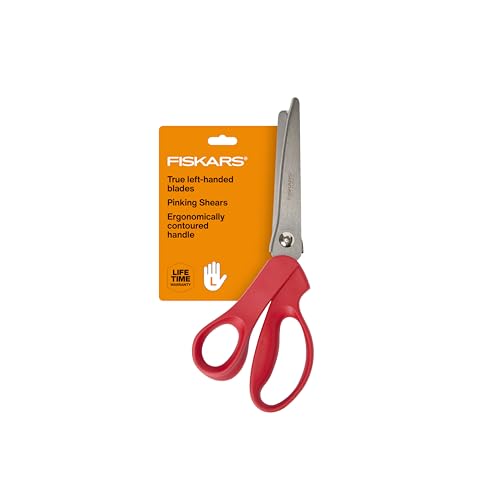
- True left-handed ergonomic design
- Precision-ground stainless steel blades
- Extended lower blade for continuous cutting
Best For: Left-handed sewists finishing fabric edges
Best Ambidextrous Value
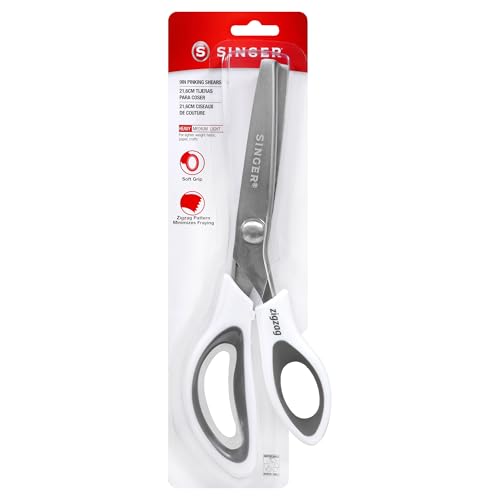
- Ambidextrous design for shared use
- 9-inch stainless steel zigzag blades
- Soft grip for comfortable cutting
Best For: Shared sewing and craft projects
Best Rubber-Grip Left-Handed Option

- True left-handed orientation
- Ergonomic rubber grip
- 5 mm teeth for varied fabrics
Best For: Comfort-focused left-handed fabric cutting
Best Ambidextrous Fiskars Pick
Fiskars 8" Orange-Handled Shears

- Ambidextrous 8-inch design
- High-grade stainless steel blades
- Full lifetime warranty
Best For: Shared sewing rooms and general fabric work
Premium Pick
SINGER ProSeries 9" Pinking Shears

- 5mm stainless-steel zigzag blades
- Comfortable TPR grip for extended use
- Ambidextrous design for left-handed users
Best For: Woven fabrics, quilts, garments, and paper crafts
Heavy-Duty Choice
Hui Tong Serrated Pinking Shears

- Ambidextrous stainless-steel construction
- Designed for denim, leather, and silk
- Serrated edge for finished cuts
Best For: Frequent sewing and mixed-material projects
Budget Craft Pick
JISTL Green Comfort-Grip Pinking Shears

- Ambidextrous design for left-handed crafters
- Hardened stainless-steel zigzag blades
- Works on fabric, paper, leather, and PU
Best For: General crafts, dressmaking, and decorative edging
Best Ergonomic Pick
Fiskars SoftGrip Pinking Shears
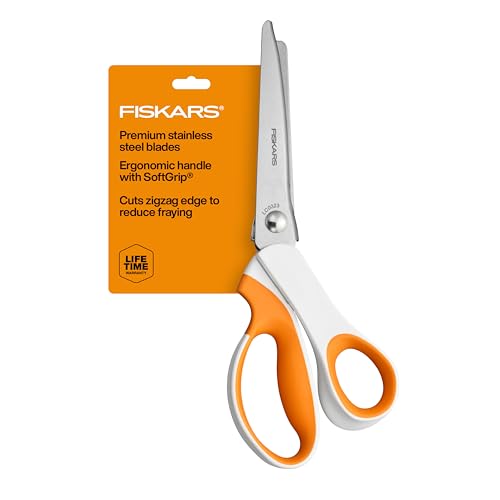
- 9.5-inch stainless steel zigzag blades
- SoftGrip ergonomic handle helps reduce fatigue
- Bent handle supports flat, accurate cuts
Best For: Comfort-focused sewing, quilting, and DIY cutting
Best Confirmed Left/Right Fit
Fri4Free 9-Inch Pinking Shears

- Ambidextrous design suits left- and right-handed users
- Hardened stainless steel blades with 5 teeth per inch
- Soft ABS grip for controlled cutting
Best For: Left-handed sewing, dressmaking, and craft users
Best Leverage Design
9.1-Inch Stainless Steel Pinking Shears

- 9.1-inch size supports longer, even cuts
- Hardened stainless steel serrated blades
- Works on fabric, leather, paper, and crafts
Best For: Longer cuts across sewing and mixed craft materials
Best Left-Handed Precision Pick – Fiskars 8" Premier Shears
For shoppers seeking left handed pinking shears, the Fiskars 8-inch Premier model is designed specifically around left-handed visibility and control. Its precision-ground stainless steel blades, extended lower blade, and large ergonomic handle make it well suited to fabric finishing.
Best For: Left-handed sewists who want controlled, continuous cuts on fabric.
Pros:
- True left-handed blade and handle design improves visibility and control.
- Precision-ground stainless steel blades cut cleanly to the tip.
- Extended lower blade supports continuous cutting without frequent readjustment.
- Large sculpted handle accommodates a range of hand sizes.
Cons:
- Its left-hand orientation is not designed for ambidextrous use.
- It is an 8-inch model, so it may offer less reach than longer shears.
This is the most purpose-built option in the group for left-handed users. Choose it when ergonomic orientation and smooth fabric-edge finishing matter more than versatility between users.
Best Ambidextrous Value – SINGER 9" Pinking Shears
These SINGER 9-inch pinking shears are a practical alternative for shoppers comparing left handed pinking shears with scissors that can be shared between users. The serrated stainless steel blades create a zigzag edge for minimizing fraying, while the soft-grip handle is designed for comfortable cutting.
Best For: Sewing and craft households that want an ambidextrous pair for woven fabric and paper projects.
Pros:
- Ambidextrous design works for left- and right-handed users.
- 9-inch stainless steel blades cut a precise zigzag edge.
- Soft-grip handle is intended to provide a comfortable, pain-free grip.
- Useful for fabric seams, decorative edges, and paper crafts.
Cons:
- It does not provide the specialized left-handed blade orientation of the Fiskars Premier model.
- The supplied details do not include a warranty.
If multiple people will use the shears, the ambidextrous design is a sensible advantage. It is also a good fit for shoppers who want one tool for both fabric finishing and decorative craft work.
Best Rubber-Grip Left-Handed Option – Asdirne Left Pinking Scissors
The Asdirne left pinking scissors combine a left-handed design with rubber grips and a 24 cm blade assembly. For buyers searching for left handed pinking shears for varied fabrics, the approximately 5 mm tooth spacing and stainless steel blades are geared toward controlled zigzag cuts during longer sessions.
Best For: Left-handed users who prioritize a cushioned rubber grip for domestic or professional fabric work.
Pros:
- True left-handed orientation supports controlled cutting.
- Rubber ergonomic grip is designed to help reduce hand strain during extended use.
- Stainless steel blades are intended for sharp cuts across many fabric types.
- Approximately 5 mm tooth spacing suits a range of materials.
Cons:
- The supplied notes do not specify a warranty.
- Its 156 g weight may feel substantial compared with lighter shears.
- There are fewer stated design details about blade construction than for the Fiskars models.
This is a compelling budget-oriented choice when a left-handed setup and soft rubber grip are the priorities. Consider it for frequent home sewing or general fabric projects where comfort matters.
Best Ambidextrous Fiskars Pick – Fiskars 8" Orange-Handled Shears
Fiskars’ 8-inch orange-handled model is worth considering when you want pinking shears that can be used by either hand. Its zigzag stainless steel blades help prevent fabric unraveling, while the ergonomic handle and extended lower blade support comfortable, continuous cutting.
Best For: Sewing rooms needing a durable, general-purpose pair for multiple users.
Pros:
- Ambidextrous hand orientation makes it suitable for shared use.
- High-grade stainless steel blades are designed for precision and durability.
- Extended lower blade supports continual cutting.
- Includes a full lifetime warranty.
Cons:
- It is not specifically configured for left-handed users.
- The 8-inch size may provide less reach than the SINGER 9-inch shears.
Choose this Fiskars model if you value a familiar general-purpose design and warranty coverage over dedicated left-handed ergonomics. It is a practical shared-tool option for fabric cutting and sewing.
Premium Pick – SINGER ProSeries 9" Pinking Shears
For shoppers seeking left handed pinking shears, the ambidextrous SINGER ProSeries offers a comfortable option for fabric and paper projects. Its stainless-steel, 5mm zigzag blades are designed to create uniform edges while helping minimize fraying.
Best For: Sewists who want durable, comfortable shears for cotton, crisp fabrics, quilts, garments, and paper crafts.
Pros:
- Stainless-steel blades with precisely spaced 5mm teeth.
- Ergonomic TPR handle supports a comfortable grip during extended use.
- Handles both lightweight and heavyweight crisp fabrics, plus paper.
- Ambidextrous hand orientation suits left- and right-handed users.
Cons:
- Not recommended for knit jersey, sweater knit, or other non-woven fabrics.
- Its 9-inch size may feel substantial for users who prefer compact shears.
The SINGER ProSeries is a strong all-purpose choice when edge control, comfort, and long-term stainless-steel durability matter. Left-handed users should appreciate the ambidextrous design, provided their projects mainly involve compatible woven or crisp materials.
Heavy-Duty Choice – Hui Tong Serrated Pinking Shears
Left handed pinking shears can be useful for both delicate and demanding materials, and these ambidextrous Hui Tong shears are designed with versatility in mind. The serrated stainless-steel blade is intended to produce a clean finished edge across materials including denim, leather, and silk.
Best For: Tailors and experienced sewists who need one pair of shears for varied fabric weights and scalloped or zigzag edging.
Pros:
- Ambidextrous design accommodates left-handed and right-handed users.
- High-carbon stainless-steel blade is described as rust-resistant and durable.
- Designed for denim, leather, silk, and other fabric projects.
- Serrated edge helps create a finished cut intended to reduce fraying and loose threads.
Cons:
- The product listing emphasizes a 3.5-inch blade, which may require more passes on wide fabric.
- Leather handle material may not suit shoppers seeking a soft molded grip.
With its professional-oriented construction and broad material range, the Hui Tong is a practical option for heavier sewing workloads. Its ambidextrous orientation makes it worth considering among left-handed pinking shears, especially for users who prioritize cutting versatility.
Budget Craft Pick – JISTL Green Comfort-Grip Pinking Shears
For left handed pinking shears that cover everyday craft tasks, the ambidextrous JISTL green model combines hardened stainless-steel blades with an ABS comfort-grip handle. It is designed for zigzag edging on fabric, linings, paper, leather, PU, ribbon, and other craft materials.
Best For: Home crafters and dressmakers seeking a versatile pair for decorative edging and general fabric cutting.
Pros:
- Ambidextrous orientation works for left- and right-handed cutting.
- Hardened stainless-steel blades provide sharp, even zigzag cuts.
- ABS inner handle ring is designed to improve comfort and control.
- Suitable for fabric, paper, leather, PU, ribbon, and craft uses.
Cons:
- The listing notes that the shears may feel large and somewhat heavy.
- The adjustment screw cannot be loosened, limiting user adjustment.
- Blades should be wiped free of protective oil before use and maintained to help prevent rust.
The JISTL is a capable multipurpose option for shoppers who want ambidextrous pinking shears for crafts and dressmaking. Its larger, heavier feel may suit users seeking substantial shears, but those wanting lightweight precision should compare the handling carefully.
Best Ergonomic Pick – Fiskars SoftGrip Pinking Shears
For shoppers seeking left handed pinking shears with a comfort-focused design, the Fiskars 9.5-inch SoftGrip model combines stainless steel blades with an ergonomic handle. Its bent-handle construction helps keep fabric flat for accurate cutting.
Best For: Sewing, quilting, and DIY projects where comfort and controlled, fray-reducing cuts matter.
Pros:
- Stainless steel zigzag blades create decorative edges and help reduce fraying.
- Contoured handle and SoftGrip touchpoints help reduce hand fatigue.
- Bent handle supports flat, aligned fabric cutting.
Cons:
- The supplied details do not specifically confirm left-handed orientation.
- Only one scissor is included.
This is a strong choice if ergonomic handling and a bent profile are more important than a handle explicitly labeled ambidextrous or left-handed.
Best Confirmed Left/Right Fit – Fri4Free 9-Inch Pinking Shears
If you specifically need left handed pinking shears, the Fri4Free model is a practical option because its supplied specifications identify it as ambidextrous. Hardened stainless steel blades, soft-grip handles, and a 5-teeth-per-inch zigzag pattern support controlled fabric cutting.
Best For: Left- or right-handed users working on dressmaking, crafts, scrapbooking, and decorative edging.
Pros:
- Ambidextrous design suits both left- and right-handed users.
- Hardened stainless steel blades are designed for sharp, long-lasting cutting.
- 5-teeth-per-inch zigzag edge helps create ravel-resistant fabric seams.
- ABS soft-grip handle is designed for controlled, less tiring use.
Cons:
- Care instructions recommend wiping away blade oil before use.
- The manufacturer advises avoiding frequent cuts through more than three fabric layers.
- Regular scissors-oil storage is recommended for longevity.
Among these options, this is the clearest match for shoppers prioritizing left-hand compatibility, while its maintenance guidance is worth keeping in mind.
Best Leverage Design – 9.1-Inch Stainless Steel Pinking Shears
These 9.1-inch pinking shears are worth considering when you want left handed pinking shears with a larger cutting profile and added leverage. Their serrated stainless steel blades are designed for consistent zigzag edges across fabric and common craft materials.
Best For: Dressmaking, quilting, leather craft, scrapbooking, and DIY projects requiring longer, even cuts.
Pros:
- 9.1-inch design provides extended cutting leverage.
- Hardened stainless steel serrated blades help minimize fraying.
- Large contoured handles provide a secure, non-slip grip.
- Suitable for fabric, leather, paper, and other common craft materials.
Cons:
- The supplied details do not specify ambidextrous or left-handed orientation.
- The listing does not provide a named brand or detailed maintenance instructions.
This model offers a straightforward balance of size, leverage, and material versatility, but shoppers needing verified left-hand orientation should confirm the handle design before buying.
How We Picked the Best Left Handed Pinking Shears
We focused on the features that most affect real-world cutting: stainless-steel or hardened blades, consistent zigzag edges, comfortable handles, overall length, and suitability for fabric rather than paper-only use. We also considered whether each design is explicitly left-handed or has a symmetrical grip that can work comfortably in either hand.
Because product listings vary in how clearly they describe blade orientation, left-handed shoppers should verify the handle and cutting direction before ordering. A pair may be marketed for fabric but still feel awkward when used in the left hand.
Quick Comparison
| Best For | What to Look For |
|---|---|
| Dedicated left-handed use | Left-hand-specific blade and handle design |
| General sewing | Sharp stainless-steel blades and a medium 8- to 9-inch length |
| Heavy or layered fabric | Long blades, sturdy construction, and comfortable leverage |
| Frequent crafting | Soft, contoured grips and reliable edge alignment |
| Occasional projects | Basic serrated blades at a lower price |
Key Buying Factors for Left Handed Pinking Shears
Blade Orientation and Edge Quality
True left-handed pinking shears are designed to cut cleanly when held in the left hand. The zigzag blades should meet evenly along their full length, without snagging or crushing the fabric. Stainless steel is a practical choice because it resists corrosion and is easier to maintain.
Length and Cutting Capacity
Shears around 8 to 9 inches are a useful all-purpose size. Longer blades can cover more fabric per squeeze and may offer better leverage on heavier materials, while shorter models are easier to control for small sewing and craft projects. Check the stated cutting capacity if you plan to trim multiple layers.
Handle Comfort
Look for rounded or soft-grip handles with enough room for your fingers. A comfortable grip reduces fatigue, especially because pinking shears require more force than ordinary fabric scissors. Ambidextrous handles may be acceptable for occasional use, but dedicated left-hand designs are usually the safer choice for frequent cutting.
Maintenance and Storage
Use pinking shears only on suitable materials, wipe the blades after use, and store them closed in a dry location. Do not use them on pins, cardboard, or hard surfaces, which can damage the serrated edge. Sharpening should be handled by a service familiar with pinking blades.
Who Should Buy Which Left Handed Pinking Shears?
Choose a dedicated left-handed pair if you sew regularly or want the most natural cutting action. A 9-inch stainless-steel model is a strong all-purpose option for dressmaking, quilting, and alterations. Makers working with thicker fabrics should prioritize sturdy construction, longer blades, and ergonomic grips. For occasional repairs or lightweight crafts, a simpler budget pair may be sufficient.
Before buying, confirm the product dimensions, return policy, and whether the listing explicitly supports left-handed use. The best choice is the pair that combines correct blade orientation with a comfortable grip you can use repeatedly without strain.