If you’re rewebbing a chair, sofa, or vintage frame, the right tool makes a big difference. A good upholstery webbing stretcher helps you pull tight, keep tension even, and work faster with less strain.
Below, we’ve rounded up 10 options for different budgets and project types, from simple wood-handled tools to gooseneck designs with extra leverage.
Best 10 Upholstery Webbing Stretcher Picks for 2026
Classic Beechwood Tension Tool
Faithfull FAIWEB50 Upholstery Webbing Stretcher

- Beechwood tensioning tool for upholstery webbing.
- Fits webbing up to 50mm (2in) wide.
- Rebated edge and slotted head help set tension.
Best For: Traditional upholstery jobs using 2-inch webbing
Ergonomic Wood Handle Pick
Dritz Home 44292 Webbing Stretcher

- Ergonomic wooden handle for comfortable control.
- Works with jute and polypropylene webbing.
- Made for chairs, sofas, and ottomans.
Best For: General upholstery tasks with jute or polypropylene webbing
Gooseneck Leverage Tool
LinyAlmY Large Upholstery Webbing Tool

- Gooseneck shape provides extra leverage.
- Six steel spikes hold webbing securely.
- Rubber-tipped end helps protect the frame.
Best For: Tighter furniture repairs needing strong grip and leverage
Ergonomic Hardwood Puller

- Ergonomic shape with non-slip rubber grip.
- Balanced for left- or right-handed use.
- Hardwood and stainless steel construction.
Best For: DIY upholstery repairs needing comfortable, controlled tensioning
Heavy-Duty Gooseneck Puller
Cinnvoice 11-Inch Webbing Stretcher

- Gooseneck shape adds leverage near the frame
- Six steel pins grip webbing firmly
- Ambidextrous hardwood handle for steady control
Best For: Upholstery repairs needing strong pull and secure grip
Simple Wood-Handle Stretcher
BENECREAT Beechwood Webbing Tool

- Beechwood build is sturdy and polished
- Slot-and-dowel setup adjusts web tension easily
- Designed to reduce effort and tape damage
Best For: Lightweight furniture repair and simple web tensioning
Compact Gooseneck Grip Tool
Gooseneck Webbing Stretcher for Upholstery

- Curved neck catches webbing near the frame
- Six hardened steel spikes hold firmly
- Rubber-tipped end helps protect furniture
Best For: Upholstery and leather repairs needing close-in leverage
Dual-Pack Lever Grip
2-Piece Webbing Stretchers for Fast Furniture Repair

- Includes 2 webbing stretchers
- Anti-slip handle with 6 steel pins
- Beech wood, stainless steel, and rubber build
Best For: DIY users and repair shops needing a sturdy 2-pack
Gooseneck Reach
Wood Handle Webbing Puller for Tight Frame Work

- Curved gooseneck shape for frame-side reach
- 6 hardened steel spikes for grip
- Wood handle with rubber-tipped end
Best For: Upholsterers needing a curved stretcher for tight frame access
Hardwood Stability
Wooden Webbing Puller with Rubber Buffer
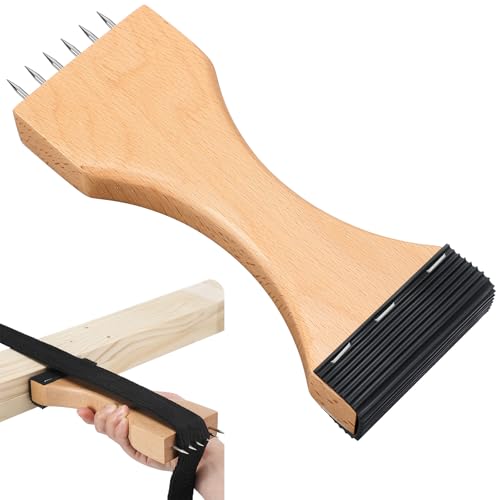
- Hardwood handle with metal construction
- Rubber buffer helps prevent slipping
- Sized for leverage and stability
Best For: Left- or right-handed DIYers wanting a balanced manual puller
Classic Beechwood Tension Tool – Faithfull FAIWEB50 Upholstery Webbing Stretcher
This upholstery webbing stretcher uses a simple beechwood design to help tension webbing neatly across furniture frames. The rebated edge helps it sit against the frame, while the slotted head and dowel hold webbing up to 50mm wide so you can adjust tension as you work.
Best For: Traditional upholstery work where a straightforward wood stretcher and 2-inch webbing capacity are important.
Pros:
- Accepts webbing up to 50mm (2in) wide.
- Rebated on one edge for frame location.
- Slotted design with dowel helps hold and adjust web tension.
- Backed by a 5-year manufacturer guarantee.
Cons:
- Wood construction may feel more basic than higher-leverage handle designs.
- Product details do not mention extra grip features.
This is a practical, no-frills option for users who want a dedicated upholstery webbing stretcher with a clear 50mm capacity and a classic beechwood build.
Ergonomic Wood Handle Pick – Dritz Home 44292 Webbing Stretcher
This upholstery webbing stretcher is built around an ergonomic wooden handle and a compact shape that makes it easy to work on chairs, sofas, or ottomans. It is designed for stretching upholstery webbing and is compatible with jute and polypropylene webbing.
Best For: General upholstery projects where a comfortable handle and simple webbing stretching tool are preferred.
Pros:
- Ergonomic wooden handle for easier grip.
- Works with jute and polypropylene webbing.
- Suitable for chairs, sofas, and ottomans.
- Compact 8 x 3 x 1-inch tool size.
Cons:
- No detailed leverage or grip mechanism is specified in the notes.
- Smaller tool profile may not suit users wanting a larger head or extended reach.
For everyday upholstery tasks, this Dritz Home stretcher is a straightforward option centered on comfort, compatibility, and a familiar wooden-handled layout.
Gooseneck Leverage Tool – LinyAlmY Large Upholstery Webbing Tool
This upholstery webbing stretcher uses a gooseneck shape to add leverage while stretching leather, canvas, and upholstery webbing. The long wood handle, six hardened steel spikes, and rubber-tipped end are designed to help you pull tightly while protecting the frame.
Best For: Users who want extra leverage and a secure grip for tighter furniture repairs.
Pros:
- Gooseneck design increases pulling leverage.
- Six hardened steel spikes grip webbing firmly.
- Rubber-tipped end helps prevent frame damage.
- Ambidextrous design works for left- or right-handed users.
Cons:
- Steel spikes are sharp, so gloves are recommended.
- Low-profile head may be better suited to tight spaces than larger open areas.
Compared with simpler stretchers, this model focuses on grip and leverage, making it appealing for users who want more control when tensioning upholstery webbing.
Ergonomic Hardwood Puller – VTUNA Webbing Stretcher Tool
This upholstery webbing stretcher combines a hardwood handle, stainless steel parts, and non-slip rubber for controlled tensioning during furniture repair. It is designed to help pull and hold upholstery webbing or straps firmly in place for a smooth, even result.
Best For: DIYers and upholsterers who want a comfortable, balanced tool for consistent webbing tension.
Pros:
- Ergonomic shape with non-slip rubber for better control.
- Balanced design works for left- or right-handed users.
- Hardwood, stainless steel, and rubber materials for durability.
- Intended to help create tight, smooth, evenly aligned upholstery surfaces.
Cons:
- Product notes do not specify a maximum webbing width.
- No frame-location or spike details are provided.
The VTUNA stretcher is a good fit for users who value comfort and control first, especially when working on chairs, sofas, or other upholstery repairs at home.
Heavy-Duty Gooseneck Puller – Cinnvoice 11-Inch Webbing Stretcher
If you need an upholstery webbing stretcher that gives you plenty of leverage, this gooseneck-style tool is built to pull webbing close to the frame with less strain. The 11-inch length, hickory hardwood handle, and six steel pins are aimed at firm grip and controlled tension for upholstery, leather, canvas, and burlap work.
Best For: Upholstery repair jobs where strong leverage and a secure grip on webbing matter most.
Pros:
- Gooseneck design helps create leverage against the frame.
- Six steel pins and a rubber bumper help hold webbing and reduce slipping.
- Ambidextrous handle works with both left and right hands.
- Hardwood handle and plated ferrule add a sturdy, tool-like feel.
Cons:
- The sharp spikes call for gloves and careful handling.
- Its serious grip and leverage may be more tool than casual DIY users need.
Overall, this is a practical pick if you want a more forceful, frame-catching webbing stretcher for upholstery repairs. The emphasis here is on leverage, grip, and stability rather than compact convenience.
Simple Wood-Handle Stretcher – BENECREAT Beechwood Webbing Tool
This upholstery webbing stretcher keeps things straightforward with a beechwood body, a wood handle, and a slot-and-dowel setup for adjusting web tension. It is designed to make stretching easier without requiring too much effort, while helping avoid damage to decorative tape during use.
Best For: Furniture repair projects that benefit from a simple, lightweight wood stretcher.
Pros:
- Beechwood construction is polished, sturdy, and durable.
- Slot and dowel design makes it easy to loop webbing and adjust tension.
- Designed to stretch with less effort and less risk of damaging tape.
- Useful for chairs, sofas, reclining sofas, leather, and canvas.
Cons:
- No leverage-focused gooseneck design for tougher pulls.
- Smaller size may feel basic compared with heavier-duty stretchers.
For users who want a simple, no-frills tool, this model focuses on ease of use and broad upholstery compatibility. It is a sensible choice when light, controlled web stretching is the priority.
Compact Gooseneck Grip Tool – Gooseneck Webbing Stretcher for Upholstery
This upholstery webbing stretcher is built around a curved gooseneck design that catches webbing near the furniture frame and helps you apply maximum leverage with minimal effort. The wood handle, six hardened steel spikes, and rubber-tipped end are all aimed at controlled pulling for leather, canvas, carpet, and upholstery work.
Best For: DIY or professional repairs that need a compact gooseneck tool with strong grip.
Pros:
- Curved neck helps catch webbing close to the frame.
- Gooseneck design is made to improve leverage.
- Six hardened steel spikes grip webbing firmly.
- Rubber-tipped end helps protect the frame from damage.
Cons:
- Steel spikes are sharp, so gloves are recommended.
- The compact design may not suit users wanting a larger handle tool.
This model is a strong fit if you want a practical, leverage-driven stretcher that stays focused on grip and control. It suits upholstery repairs where catching the webbing near the frame is the main challenge.
Dual-Pack Lever Grip – 2-Piece Webbing Stretchers for Fast Furniture Repair
If you need an upholstery webbing stretcher for chair seats, sofa repairs, or canvas work, this 2-piece set is built for straightforward stretching with plenty of leverage. The beech wood, stainless steel, and rubber construction is paired with an anti-slip handle and sharp steel pins to help hold webbing securely while you work.
Best For: DIY users, repair shops, and anyone who wants two sturdy stretchers for repeated upholstery or canvas projects.
Pros:
- Includes 2 tools, which is useful for multiple jobs or backup use.
- Ergonomic lever design helps stretch webbing with less effort.
- Anti-slip rubber handle and 6 steel pins improve grip and control.
- Built from beech wood, stainless steel, and rubber for durability.
Cons:
- Steel pins are sharp, so careful handling is necessary.
- May be more tool than needed if you only have a single small repair.
This is a practical choice if you want a straightforward, durable upholstery webbing stretcher set with good leverage and extra value from the 2-pack format.
Gooseneck Reach – Wood Handle Webbing Puller for Tight Frame Work
This upholstery webbing stretcher uses a gooseneck shape to catch webbing near furniture frames, making it a smart pick for detailed repair work. The wood handle, 6 hardened steel spikes, and rubber-tipped end are designed to improve control while helping protect the frame during stretching.
Best For: Upholsterers and DIY repairers who need a curved tool for pulling webbing close to the frame.
Pros:
- Gooseneck design helps reach webbing near the frame more easily.
- Manual leverage makes stretching feel more efficient.
- Wood handle offers steady control during use.
- Rubber-tipped end helps prevent frame damage.
Cons:
- Only one tool is included.
- The curved design may not be necessary for every basic upholstery job.
For upholstery tasks that benefit from a more specialized shape, this gooseneck stretcher offers targeted reach and solid grip in a compact manual tool.
Hardwood Stability – Wooden Webbing Puller with Rubber Buffer
For a dependable upholstery webbing stretcher with a more traditional manual feel, this wooden puller is built around a hardwood handle and metal working end. Its corrugated rubber section and sharp steel pins are intended to keep webbing steady while the leverage-focused shape helps pull material close to the frame.
Best For: Home repair users and left- or right-handed DIYers who want a balanced, stable webbing puller.
Pros:
- Hardwood handle and metal parts are made for durability.
- Balanced 8 x 3 1/4 inch size adds leverage and stability.
- Rubber buffer helps reduce slipping and frame damage.
- Usable by both left-handed and right-handed users.
Cons:
- Sharp pin tips require extra care during use.
- Single-tool package may not suit larger multi-seat projects.
This is a solid all-around option if you want a stable, leverage-friendly webbing stretcher with a simple wooden design and added slip protection.
How We Picked the Best Upholstery Webbing Stretcher
We focused on the features that matter most for an Upholstery Webbing Stretcher: leverage, grip, reach, build quality, and how well the tool can get close to a frame edge. We also considered whether a model looks suitable for jute webbing, canvas, carpet, and general furniture reupholstery work.
Because these tools are often used on older furniture and tight workspaces, we favored designs that balance control with enough pulling power to help reduce hand fatigue.
Quick Comparison
For simple home projects, a basic wood-handle stretcher is usually enough. If you need more leverage or better access near the frame, a gooseneck style can be the better fit. Kits with two tools may be useful if you want a backup or plan to work on larger projects where speed matters.
Key Buying Factors for Upholstery Webbing Stretcher
Leverage and Handle Design
The main job of an Upholstery Webbing Stretcher is to give you mechanical advantage. A longer handle or gooseneck shape can make it easier to tension webbing without overworking your hands.
Material and Durability
Wooden tools are common and can be comfortable to hold, while steel-pin or reinforced designs may offer extra holding power. Look for solid construction if you plan to use the tool often or on dense webbing.
Access and Frame Clearance
Some furniture frames leave very little room to work. If you regularly reupholster tight corners or deep seats, choose a tool that can catch webbing close to the frame and still give you room to pull.
Grip and Control
A secure grip matters when tension increases. Anti-slip handles or a shape that fits naturally in your hand can improve control and help you place tension more accurately.
Project Type
Match the tool to the material you use most. Jute webbing, canvas, carpet, and leather-like upholstery tasks can benefit from different levels of grip and leverage, so think about your typical projects before buying.
Who Should Buy Which Upholstery Webbing Stretcher?
If you’re a beginner doing occasional chair repairs, a straightforward wood-handled model is usually the easiest place to start. If you work on a lot of furniture or need more pulling power, a gooseneck or high-leverage style may save time and effort.
For hobbyists who want flexibility, a two-piece set can be a smart value choice. For anyone restoring older or awkward frames, prioritize reach, leverage, and secure webbing contact over extra features.