Mold can release airborne spores and contribute to musty odors, irritation, and allergy symptoms. The right air purifier can help capture particles that circulate indoors, especially when paired with moisture control and professional remediation.
We compared 10 promising options across filtration, room coverage, odor control, maintenance, and everyday usability to help you choose a practical air purifier for mold.
Best 10 Air Purifier for Mold Picks for 2026
Best Overall

- HEPA and activated-carbon filtration
- Smart sensing with 19 dB Sleep Mode
- Covers up to 1,800 square feet
Best For: Large spaces and hands-off air-quality monitoring
Best Value
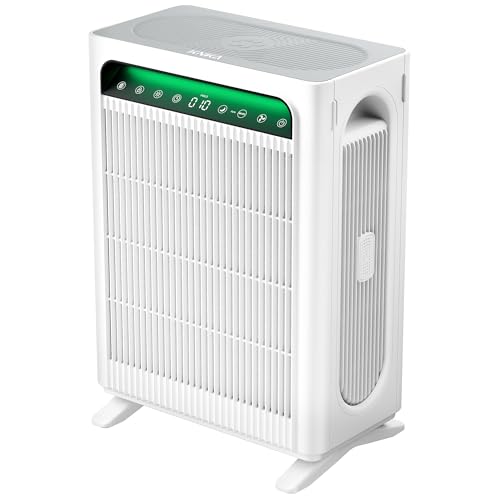
- AHAM-verified performance
- Dual three-stage filter cartridges
- Quiet Sleep Mode down to 22–24 dB
Best For: Budget-conscious buyers wanting wide coverage and flexible modes
Best Humidifying Option
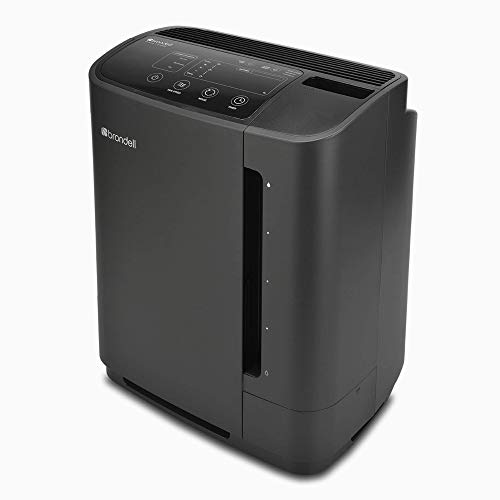
- Dual True HEPA filtration
- Evaporative humidification
- Carbon and off-gassing filters
Best For: Medium rooms needing filtration plus added humidity
Best Smart Large-Room Pick

- AHAM-verified CADR ratings
- Covers up to 1,875 square feet
- App control and air-quality monitoring
Best For: Connected homes and large rooms with allergy concerns
Best Quiet Coverage

- H13 True HEPA and activated carbon filtration
- As quiet as 24 dB in sleep mode
- Up to 1,100 sq. ft. stated coverage
Best For: Quiet bedroom, nursery, or office air cleaning
Best Smart Room Monitoring
Clorox Medium Room Air Purifier

- Three-stage 360° True HEPA filtration
- PM2.5 display and automatic fan mode
- Five air changes per hour in 225 sq. ft.
Best For: Medium rooms needing automatic monitoring and control
Best for Large Spaces

- Certified HEPA captures 99.97% to 0.3 microns
- Coverage up to 2,000 sq. ft. at two exchanges/hour
- Focused on chemicals, VOCs, germs, and mold
Best For: Large rooms needing broad particle and VOC filtration
Best All-Around Pick
Clorox Turbo True HEPA Air Purifier

- True HEPA filter captures 99.97% of particles
- Three-stage 360° filtration with carbon
- Turbo timer and four fan speeds
Best For: Medium rooms needing particle and odor filtration
Best With UV-C
GermGuardian AC4825E Tower Air Purifier

- HEPA filter captures 99.97% of allergens
- Optional UV-C light helps reduce airborne particles
- Carbon filter targets cooking and pet scents
Best For: Bedrooms, basements, and offices needing multi-stage filtration
Best Quiet Option
Afloia PLUTO 4-Stage Air Purifier

- Four-stage filtration includes mold capture
- Washable pre-filter simplifies maintenance
- 23 dB sleep mode for bedroom use
Best For: Quiet bedroom purification and easier pre-filter upkeep
Best Overall – COWAY Airmega Mighty2
The COWAY Airmega Mighty2 is a well-rounded air purifier for mold concerns, combining a HEPA filter for airborne particles with activated carbon for odors and fumes. Its particle sensor, automatic airflow adjustment, and washable pre-filter make it practical for everyday home use.
Best For: Large living spaces, bedrooms, and shoppers who want automatic operation with detailed air-quality and filter-life feedback.
Pros:
- Three-stage filtration captures up to 99.97% of particles as small as 0.3 microns and includes activated carbon.
- Smart Mode adjusts airflow based on real-time air quality, while Sleep Mode runs as quietly as 19 dB.
- Supports spaces up to 1,800 square feet, with a washable pre-filter and digital filter-life indicators.
Cons:
- The unit is corded and uses touch controls rather than app control.
- The replacement Max2 filter is a separate purchase.
With strong particle filtration, odor reduction, and useful sensors, the Mighty2 is a versatile choice for maintaining cleaner air. As with any purifier, it should complement—not replace—professional mold removal and moisture control.
Best Value – KNKA APH4000 Air Purifier
The KNKA APH4000 is a practical air purifier for mold-related airborne particles, with dual three-stage filter cartridges, washable pre-filters, and an AHAM-verified CADR. Its front-and-back intake design is intended to circulate air efficiently in bedrooms and larger rooms.
Best For: Value-focused shoppers who want broad room coverage, a washable pre-filter, and automatic or pet-focused operating modes.
Pros:
- AHAM-verified smoke, dust, and PM2.5 CADR of 226 CFM, with a pollen CADR of 244 CFM.
- Dual cartridges combine washable pre-filters, high-efficiency filters, and activated carbon.
- Offers Pet, Eco, Auto, and Sleep modes, with Sleep operation as low as 22–24 dB.
Cons:
- The stated 1,695-square-foot coverage corresponds to one air refresh per hour; smaller rooms receive more frequent filtration.
- Filters are recommended for replacement every 3–6 months.
The APH4000 offers a strong feature set for its category, especially if washable pre-filters and quiet operation matter. Its dual-filter layout may also be useful in homes dealing with dust, pet debris, and odors alongside airborne mold particles.
Best Humidifying Option – Brondell O2+ Revive
The Brondell O2+ Revive combines dual True HEPA filtration with evaporative humidification, making it a distinctive air purifier for mold-related airborne particles and dry indoor air. It also adds activated carbon and an off-gassing reduction filter for odors, gases, and VOCs.
Best For: Medium-sized rooms where air filtration and more comfortable humidity are both priorities.
Pros:
- Dual True HEPA filters remove 99.97% of particulates and allergens larger than 0.3 microns.
- Dual suction refreshes a 627-square-foot room three times per hour.
- Evaporative humidification is self-regulating, while carbon filtration targets odors and VOCs.
Cons:
- Its 627-square-foot coverage is more limited than the larger-room models in this roundup.
- The unit is relatively heavy at 20 pounds and uses 65 watts.
- Some specialized filters are sold separately.
The Revive is best suited to buyers who want a combined purifier-and-humidifier rather than a filtration-only appliance. Keep humidity controlled, however, because excess moisture can contribute to mold growth.
Best Smart Large-Room Pick – LEVOIT Vital 200S-P
The LEVOIT Vital 200S-P is a smart air purifier for mold concerns in large rooms, using a three-stage filter system to capture fine particles, dust, pet debris, and odors. Its AHAM verification, air-quality monitoring, and app control make it a convenient choice for connected homes.
Best For: Large rooms, basements, open-concept areas, and households that want app-based control and strong allergy-focused filtration.
Pros:
- AHAM-verified CADR ratings include 250 CFM for smoke, 254 CFM for dust, and 289 CFM for pollen.
- Designed for spaces up to 1,875 square feet and includes a washable pre-filter.
- Runs at a stated 27 dB in quiet bedroom use and includes an air-quality monitor.
Cons:
- The supplied specifications do not list a dedicated mold-specific filter or a separate mold-removal function.
- App control may be less appealing to shoppers who prefer simple physical controls.
The Vital 200S-P is a compelling large-room option when smart controls and independently verified performance are priorities. Its filtration can help reduce airborne particles, but addressing the moisture source remains essential for managing a mold problem.
Best Quiet Coverage – Aurora AR100W
If you need an air purifier for mold in a bedroom, nursery, office, or other small-to-medium room, the Aurora AR100W combines three-stage filtration with a compact design. Its H13 True HEPA filter is rated to capture 99.97% of particles as small as 0.3 microns, while activated carbon helps address odors and smoke.
Best For: Quiet nighttime use and rooms needing flexible coverage up to 1,100 square feet.
Pros:
- Three-stage filtration targets mold, dust, pollen, germs, pet dander, odors, and smoke.
- Sleep mode operates as low as 24 dB and includes a light-off function.
- Touch controls include a timer, display lock, fan-speed settings, and filter-replacement indicator.
- CADR of 142 CFM supports up to five air changes per hour in a 220-square-foot room.
Cons:
- The 99.97% particle-capture rating applies to particles as small as 0.3 microns.
- Replacement filters are a separate maintenance purchase.
The Aurora AR100W is a practical pick when low noise and straightforward controls matter. Its strongest performance is in smaller rooms, while the 1,100-square-foot figure represents approximately one air change per hour.
Best Smart Room Monitoring – Clorox Medium Room Air Purifier
The Clorox Medium Room Air Purifier is a useful air purifier for mold and everyday household particles in bedrooms and medium-size rooms. Its three-stage, 360-degree filter combines a pre-filter, True HEPA filtration, and activated carbon, with an air-quality sensor to adjust operation automatically.
Best For: Medium rooms where automatic fan control and real-time air-quality feedback are priorities.
Pros:
- True HEPA filtration captures 99.97% of listed allergens and particulates as small as 0.1 microns.
- Three-stage 360-degree airflow also addresses larger particles, odors, VOCs, viruses, and bacteria.
- Auto mode responds to sensor readings, with PM2.5 display and color-coded air-quality feedback.
- Designed to clean a 225-square-foot room up to five times per hour.
Cons:
- The filter is recommended for replacement every 6–12 months.
- Its stated five-air-changes-per-hour performance is for rooms up to 225 square feet; larger spaces receive fewer exchanges.
- At 30 dB, it is not the quietest option in this group.
Choose this Clorox model if you want more than basic filtration: its sensor, PM2.5 display, and automatic mode make it easier to monitor changing room conditions. Be sure to match the room size to the desired air-exchange rate.
Best for Large Spaces – Airpura P714
P714 Airpura air purifier for Germs, Mold and Chemicals Reduction Air Purifier (WHITE)
Check Price On AmazonFor shoppers comparing an air purifier for mold with stronger chemical and VOC filtration, the Airpura P714 offers 360-degree air distribution and a certified HEPA filter. It is rated to purify up to 2,000 square feet at two air exchanges per hour, based on 8-foot ceilings.
Best For: Large spaces where broad coverage and chemical or VOC reduction are important.
Pros:
- Certified HEPA filtration captures 99.97% of airborne particles as small as 0.3 microns.
- 360-degree air distribution supports coverage up to 2,000 square feet at two air exchanges per hour.
- Designed for reduction of germs, mold, chemicals, odors, pet dander, pollen, and VOCs.
- Listed energy use is $0.27 per day when operated continuously on medium speed.
Cons:
- The particle-capture specification is for particles as small as 0.3 microns.
- The two-air-exchanges-per-hour coverage figure assumes 8-foot ceilings.
- The supplied details do not specify a noise level or filter-replacement interval.
The P714 stands out for its large stated coverage area and emphasis on chemical and VOC filtration. It is worth considering for open or spacious areas, but confirm operating noise and replacement-filter costs before buying.
Best All-Around Pick – Clorox Turbo True HEPA Air Purifier
If you need an air purifier for mold alongside everyday allergens, smoke, and odors, the Clorox Medium Room Turbo model offers three-stage filtration and 360° airflow. Its True HEPA filter captures 99.97% of particles, while the carbon filter helps reduce VOCs and odors.
Best For: Medium rooms, allergy-prone households, and shoppers who want a turbo-cleaning option for odors, smoke, and airborne particles.
Pros:
- True HEPA filtration captures 99.97% of allergens and particulates.
- Three-stage, 360° filtration includes a pre-filter and activated carbon filter.
- Turbo timer offers 10-, 20-, and 30-minute quick-cleaning settings.
- Quiet operation is rated at 24 dB, with four fan speeds.
Cons:
- The supplied information does not specify a washable pre-filter.
- Its stated five-air-changes-per-hour coverage is for a 215-square-foot room; larger rooms receive less frequent circulation.
The Clorox is a versatile choice for buyers prioritizing proven particle filtration, odor reduction, and flexible controls. Remember that an air purifier can help filter airborne particles, but it does not replace fixing moisture problems or removing established mold.
Best With UV-C – GermGuardian AC4825E Tower Air Purifier
The GermGuardian AC4825E is a practical air purifier for mold-related airborne particles in bedrooms, basements, offices, and other spaces. Its HEPA filter captures 99.97% of allergens as small as 0.1 microns, while the optional UV-C light is designed to help reduce airborne particles.
Best For: Small bedrooms, dusty basements, offices, and shoppers who want HEPA filtration with optional UV-C functionality.
Pros:
- HEPA filtration captures 99.97% of allergens as small as 0.1 microns.
- Activated carbon filter helps reduce cooking and pet scents.
- Optional UV-C light helps reduce airborne particles.
- Three speeds include a quiet sleep mode.
Cons:
- The listed noise level is 55 dB, so it may be less quiet than some alternatives.
- The UV-C light is described as optional rather than essential to the filtration system.
- Filter and bulb replacements are required for continued performance.
With HEPA, carbon, and UV-C features in a tall tower design, this model suits buyers who want multiple air-cleaning functions. Its strongest stated coverage is one air change per hour in spaces up to 743 square feet, with faster circulation in a 153-square-foot bedroom.
Best Quiet Option – Afloia PLUTO 4-Stage Air Purifier
For shoppers seeking an air purifier for mold in a bedroom or living area, the Afloia PLUTO combines four-stage filtration with a washable pre-filter. It is designed to capture mold along with dust, pollen, smoke, odors, and pet dander, and its sleep mode operates at a listed 23 dB.
Best For: Bedrooms and larger areas where quiet operation, washable pre-filter maintenance, and broad everyday particle filtration are priorities.
Pros:
- Four-stage filtration is designed to remove mold, dust, pollen, smoke, odors, and pet dander.
- Washable outer pre-filter can be rinsed to help maintain performance.
- Sleep mode operates at a listed 23 dB.
- Purifies a 269-square-foot space four times per hour and refreshes up to 1,076 square feet in one hour.
Cons:
- The supplied details identify the filter type as “Pre-Filter,” so the exact construction of the other filtration stages is not specified.
- The main filter should be replaced every four to six months, depending on local air quality.
- A washable pre-filter does not eliminate the need to address the moisture source behind mold growth.
The PLUTO stands out for quiet nighttime use and simpler pre-filter upkeep. Its stated mold-removal capability makes it relevant to this category, while the washable component may help reduce buildup on the primary filter.
How We Picked the Best Air Purifier for Mold
We focused on models with particle filtration designed to capture fine airborne contaminants, prioritizing True HEPA or comparable high-efficiency filtration where specified. We also considered activated carbon or other odor-reducing media, since mold-related spaces may have persistent musty smells.
Coverage claims, filter access, replacement needs, noise, controls, and portability also shaped the comparison. Manufacturer room-size ratings can vary by testing method, so treat them as guidance rather than a guarantee. A purifier works best when its airflow is appropriate for the room and the doors and windows are generally closed.
Quick Comparison
- Large rooms: COWAY, KNKA, LEVOIT, and Brondell models offer broad stated coverage for open areas or larger bedrooms.
- Odor and chemical concerns: Brondell and Airpura options are worth considering when odor reduction or chemical filtration is a priority.
- Medium rooms and bedrooms: Clorox, GermGuardian, Aurora, and Afloia models suit more focused room-by-room use.
- Convenience features: Smart controls, automatic modes, washable pre-filters, and turbo settings can make regular operation easier.
Key Buying Factors for an Air Purifier for Mold
Filtration and Particle Capture
Choose a purifier with clearly stated high-efficiency particle filtration. A HEPA filter can capture many airborne particles, including mold spores, but it cannot remove mold growing on walls, flooring, insulation, or furnishings.
Room Coverage and Airflow
Match the purifier to the room where it will operate most often. For open-plan spaces, select generous coverage and strong airflow; for bedrooms, a quieter medium-room model may be more comfortable overnight. Avoid relying solely on an unusually large square-foot claim without checking the recommended air-change rate.
Carbon for Musty Odors
Particle filters address airborne particles, while activated carbon can help reduce some odors and gases. Carbon performance depends on the amount and quality of media, so a thin carbon layer may provide less odor control than a larger dedicated carbon filter.
Maintenance and Placement
Check replacement-filter prices and availability before buying. Clean or replace pre-filters as directed, keep the air intake unobstructed, and position the unit where air can circulate freely. Never use a purifier as a substitute for fixing leaks, lowering humidity, or removing contaminated materials.
Who Should Buy Which Air Purifier for Mold?
Choose a large-room model if you want one unit for an open living area, basement, or expansive bedroom. Choose a smart purifier if app controls, scheduling, and automated operation matter to you. Choose a model with stronger odor-focused filtration for musty spaces, smoke, pets, or renovation-related smells. Choose a compact tower or medium-room purifier for a bedroom, office, or other enclosed space where lower cost and easy placement are priorities.
For visible mold, recurring moisture, or significant water damage, address the source first and consult a qualified remediation professional. An air purifier is a supporting tool for cleaner circulating air—not a complete mold-removal solution.