The right interfacing can determine whether a handmade bag feels soft and flexible or structured, durable, and polished. These 10 options cover common bagmaking needs, including woven interfacing, fusible fleece, foam stabilizer, and heavyweight support.
Use the comparison and buying advice below to match interfacing weight, fiber, fusibility, and coverage to your bag pattern and fabric.
Best 10 Fusible Interfacing for Bags Picks for 2026
Reliable Everyday Support

- 100% cotton woven fusible
- Designed for light- to medium-weight fabrics
- Continuous yardage when buying multiple yards
Best For: Everyday totes and lighter bags needing woven support
Soft Structured Volume
Bosal In-R-Form Foam Stabilizer

- Single-sided fusible foam
- 100% polyester construction
- One-yard piece, 36 inches wide
Best For: Padded bags and accessories needing cushioned structure
Cushioned Yardage Value
PLANTIONAL Medium-Weight Fusible Fleece

- Soft loft adds cushioning and structure
- 16.5-inch-wide, 10-yard bolt
- Single-sided iron-on adhesive
Best For: Totes and larger projects needing padded support
Firmest Bag Structure

- Heavyweight polyester stabilizer
- Firm and resistant to distortion
- 15- by 36-inch washable package
Best For: Structured bags requiring strong shape retention
Soft Structure Pick
PLANTIONAL Medium Weight Fusible Fleece

- Soft loft adds cushioning and body
- Iron-on, one-sided adhesive
- 11.8-inch by 10-yard roll
Best For: Quilted totes and softly structured bags
Heavy-Duty Yardage Pick
ZOMONETI Heavy Weight Fusible Interfacing
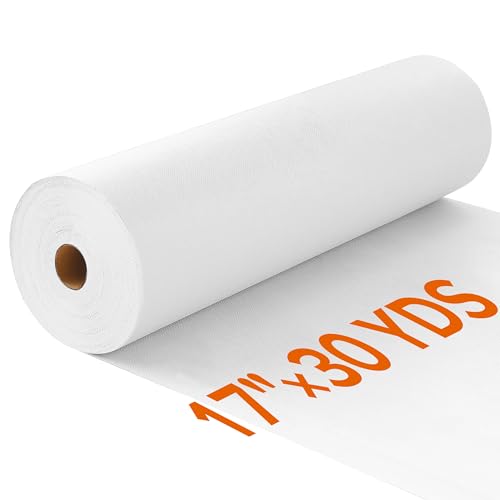
- Heavy-weight polyester support
- 17-inch by 30-yard bolt
- Washable, breathable non-woven fabric
Best For: Handbags and larger structured sewing projects
Small-Project Fleece Pick
PLANTIONAL Fusible Fleece by the Yard

- Soft, cushioned fleece loft
- 39-by-36-inch cut
- Medium and light weight options
Best For: Individual totes and quilted bag panels
Best Heavy-Duty Cotton Support
Heavy Weight Woven Cotton Interfacing

- 100% cotton provides a stable foundation.
- Heavy weight adds structure and durability.
- 10.6-inch by 10-yard roll supports multiple projects.
Best For: Structured bags made with medium-to-heavy fabrics
Best Bulk Roll Value
Medium Weight Polyester Interfacing

- Soft polyester adds body and support.
- Wide 16.5-inch by 30-yard roll offers extensive coverage.
- Single-sided adhesive applies with an iron.
Best For: Multiple bags and larger DIY projects
Best Lightweight Option
Light Non-Woven Fusible Interfacing

- Light polyester construction supports flexible projects.
- Iron-on adhesive makes application straightforward.
- 11.6-inch by 30-yard roll suits repeated projects.
Best For: Lightweight or flexible bags needing moderate support
Reliable Everyday Support – Pellon SF101 Shape-Flex
Pellon SF101 Shape-Flex Fusible medium weight woven interfacing White Sold by Yard
Check Price On AmazonFor sewists seeking fusible interfacing for bags made from light- to medium-weight fabrics, Pellon SF101 Shape-Flex offers a practical woven cotton option. It is sold by the yard and can be cut as continuous yardage when multiple quantities are purchased.
Best For: Light- to medium-weight bags, totes, and sewing projects that need woven support without a heavy stabilizing layer.
Pros:
- 100% cotton woven construction
- Fusible design for convenient application
- Sold by the yard with continuous yardage for multiple quantities
- Machine washable and suitable for tumble drying on low
Cons:
- Medium weight may not provide enough firmness for structured bags
- Sold by the yard rather than as a pre-sized package
SF101 is a versatile choice when you want cotton-based reinforcement that preserves a relatively fabric-like feel. For rigid or highly structured bags, a heavier stabilizer may be more suitable.
Soft Structured Volume – Bosal In-R-Form Foam Stabilizer
Bosal In-R-Form is a single-sided fusible foam stabilizer for projects where fusible interfacing for bags should add both body and cushioning. The one-yard piece measures 36 inches wide and is made from 100% polyester.
Best For: Bags and accessories that benefit from padded structure, dimensional support, and a soft foam feel.
Pros:
- Single-sided fusible construction
- 100% polyester foam stabilizer
- One-yard cut measuring 36 inches wide
- Machine washable and suitable for tumble drying on low
Cons:
- Foam construction may be too bulky for thin, unstructured bags
- Single-sided adhesive requires attention to orientation during assembly
Choose In-R-Form when cushioning and volume matter as much as reinforcement. Its foam format is especially relevant for projects where a flat woven interfacing would not provide enough loft.
Cushioned Yardage Value – PLANTIONAL Medium-Weight Fusible Fleece
PLANTIONAL medium-weight fusible fleece gives shoppers substantial yardage when choosing fusible interfacing for bags. Its single-sided adhesive bonds with a household iron, while the soft fleece adds cushioning and structure to tote bags and similar projects.
Best For: Totes, quilts, home décor, and larger sewing projects that need soft loft across a 16.5-inch-wide, 10-yard bolt.
Pros:
- Medium-weight fleece provides soft cushioning and support
- Single-sided iron-on application
- Generous 16.5-inch by 10-yard format
- Machine washable
Cons:
- Fleece adds loft rather than firm, rigid structure
- 16.5-inch width may require joining for wider bag panels
- A 10-yard bolt may be more material than needed for a small project
This is a practical bulk option for makers who want a padded finish and have multiple projects planned. Select a firmer stabilizer instead when crisp, distortion-resistant bag walls are the priority.
Firmest Bag Structure – Pellon 731 Fuse-N-Shape
Pellon 731 Fuse-N-Shape is a heavyweight fusible interfacing for bags that need firm, distortion-resistant support. This 100% polyester stabilizer comes as a 15- by 36-inch package and is designed for washable finished projects.
Best For: Structured bags and accessories where firmness and resistance to distortion are more important than a soft, flexible drape.
Pros:
- Heavyweight construction for firm support
- Resistant to distortion
- 100% polyester material
- Washable and made in the USA
Cons:
- 15- by 36-inch package offers less yardage than bolt-style options
- Heavyweight format may be too rigid for soft bags
- Polyester construction may be less suitable when a cotton interfacing is preferred
For bags that must hold their shape, 731 Fuse-N-Shape is the strongest structure-focused option in this group. Its compact package is convenient for a defined project, though larger batches may require multiple packages.
Soft Structure Pick – PLANTIONAL Medium Weight Fusible Fleece
For fusible interfacing for bags that adds body while retaining a cushioned feel, this medium-weight fusible fleece is a practical option. Its one-sided adhesive applies with a household iron, and the 10-yard length suits repeated sewing projects.
Best For: Quilted bags, totes, and projects needing soft loft and added stability.
Pros:
- Medium and light weight options support different levels of padding and structure.
- One-sided iron-on adhesive makes application straightforward.
- Approximately 11.8 inches wide and 10 yards long for multiple projects.
- Machine washable for finished items that need regular care.
Cons:
- Fleece provides loft and cushioning rather than the firmest possible bag structure.
- The approximately 11.8-inch width may require piecing for wider panels.
This is a good choice when comfort, padding, and moderate support matter more than rigid structure, particularly for quilted or softly constructed bags.
Heavy-Duty Yardage Pick – ZOMONETI Heavy Weight Fusible Interfacing
For fusible interfacing for bags where stronger support and substantial coverage are priorities, this heavy-weight non-woven polyester interfacing offers a broad 17-inch by 30-yard format. It bonds from one side with an iron and can be trimmed for different projects.
Best For: Handbags, purses, wallets, and medium-to-large sewing projects requiring added stability without described bulk.
Pros:
- Heavy-weight construction is designed to strengthen and support fabric.
- Large 17-inch by 30-yard bolt provides ample material for repeated projects.
- Polyester non-woven material is washable and breathable according to the supplied details.
- Suitable for bags, pockets, waistbands, quilt linings, and other sewing applications.
Cons:
- Heavy weight may be more support than delicate or drapey fabrics require.
- Only one color and one listed weight are supplied: white and heavy weight.
Choose this roll when you want generous yardage and a more supportive non-woven layer for bags or other projects that benefit from reinforcement.
Small-Project Fleece Pick – PLANTIONAL Fusible Fleece by the Yard
This fusible interfacing for bags is sold as a 39-by-36-inch cut, making it a convenient choice when you want fleece support without committing to a long roll. The one-sided adhesive adds a soft, cushioned layer with standard iron-on application.
Best For: Individual tote bags, quilted panels, home décor projects, and makers who prefer cut-by-the-yard material.
Pros:
- Soft loft adds comfort and padding to totes and quilted projects.
- Medium and light weight variations offer flexibility for different designs.
- 39-by-36-inch coverage is practical for a single project or smaller batch.
- Machine washable and designed to retain structure and adhesive properties.
Cons:
- The cut-by-the-yard format provides less total yardage than a multi-yard roll.
- Fleece prioritizes softness and loft over rigid reinforcement.
This option fits makers who need a manageable piece of fusible fleece for a bag or two and want padded support without storing a large bolt.
Best Heavy-Duty Cotton Support – Heavy Weight Woven Cotton Interfacing
For bags that need a firm, stable foundation, this heavy weight woven cotton fusible interfacing is a practical option. Its single-sided, heat-activated adhesive bonds to fabric with an iron, while the 10.6-inch by 10-yard roll provides material for multiple projects.
Best For: Structured bags and other projects using medium-to-heavy fabrics where added durability and shape are priorities.
Pros:
- Made from 100% cotton for a smooth, stable foundation.
- Heavy weight helps reinforce fabric and add structure.
- Iron-on application avoids messy glue or complicated sewing techniques.
- Machine washable after application.
Cons:
- The 10.6-inch width may require more joining for wider bag panels.
- Heavy weight may be more support than lightweight fabrics need.
This is a strong choice when your fusible interfacing for bags needs to emphasize firmness and lasting shape. Consider the heavy weight and narrower roll width when planning your pattern pieces.
Best Bulk Roll Value – Medium Weight Polyester Interfacing
If you need fusible interfacing for bags across several projects, this medium-weight non-woven polyester roll offers substantial coverage. The 16.5-inch width and 30-yard length make it useful for repeated bag panels, crafts, and other items needing added body.
Best For: Sewists making multiple bags or larger projects who want a medium-weight, single-sided iron-on interfacing in a long roll.
Pros:
- Soft polyester construction provides support without a rough feel.
- Medium weight adds body and structure to fabric.
- Wide 16.5-inch format and 30-yard length suit extensive projects.
- Designed to maintain integrity through washing and regular use.
Cons:
- The large 30-yard roll may be more material than occasional makers need.
- Medium weight may not provide enough firmness for the most rigid bag designs.
Choose this roll when coverage and versatility matter more than a compact package. Its medium weight is a practical middle ground for everyday bag construction and other DIY applications.
Best Lightweight Option – Light Non-Woven Fusible Interfacing
For bags that need reinforcement without the feel of a heavy stabilizer, this light-weight non-woven fusible interfacing is designed for easy iron-on use. Its 11.6-inch by 30-yard roll offers ample material for bags, clothing, crafts, and home décor projects.
Best For: Lightweight or flexible bags and projects where moderate support is preferred over a highly rigid finish.
Pros:
- Lightweight polyester non-woven material adds support without emphasizing bulk.
- Heat-activated, single-sided adhesive simplifies application.
- 30-yard length provides material for numerous projects.
- Designed to retain shape and adhesive strength through regular washing.
Cons:
- Lightweight interfacing may not be firm enough for heavily structured bags.
- The 11.6-inch width can be limiting for wider pattern pieces.
This is a sensible pick when your fusible interfacing for bags should preserve flexibility while adding useful support. For rigid totes or heavily structured designs, a heavier option may be more suitable.
How We Picked the Best Fusible Interfacing for Bags
We focused on materials suited to practical bagmaking rather than general apparel use. The selection includes woven and non-woven interfacing, fusible fleece, foam stabilizer, and heavyweight shape-support products. We considered the level of structure each type can provide, available widths and yardage, ease of application, and how well each option fits common projects such as totes, pouches, handbags, wallets, and soft-sided backpacks.
Because fabric weight and pattern design vary, no single interfacing is ideal for every bag. Always test a small sample before applying an iron-on product to the finished project.
Quick Comparison
| Interfacing type | Best for | Typical result |
|---|---|---|
| Lightweight non-woven | Thin cotton, linings, and small accessories | Subtle body and support |
| Medium-weight woven | Totes, pouches, and everyday bags | Natural flexibility with added stability |
| Fusible fleece | Quilted bags and padded projects | Soft structure and cushioning |
| Foam stabilizer | Boxy bags and structured handbags | Volume, firmness, and shape retention |
| Heavyweight stabilizer | Firm bags, bases, and handles | Maximum body and dimensional support |
Key Buying Factors for Fusible Interfacing for Bags
Weight and Structure
Choose lightweight interfacing when you want to preserve drape or work with thin fabric. Medium-weight products are the most versatile starting point for cotton totes and everyday accessories. Heavyweight stabilizers are better when the bag must stand upright or hold its shape without much support.
Woven Versus Non-Woven Construction
Woven interfacing generally retains a fabric-like hand and works well when flexibility and directional stability matter. Non-woven options can be economical and easy to cut, while fleece adds softness rather than a crisp, rigid finish.
Fusible Coverage and Application
Check whether the product is single-sided or requires another bonding layer, and confirm its recommended pressing temperature. Use a pressing cloth, avoid sliding the iron, and allow the fused layers to cool flat. Large rolls can offer better value for frequent sewing, while packaged cuts suit occasional projects.
Fabric Compatibility
Match the interfacing to the shell fabric. A heavyweight layer can overwhelm lightweight cloth, create unwanted stiffness, or affect seams and turning. For delicate, coated, heat-sensitive, or textured fabrics, test first and follow the manufacturer’s instructions.
Who Should Buy Which Fusible Interfacing for Bags?
- For versatile everyday bags: Choose a medium-weight woven or non-woven interfacing.
- For soft, padded bags: Select fusible fleece, especially for quilted or lightly cushioned designs.
- For structured handbags: Look for foam stabilizer or a heavyweight shape-support product.
- For thin fabric and linings: A light non-woven option can add body without making the project rigid.
- For frequent bagmaking: Consider a wide roll or 10-yard-plus package to reduce per-project cost and simplify matching.