The best stretch fusible interfacing adds support without making knit garments, hems, waistbands, or soft tailoring feel stiff. The right choice depends on how much stretch you need, whether you want tape or yardage, and how much structure the fabric can handle.
We’ve gathered 10 options ranging from ultra-fine knit stay tape and four-way stretch tricot to lightweight and medium-weight fusible interfacing. Use the guide below to compare formats and narrow down the best match for your fabric and sewing goal.
Best 10 Stretch Fusible Interfacing Picks for 2026
Flexible Knit Support
4-Way Stretch Tricot Interfacing

- Soft 100% polyester tricot
- Wide 59-inch fabric format
- Sew-in, non-fusible construction
Best For: Light- to medium-weight knits and embroidery stabilization
Everyday Iron-On Value
Lightweight Fusible Interfacing

- Single-sided iron-on adhesive
- 11.6 inches wide by 30 yards
- Suitable for light and medium fabrics
Best For: Garments, crafts, and home décor projects
Seam and Edge Support

- Flexible knit interfacing tape
- One-sided iron-on adhesive
- 25-yard, 1-inch-wide roll
Best For: Targeted stabilization of seams and fabric edges
Structured Iron-On Support
Medium-Weight Fusible Interfacing

- 11.6-inch by 30-yard roll
- Medium-weight single-sided adhesive
- Designed for garments and décor
Best For: Structured pieces such as plackets, pockets, collars, and cuffs
Best Stretch Stay Tape
Soft White Knit Hem Stabilizer

- Ultra-fine, soft, and stretchy
- Supports hems and seams without bulk
- 20-yard roll with quick steam fusing
Best For: Targeted reinforcement on light- to mid-weight white knits
Best Wide Stretch Interfacing

- 58-inch-wide lightweight tricot
- Crosswise stretch with lengthwise stability
- Useful for quilts and garment panels
Best For: Large-area stabilization on lightweight knits and apparel fabrics
Best Black Stretch Stay Tape
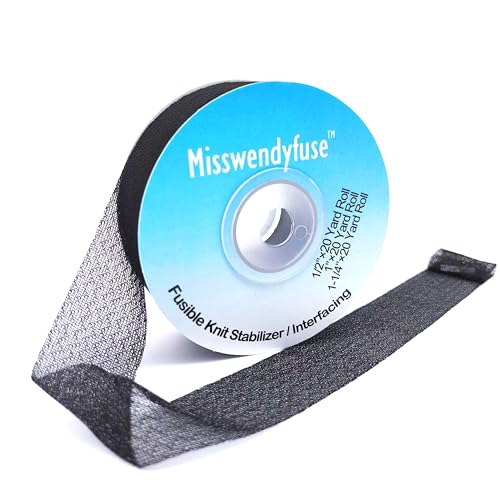
- Discreet black color for dark knits
- Soft, fine, and flexible after fusing
- Helps stabilize hems and high-wear seams
Best For: Targeted reinforcement on black and other dark knit garments
Classic Woven Support

- 100% cotton woven interfacing
- For light- to medium-weight fabrics
- Cut by the yard with continuous yardage
Best For: Cotton-based sewing and fabric crafts
Bulk Lightweight Reinforcement
White Fusible Interfacing, 11.6" x 30yd

- 30-yard roll for repeated projects
- Lightweight polyester material
- Single-sided iron-on adhesive
Best For: High-volume sewing and craft reinforcement
Wide Medium-Weight Coverage
PLANTIONAL Medium-Weight Iron-On Interfacing

- 16.5-inch-wide, 30-yard roll
- Soft polyester with medium-weight support
- Single-sided heat-activated adhesive
Best For: Large garments, quilting, and home décor
Flexible Knit Support – 4-Way Stretch Tricot Interfacing
If you need stretch fusible interfacing for a project involving knit or flexible fabrics, note that this option is sew-in rather than fusible. Its lightweight tricot construction adds support without sacrificing much flexibility, making it useful where an iron-on adhesive is not required.
Best For: Light- to medium-weight knit garments, soft shaping, tailoring, and embroidery stabilization.
Pros:
- Four-way stretch supports flexible fabrics.
- Soft-touch 100% polyester knit construction.
- Wide 59-inch format and approximately 2.18-yard prepared length.
- Can be trimmed with scissors and sewn in place.
Cons:
- Not fusible; it must be pinned and sewn.
- May provide less structure than a medium- or heavyweight interfacing.
This is a practical choice when maintaining stretch matters more than adhesive application. Confirm that sew-in construction suits your pattern before buying.
Everyday Iron-On Value – Lightweight Fusible Interfacing
For projects specifically calling for stretch fusible interfacing, check the fabric compatibility first: this product is a lightweight, non-woven fusible rather than a stretch knit. Its single-sided adhesive activates with an iron and provides general support for garments, crafts, and home décor.
Best For: Clothing, collars, cuffs, crafts, and décor projects using light- to medium-weight fabrics.
Pros:
- Heat-activated adhesive bonds with an iron.
- Generous 11.6-inch by 30-yard roll.
- Polyester non-woven material adds stability and structure.
- Designed to remain washable and retain adhesive strength.
Cons:
- Non-woven construction may not flex like stretch interfacing.
- Single-sided adhesive may be unsuitable when support is needed on both sides.
This long roll offers good coverage for repeated sewing and craft projects, but choose a knit-specific interfacing when preserving garment stretch is essential.
Seam and Edge Support – 1-Inch Fusible Knit Stay Tape
This narrow fusible knit stay tape can be a useful alternative when you need stretch fusible interfacing in a concentrated strip rather than across an entire pattern piece. The one-sided iron-on adhesive is designed for fabric applications and comes as a 25-yard roll.
Best For: Stabilizing seams, edges, and selected areas of stretch or knit garments.
Pros:
- Knit material is suited to flexible fabric applications.
- One-sided iron-on adhesive allows fusible application.
- 25-yard roll provides material for multiple projects.
- One-inch width is convenient for targeted support.
Cons:
- Narrow tape is not intended to cover broad fabric panels efficiently.
- Product details list a 1-inch width, so it may require multiple strips for wider areas.
- It is not water resistant.
Choose this roll for precise stabilization rather than full-piece interfacing. Its knit format and fusible backing make it especially practical for controlled reinforcement along fabric sections.
Structured Iron-On Support – Medium-Weight Fusible Interfacing
If your project needs a firmer finish than stretch fusible interfacing typically provides, this medium-weight iron-on interfacing is designed for structure and support. It has a single-sided adhesive, can be cut to pattern, and is supplied in a long 30-yard roll.
Best For: Shirt plackets, denim pockets, collars, cuffs, quilting, patchwork, and home décor.
Pros:
- 11.6-inch-wide, 30-yard roll supports many projects.
- Medium-weight construction adds structure without unnecessary bulk.
- Iron-activated adhesive bonds quickly and firmly.
- Designed for materials ranging from delicate silk to heavy denim.
Cons:
- Medium-weight support may reduce flexibility in stretch garments.
- Single-sided adhesive is less suitable for applications requiring two-sided bonding.
- White interfacing may show through some darker fabrics.
This is a strong general-purpose option for structured sewing rather than high-stretch applications. Select it when stability, wrinkle prevention, and a crisp finish are higher priorities than maximum stretch.
Best Stretch Stay Tape – Soft White Knit Hem Stabilizer
For knit hems, shoulder seams, and other areas that need support without losing flexibility, this stretch fusible interfacing tape offers a narrow, low-bulk solution. Its soft, ultra-fine construction is designed for lightweight to mid-weight fabrics, while the single-sided adhesive fuses with steam and a standard iron.
Best For: Stabilizing white knit hems, shoulder seams, back necks, pant hems, and zipper areas without noticeably changing the fabric’s drape.
Pros:
- Soft, fine, and stretchy, so it adds minimal stiffness or bulk.
- Helps prevent seams from stretching out or becoming misshapen.
- Useful for reducing knit-hem curling and double-needle tunneling.
- Fuses in less than 20 seconds with steam and a pressing cloth.
Cons:
- The 1-inch width is better suited to targeted reinforcement than large fabric panels.
- White may be less suitable for dark or transparent garments.
This is a practical choice when you need discreet reinforcement that preserves the soft feel and stretch of a knit garment. The 20-yard roll also makes it convenient for repeated hemming and seam-stabilization projects.
Best Wide Stretch Interfacing – White French Woven Tricot
For larger fabric areas, this wide French woven tricot is a useful stretch fusible interfacing option. The lightweight polyester material provides crosswise stretch with lengthwise stability, helping stabilize knits, blouses, dresses, and quilt projects without adding substantial weight.
Best For: Stabilizing broad fabric panels, t-shirt quilts, blouses, and bridal dresses where crosswise stretch and lengthwise support are useful.
Pros:
- Wide 58-inch format covers larger areas efficiently.
- Lightweight construction helps keep quilts and garments from becoming overly heavy.
- Offers crosswise stretch with lengthwise stability.
- Evenly spread adhesive is designed for consistent fusing.
Cons:
- Requires careful orientation to match the fabric’s stretch direction.
- Application requires an iron, steam, and pressing cloth.
- The lightweight version may provide less stiffness than heavier interfacing.
Choose this tricot when you need coverage rather than narrow seam tape. Its 2-yard, 58-inch-wide format is especially practical for quilts and garment panels, provided you align the stable direction correctly before pressing.
Best Black Stretch Stay Tape – Fine Knit Hem Interfacing
When a dark knit garment needs discreet reinforcement, this black stretch fusible interfacing tape supports hems and seams without adding noticeable bulk. The soft, single-sided adhesive tape is intended for lightweight to mid-weight fabrics and can be fused with steam using a standard iron.
Best For: Stabilizing black knit hems, shoulder seams, back necks, pant hems, and high-wear areas such as zipper edges.
Pros:
- Black color is well suited to dark knit garments.
- Soft, ultra-fine, and stretchy after fusing.
- Helps limit seam distortion, hem curling, and double-needle tunneling.
- Strong adhesive bonds when heated and fuses in less than 20 seconds.
Cons:
- The 1-inch width limits it primarily to narrow reinforcement jobs.
- Black tape is less versatile for light-colored or sheer fabrics.
This roll is a focused choice for dark knit sewing projects where visible reinforcement would be distracting. It provides targeted support while retaining the garment’s soft hand and stretch, making it especially useful for hems and seams that tend to deform with wear.
Classic Woven Support – Pellon SF101 Shape-Flex
Pellon SF101 Shape-Flex Fusible medium weight woven interfacing White Sold by Yard
Check Price On AmazonIf you want stretch fusible interfacing with a woven cotton construction, Pellon SF101 Shape-Flex is a practical choice for light- to medium-weight fabrics. It is sold by the yard and cut to order, with continuous yardage available when multiple quantities are purchased.
Best For: Light- to medium-weight sewing and fabric-craft projects requiring cotton woven support.
Pros:
- 100% cotton woven construction
- Designed for light- to medium-weight fabrics
- Available as cut-by-the-yard, continuous yardage
- Machine-washable care instructions
Cons:
- Only listed in white
- Sold by the yard rather than as a large pre-cut roll
Choose this option when a natural cotton woven interfacing and flexible yardage quantities matter more than bulk coverage.
Bulk Lightweight Reinforcement – White Fusible Interfacing, 11.6" x 30yd
This white polyester option is useful when you need stretch fusible interfacing for repeated sewing, quilting, or patchwork projects. The 30-yard roll is easy to cut, while the single-sided adhesive is designed for reinforcing collars, cuffs, welts, clothing, and craft items.
Best For: High-volume sewing, quilting, patchwork, clothing reinforcement, and shaping accessories.
Pros:
- 30-yard length for multiple projects
- Lightweight polyester construction
- Single-sided iron-on application
- Designed to support collars, cuffs, and welts
Cons:
- Application requires a pressing cloth and careful iron use
- The listed roll width is 11.6 inches
Its generous length makes it a practical supply for frequent makers, especially when consistent reinforcement is needed across many projects.
Wide Medium-Weight Coverage – PLANTIONAL Medium-Weight Iron-On Interfacing
For projects that need broader coverage, this medium-weight stretch fusible interfacing provides a 16.5-inch width and 30-yard length. Its soft polyester material and single-sided heat-activated adhesive are suited to garments, quilting, crafts, and home décor projects.
Best For: Large garments, quilting, home décor, and projects needing medium-weight structure.
Pros:
- Wide 16.5-inch format
- Generous 30-yard length
- Soft yet supportive polyester construction
- Designed to retain shape through washing and regular use
Cons:
- Medium weight may be more support than lightweight fabrics require
- Only listed in white
This is the strongest bulk-coverage choice in the group, combining a wide roll with medium-weight support for larger or more structured makes.
How We Picked the Best Stretch Fusible Interfacing
We focused on products suited to knitwear, stretch fabrics, hems, seams, waistbands, embroidery, and light tailoring. The selection includes fusible and sew-in materials, narrow stay tape, wide yardage, woven tricot, and non-woven interfacing in lightweight and medium-weight options. We also considered practical details such as roll length, usable width, color, softness, and whether the product is designed to preserve fabric movement.
Because “Stretch Fusible Interfacing” can describe several different materials, always verify the listing’s fiber content, adhesive side, application instructions, and expected stretch before buying.
Quick Comparison
| Best For | Recommended Format | What to Look For |
|---|---|---|
| Knit hems and seam stabilization | 1-inch fusible knit stay tape | Soft hand, fine construction, single-sided adhesive |
| Flexible garment support | Four-way stretch tricot or knit interfacing | Stretch in the same direction as the garment |
| General lightweight sewing | Lightweight fusible interfacing | Low bulk and compatibility with the base fabric |
| Collars, plackets, and structured areas | Medium-weight interfacing | More body without excessive stiffness |
| Large projects | Wide rolls or 20- to 30-yard lengths | Consistent coverage and better value per yard |
Key Buying Factors for Stretch Fusible Interfacing
Stretch and Recovery
Match the interfacing’s stretch direction to the fabric. Four-way stretch is useful when the garment must move in multiple directions, while a narrow knit tape can stabilize a hem or seam without reinforcing the entire panel. Avoid a rigid product on highly elastic fabric unless you specifically need firm stabilization.
Weight and Drape
Lightweight interfacing is generally better for jersey, rayon knits, lingerie, and soft garments. Medium-weight products can support waistbands, collars, bags, and areas requiring shape, but may alter the fabric’s drape. When uncertain, test a small scrap first.
Width and Format
Stay tape is efficient for hems, shoulder seams, necklines, and narrow edges. Yardage is more versatile for full garment panels, embroidery backing, and larger shaped pieces. Check the listed width carefully: a narrow roll may be economical for stabilization but impractical for broad coverage.
Adhesive and Application
Fusible products require heat and pressure to bond. Follow the manufacturer’s temperature, pressing time, and steam recommendations, and use a pressing cloth when appropriate. Test adhesion and wash durability before applying the material to a finished garment.
Who Should Buy Which Stretch Fusible Interfacing?
- For knit hems: Choose ultra-fine fusible knit stay tape in white or black to match the garment and reduce stretching while sewing.
- For flexible shaping: Select four-way stretch knit or woven tricot interfacing when support must move with the fabric.
- For everyday garment sewing: Lightweight fusible interfacing offers broad usefulness with less risk of adding unwanted bulk.
- For firmer structure: Medium-weight options, including woven or non-woven styles, suit collars, cuffs, waistbands, and craft projects.
- For frequent sewing or large projects: A 20- or 30-yard roll can provide better coverage and fewer interruptions than small packages.
Before committing to a full roll, fuse a sample to a fabric offcut and check stretch, drape, bond strength, wash behavior, and visibility from the right side. That simple test is the best way to confirm that your chosen interfacing supports the project without changing its intended feel.